Online Quran Lessons for Kids have become one of the most effective ways for Muslim families to help their children build a strong relationship with the Quran while learning from the comfort of home. Instead of being limited by location or local teacher availability, parents can now choose qualified Quran instructors, flexible schedules, and structured learning programs that match their child’s age and ability.
However, not every online program delivers the same experience. The quality of the teacher, lesson structure, learning methodology, parental involvement, and regular progress tracking all influence how confidently a child reads, understands, and memorizes the Quran. If this is an area you’d like to explore in more depth, check out our quran.
This guide explains everything parents need to know before enrolling their child, from selecting the right academy to creating a successful learning routine that encourages consistent progress without overwhelming young learners.
Why Are More Families Choosing Online Quran Lessons for Kids?

The growing popularity of Online Quran Lessons for Kids is not simply a result of technology. Parents are increasingly looking for learning environments that fit modern family life while maintaining high educational standards. Many students pair this with our learn quran to round out their learning.
Unlike traditional classes that require transportation and fixed schedules, online learning allows children to receive Quran education wherever they live. Whether a family lives in North America, Europe, Australia, or another region with limited access to qualified teachers, online classes make consistent Islamic education more accessible. Our hifz quran can be a good complement for anyone following this path.
Parents also appreciate the flexibility to arrange lessons around school hours, sports, and family commitments. Instead of missing classes because of travel or busy schedules, children can maintain a steady learning routine throughout the year.
Another important advantage is personalized instruction. Many academies offer one-to-one sessions that allow teachers to focus on each child’s pronunciation, memorization, and confidence without the distractions of a large classroom.
When these benefits are combined with experienced teachers and structured lesson plans, online learning becomes much more than a convenient alternative—it becomes a highly effective way to build lifelong Quran learning habits. This connects closely with our learn quran tafseer, which many families find useful.
Start Your Quran Journey With Al Braa Quran Academy Today
If you are ready to begin a meaningful journey with the Holy Quran, Al Braa Quran Academy is here to guide you step by step. Our qualified teachers help you improve your Quran recitation, understand Tajweed rules, and build strong confidence in reading the Quran correctly.
Moreover, you can join flexible online classes designed to suit all ages and learning levels. As a result, you can learn at your own pace while maintaining consistency and focus. In addition, our structured lessons ensure steady progress and a clear understanding. Start today and take the first step toward mastering Quran reading with clarity, consistency, and a strong spiritual connection.

How to Prepare for Online Quran Lessons for Kids?
Many parents spend weeks comparing academies but forget that the learning environment at home has a direct impact on their child’s success. A few simple preparations before the first lesson can improve concentration, reduce anxiety, and help children enjoy their first learning experience. Before classes begin, prepare the following:
- A quiet room away from television, toys, and unnecessary distractions.
- A reliable internet connection that supports uninterrupted video calls.
- A laptop or tablet with a functioning camera and microphone.
- A Quran or learning material recommended by the academy.
- Headphones if the surrounding environment is noisy.
It is equally important to prepare your child emotionally. Explain who the teacher is, how the lesson will work, and reassure your child that making mistakes is a normal part of learning.
For younger children, sitting nearby during the first few sessions often helps them feel comfortable until they become familiar with the teacher and the class routine.
What Makes High-Quality Online Quran Lessons for Kids?
Parents often compare tuition fees before examining the educational quality of a program. In reality, the teaching method has a much greater impact on a child’s progress than the price alone.
A well-designed Online Quran Lessons for Kids program usually includes several essential elements.
Qualified Quran Teachers
Children learn best when their teacher combines strong Quranic knowledge with experience in child education. A qualified instructor should demonstrate clear pronunciation, patience, positive encouragement, and the ability to simplify lessons according to the student’s age.
Structured Learning Path
Effective programs do not jump randomly between lessons. Instead, they follow a clear progression that gradually develops Quran reading, Tajweed, memorization, and comprehension.
This structured approach allows children to build confidence while mastering one skill before moving to the next.
Continuous Assessment
Regular evaluations help teachers identify pronunciation mistakes, memorization challenges, and areas that require additional revision before small issues become long-term habits.
Parent Communication
Children achieve better results when teachers and parents work together. Progress reports, lesson feedback, and practical home revision tips help families support learning between classes without creating unnecessary pressure.
For this reason, many parents choose Al Braa online Islamic academy for kids, where structured lesson plans, qualified teachers, and regular progress monitoring help children develop strong Quran reading skills while keeping parents informed throughout the learning journey. It’s worth pairing this with our quran kids USA for a fuller picture.
How Online Quran Lessons for Kids Actually Work?
Parents who are new to online Noorani Qaida for kids learning often wonder whether children can truly receive the same quality of education through a screen. The answer depends largely on how lessons are organized.
Most professional Quran academies follow a structured lesson format rather than simply asking children to read verses.
A typical lesson includes:
Initial Revision
Each class begins with a review of previously learned material. Frequent revision strengthens long-term memory and allows teachers to identify areas that need additional practice before introducing new lessons.
Guided Quran Reading
The teacher recites each verse carefully while the student listens and repeats. Immediate correction helps children develop accurate pronunciation from the beginning instead of reinforcing mistakes.
Tajweed Practice
Rather than memorizing complex rules, children learn Tajweed naturally through repeated guided reading, practical examples, and gradual correction.
This method is especially effective for younger learners because they apply the rules while reading instead of studying them theoretically.
New Memorization
Once reading accuracy has been confirmed, students begin memorizing small sections based on their individual ability. The amount varies according to age, confidence, and previous experience.
Review and Homework
The lesson concludes with revision, feedback, and simple practice assignments that reinforce learning before the next class.
This balanced structure allows children to improve reading accuracy, memorization, and confidence at the same time, rather than focusing on only one skill.
Best Age to Start Online Quran Lessons for Kids
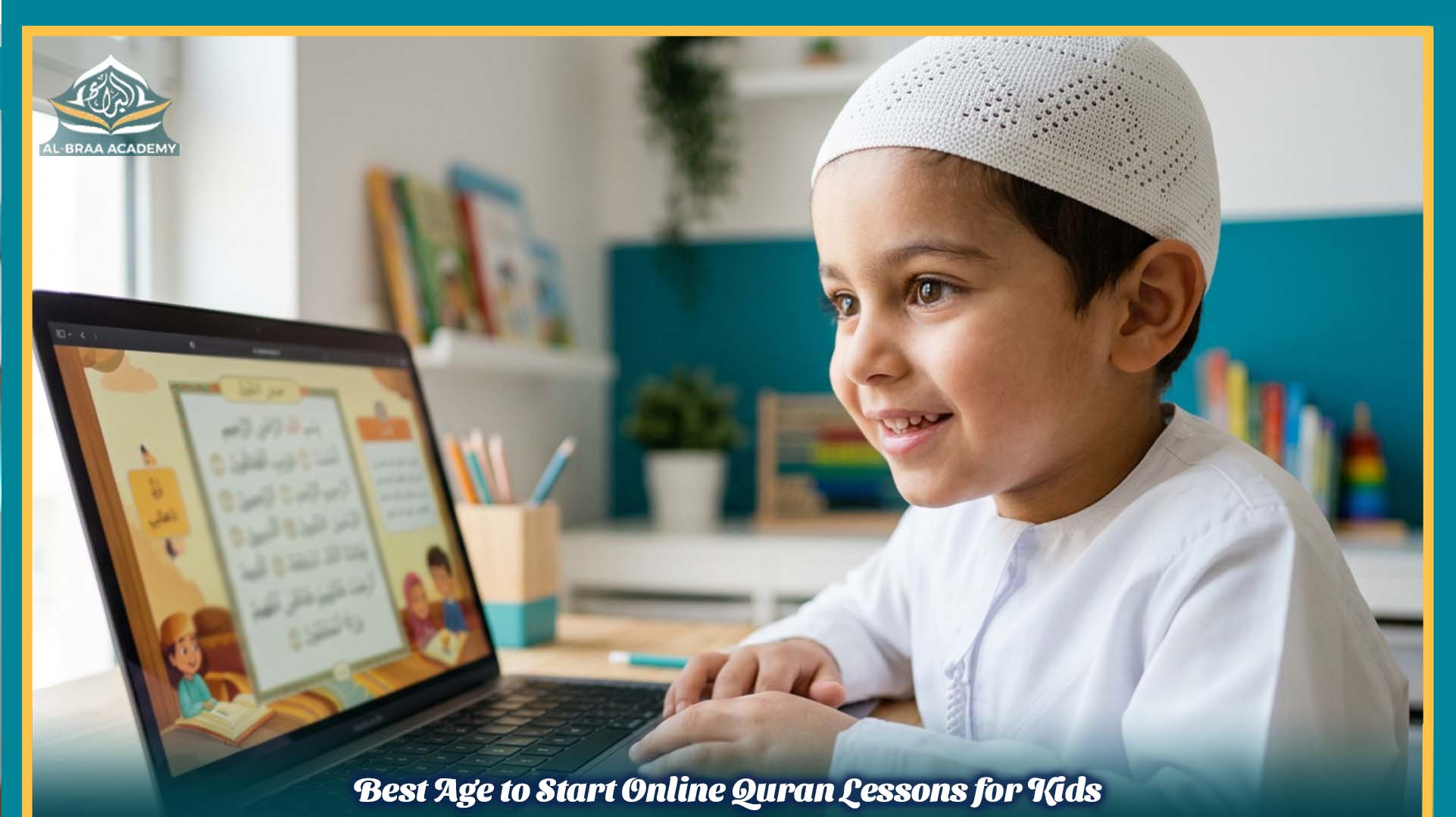
One of the questions parents ask most often is when children should begin learning the Quran online. While there is no single age that suits every child, most Quran educators agree that children between 4 and 6 years old are usually ready to start if they can listen, repeat simple words, and stay focused for short periods.
Readiness matters more than age. Some children develop language and listening skills earlier, while others need additional time before they feel comfortable participating in live lessons.
The table below provides general guidance based on developmental stages.
| Age | Recommended Focus | Suggested Lesson Length |
|---|---|---|
| 4–5 years | Arabic letters, listening, short Surahs | 20–25 minutes |
| 6–8 years | Quran reading, Noorani Qaida, simple Tajweed | 25–30 minutes |
| 9–12 years | Fluency, memorization, Tajweed application | 30–40 minutes |
| 13+ years | Advanced Tajweed, memorization, and understanding | 40–45 minutes |
Parents should avoid comparing their child with others. Consistent improvement over time is far more valuable than memorizing large portions quickly.
How Long Do Online Quran Lessons for Kids Take to Show Results?
Many families expect rapid progress after enrolling in online Quran classes for kids, but learning the Quran is a gradual journey rather than a race. For learners who want to go further, take a look at our clear quran kids. The timeline depends on several factors, including:
- The child’s age.
- Previous Arabic knowledge.
- Lesson frequency.
- Practice between classes.
- Teaching quality.
- Parent involvement.
Children who attend two or three live sessions each week while reviewing lessons for 10–15 minutes daily often progress faster than children who rely only on weekly classes. As a general expectation:
- Learning Arabic letters may take 1–3 months.
- Reading simple Quranic words often requires 3–6 months.
- Comfortable Quran reading with basic Tajweed usually develops within 6–12 months.
- Memorization progresses differently for every child depending on individual goals and revision habits.
Instead of asking, “How quickly will my child finish?” a better question is, “Is my child improving every month?” Sustainable progress creates stronger lifelong Quran reading skills.
Choosing Between One-to-One and Group Online Quran Lessons for Kids
Professional academies usually offer both individual lessons and small group classes. The right choice depends on your child’s personality, confidence, and learning objectives.
One-to-One Classes
Individual lessons allow the teacher to focus entirely on one student. These classes are ideal for children who:
- Are complete beginners.
- Need extra pronunciation correction.
- Memorize at their own pace.
- Feel shy speaking in front of other students.
- Require flexible scheduling.
Since every minute belongs to one learner, mistakes can be corrected immediately before they become habits.
Small Group Classes
Group learning introduces healthy interaction and motivation. Children often benefit from:
- Listening to classmates read.
- Friendly encouragement.
- Improved communication skills.
- Shared classroom activities.
- Greater confidence through participation.
A quality academy evaluates the child’s learning style before recommending the most suitable option rather than offering the same format to everyone.
How to Choose the Right Teacher for Online Quran Lessons for Kids
The teacher has a greater influence on a child’s learning experience than any software or learning platform. When evaluating online Quran classes for kids, look beyond qualifications and consider teaching style as well. A good Quran teacher should:
- Read the Quran with accurate Tajweed.
- Have experience teaching children.
- Encourage rather than criticize.
- Explain lessons using language children understand.
- Adapt the pace according to each student’s ability.
- Provide regular feedback for parents.
- Build confidence through positive reinforcement.
Children who feel safe asking questions and making mistakes usually become more confident readers over time. At Al Braa Online Arabic Academy for kids, teachers are selected not only for their Quranic knowledge but also for their ability to communicate effectively with children, create engaging lessons, and support every student’s individual learning journey.
Why Revision Is Essential in Online Quran Lessons for Kids
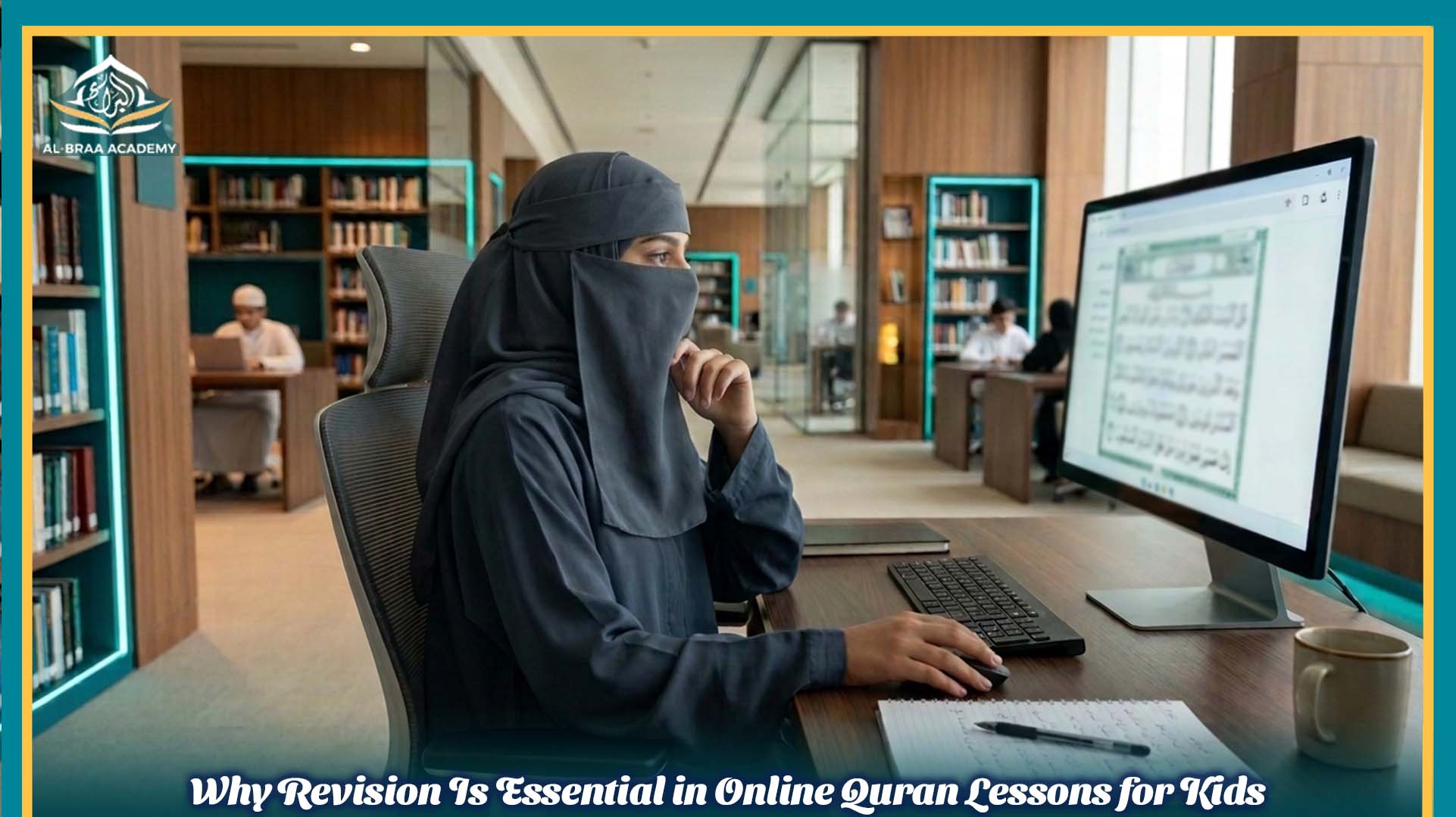
One of the biggest mistakes families make is measuring success only by the number of verses their child memorizes. Experienced Quran teachers know that revision is what protects memorization.A practical approach followed in many successful Quran programs is:
- Approximately 70% of study time is devoted to revision.
- Around 30% is dedicated to learning new material.
Children who regularly review previous lessons often retain their memorization far longer than those who constantly move to new pages without revision. Simple daily revision habits make a significant difference:
- Read previously memorized verses before learning anything new.
- Review older Surahs every weekend.
- Listen to the same recitation outside lesson time.
- Encourage children to recite during family prayer or daily routines.
Small, consistent revision sessions build stronger long-term memory than occasional intensive study sessions. This approach helps children gain confidence while reducing frustration caused by forgetting previously memorized verses.
Common Myths About Online Quran Lessons for Kids
Although Online Quran Lessons for Kids have become increasingly popular, many parents still hesitate because of common misconceptions. Understanding the reality behind these myths helps families make informed decisions based on evidence rather than assumptions.
“Children cannot stay focused during online lessons.”
Children can remain engaged when lessons are designed specifically for their age. Experienced teachers alternate between reading, repetition, questions, and interactive activities instead of relying on long lectures. Short, well-structured sessions often maintain attention better than lengthy classroom lessons.
“Online learning is less effective than face-to-face teaching.”
Learning outcomes depend on teaching quality rather than location. Children who receive regular feedback, structured lessons, and consistent revision frequently achieve results comparable to traditional classes.
“Parents must teach every lesson.”
Parents are not expected to become Quran teachers. Their role is to encourage consistency, prepare the learning environment, and communicate with the instructor when needed.
“Children need to know Arabic before learning the Quran.”
Many students begin without speaking Arabic. Qualified teachers introduce Quran reading step by step, often starting with Noorani Qaida, pronunciation practice, and letter recognition before progressing to complete verses.
Signs Your Child May Need a Different Quran Teacher
Not every teacher is the right fit for every child. Sometimes progress slows because the teaching style does not match the student’s personality or learning needs.
Parents should consider discussing changes if they notice several of these signs over an extended period:
- Your child repeatedly refuses to attend lessons.
- Progress has stopped despite regular attendance.
- The teacher rarely provides feedback.
- Lessons feel rushed with little opportunity for correction.
- Your child seems afraid to ask questions.
- Motivation continues to decline month after month.
Changing teachers should never be viewed as a failure. Every child learns differently, and finding the right teaching style can significantly improve confidence, engagement, and long-term progress.
Healthy Screen Time During Online Quran Lessons for Kids
Many parents worry that adding Online Arabic lessons for kids will increase their child’s daily screen time. The concern is understandable, but educational screen time differs from passive entertainment.
A focused Quran lesson encourages listening, speaking, reading, memorization, and interaction rather than passive viewing.
To keep screen use healthy:
- Schedule Quran lessons separately from entertainment time.
- Encourage children to stand and stretch after class.
- Avoid switching directly from gaming to Quran lessons.
- Use printed Qurans whenever possible instead of reading entirely from the screen.
- Give children short breaks before beginning homework or revision.
These simple habits help children stay focused while reducing digital fatigue.
Skills Children Gain from Online Quran Lessons for Kids
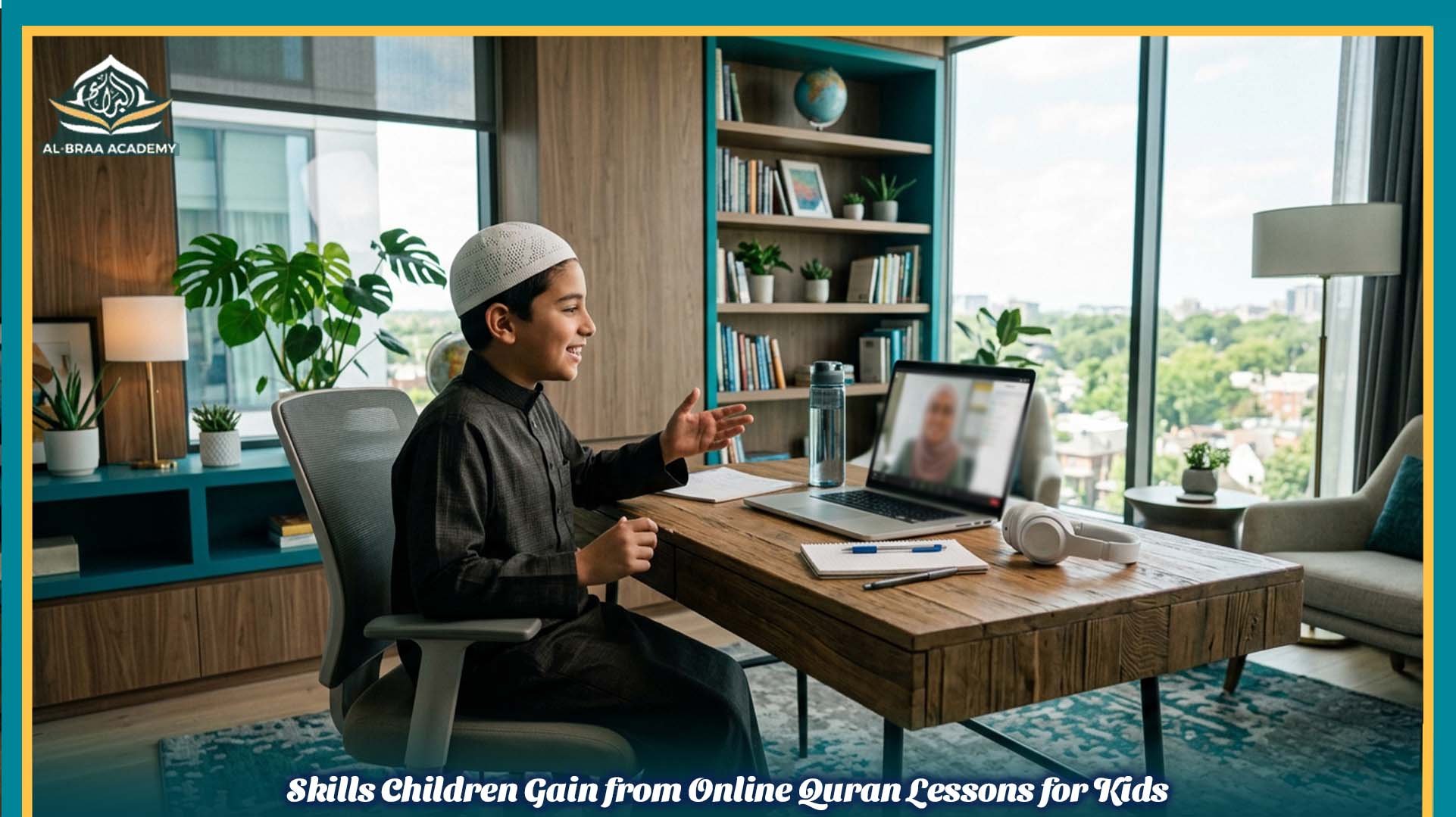
The benefits of Online Quran Lessons for Kids extend far beyond learning how to recite verses correctly. Over time, children also develop valuable life skills. For a deeper dive, take a look at our how to learn quran kids.
Better Listening Skills
Listening carefully to pronunciation teaches children to pay attention to small details, an ability that also benefits school learning.
Stronger Self-Discipline
Following a weekly learning schedule encourages responsibility and consistency from an early age.
Improved Confidence
As children complete Surahs and receive positive feedback, they become more confident speaking and reading aloud.
Better Memory
Regular memorization and revision naturally strengthen long-term memory and recall abilities.
Positive Islamic Character
Learning the Quran alongside good manners, honesty, patience, and respect helps children apply Islamic values in their everyday lives.
These lifelong skills often become just as valuable as memorization itself.
Checklist Before Choosing an Online Quran Academy
Choosing an academy is a long-term decision. Instead of focusing only on pricing, compare programs using practical criteria.
Use this checklist before enrolling:
| Question | Why It Matters |
|---|---|
| Are teachers qualified in Quran and Tajweed? | Ensures accurate learning. |
| Is there a structured curriculum? | Helps children progress step by step. |
| Are trial classes available? | Allows families to evaluate teaching quality. |
| Does the academy provide progress reports? | Keeps parents informed. |
| Are schedules flexible? | Makes consistent attendance easier. |
| Is one-to-one learning available? | Supports children who need individual attention. |
| Is technical support available? | Reduces interruptions during lessons. |
Parents looking for a balanced learning experience often consider Al Braa Quran Academy because it combines qualified instructors, structured Quran programs, flexible scheduling, and ongoing progress tracking. Rather than following a one-size-fits-all approach, the academy adapts learning plans to each student’s age, ability, and goals, helping children build confidence while developing strong Quran reading and memorization skills.
Measuring Real Progress in Online Quran Lessons for Kids
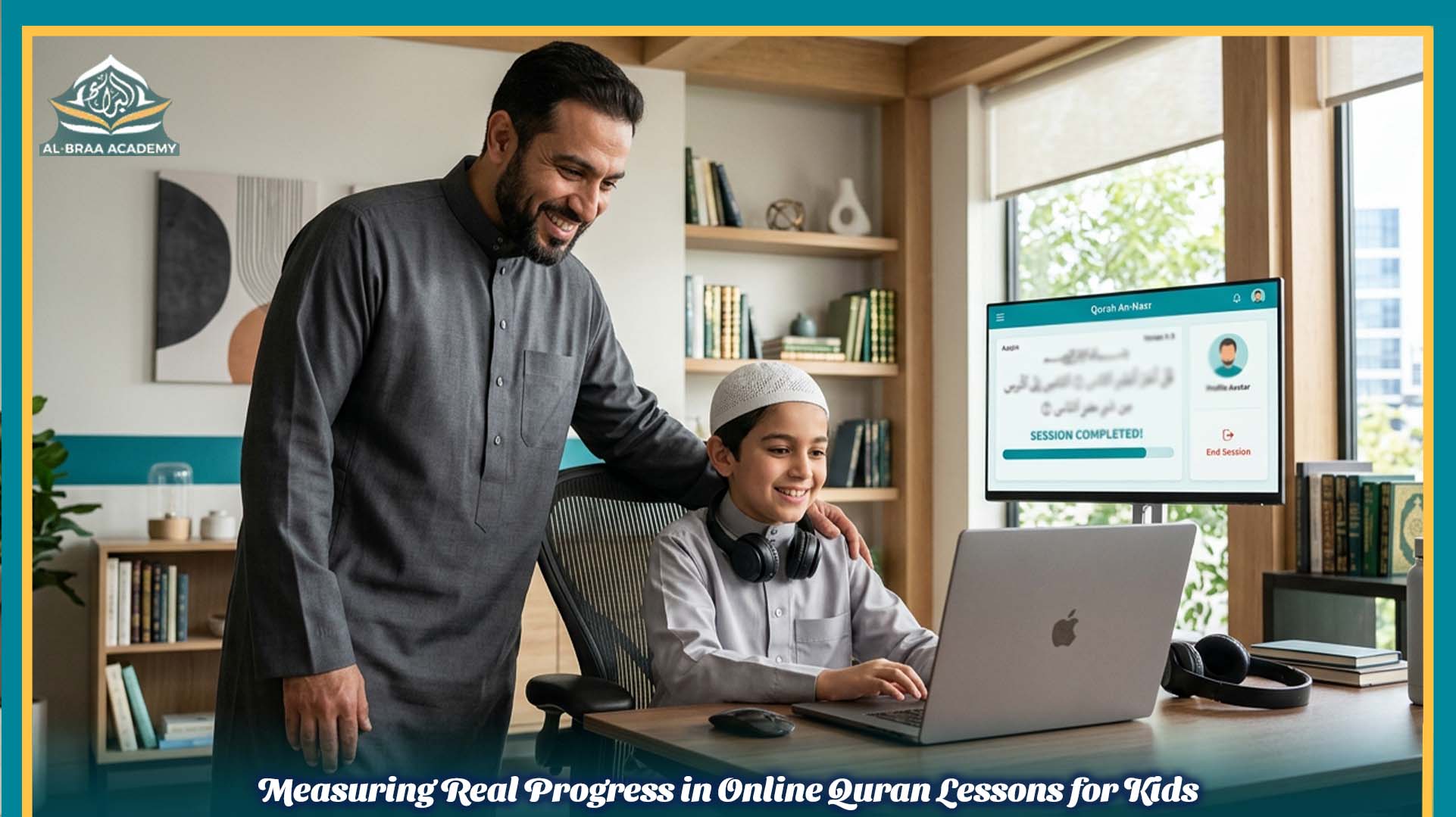
Progress should never be measured only by the number of pages memorized. A child who memorizes slowly with accurate pronunciation and regular revision often develops stronger online quran classes for kids skills than one who memorizes quickly but forgets frequently. Parents can monitor progress by asking simple questions: Those who found this helpful often continue with our memorize quran.
- Is pronunciation improving each month?
- Does my child remember previously memorized Surahs?
- Is Tajweed becoming more accurate?
- Does my child attend lessons willingly?
- Is confidence increasing during recitation?
When these indicators improve consistently, the learning process is moving in the right direction. Success in Online Quran Lessons for Kids is built through steady improvement, consistent revision, supportive teaching, and encouragement from both the academy and the family.
Frequently Asked Questions: Online Quran Lessons for Kids
Parents often have practical questions that go beyond lesson schedules and course outlines. The answers below address common concerns that can influence both the learning experience and long-term success of online Quran classes for kids.
Can my child join online Quran classes without speaking Arabic?
Yes. Most children begin without speaking Arabic fluently. Qualified teachers introduce Arabic letters, pronunciation, and Quran reading gradually, allowing students to build confidence step by step before moving to more advanced reading and memorization.
How do online Quran teachers correct pronunciation remotely?
Live video lessons allow teachers to hear every word a child recites in real time. They can immediately identify pronunciation mistakes, demonstrate the correct articulation of letters, and ask students to repeat verses until the recitation becomes accurate.
What internet speed is recommended for live Quran classes?
A stable internet connection is more important than extremely high speed. Generally, 5–10 Mbps is sufficient for smooth one-to-one video lessons, provided the connection remains stable throughout the class.
Are completion certificates important for children?
Certificates can motivate younger learners by recognizing their achievements, but they should not be viewed as the primary goal. Consistent improvement in Quran reading, Tajweed, memorization, and understanding is a much stronger indicator of long-term success than collecting certificates alone.
Conclusion
Choosing the right Online Quran Lessons for Kids is about much more than finding a convenient schedule. The best learning experience combines qualified teachers, structured lesson plans, regular revision, age-appropriate teaching methods, and active support from parents. When these elements work together, children develop accurate Quran recitation, stronger memorization skills, confidence, and a lasting connection with the Book of Allah.
If you are looking for a trusted learning environment that balances academic excellence with engaging child-centered teaching, Al Braa Quran Academy offers structured live Quran classes designed to support every stage of your child’s Quran journey. With experienced instructors, flexible scheduling, and personalized guidance, families can help their children build lifelong Quran learning habits in a supportive and encouraging online environment.