
1. The Qur’an for Kids program at Al-Braa Academy is specially designed to make learning the Book of Allah enjoyable, interactive, and meaningful for children. Our goal is to nurture a love for the Qur’an early on, so that kids grow with both knowledge and faith.
2. Children are guided step by step in recitation, Tajweed, and memorization, supported by engaging methods that make learning simple and fun. Alongside Qur’an study, we also teach Islamic manners and values, helping students build strong character while deepening their faith.
3. All classes are taught by qualified male and female teachers from Al-Azhar University, many of whom are Hafiz of the Qur’an and hold an Ijazah. With one-on-one tutoring, flexible schedules, and bilingual teaching (Arabic and English), each child learns at their own pace in a warm, encouraging environment.
Quran Classes Designed Specifically for Children
Teaching a child to read the Quran correctly is different from teaching an adult, it takes more patience, more repetition, and a teaching style built around how young minds actually learn best. At Al-Braa Academy, our children’s Quran program is not simply the adult curriculum slowed down; it is designed from the ground up for young learners, from complete beginners just starting the Arabic alphabet to children already reading who are working on Tajweed refinement or memorization.
Starting With Noorani Qaida
For children who are brand new to Arabic letters, we begin with Noorani Qaida, the foundational method used worldwide to teach correct pronunciation of Arabic letters, their forms, and basic Tajweed rules before moving into actual Quran reading. This stage is crucial: rushing past it often leads to pronunciation habits that are hard to correct later. Our teachers take the time needed here, using repetition, letter recognition games, and lots of positive reinforcement so children build confidence rather than frustration.
From Reading to Tajweed to Memorization
Once a child can read confidently, lessons progress to applying proper Tajweed rules, the correct pronunciation and articulation points that ensure the Quran is recited as it should be. From there, many families move into a structured Hifz (memorization) track, where the child memorizes Quran in manageable weekly portions with regular revision built in so earlier memorization stays fresh rather than fading. Not every family pursues full memorization, and that is completely fine, plenty of students focus purely on reading fluency and correct Tajweed as their goal.
Built for Short Attention Spans
We know young children cannot sit through a long, lecture-style class and stay engaged. Sessions for younger students are shorter, more interactive, and broken into segments, a bit of review, a bit of new material, a short break or change of activity, rather than one long unbroken block. Teachers use visual aids, repetition games, and plenty of encouragement to keep sessions feeling positive rather than like a chore.
One-on-One Attention
Every class is one-on-one, which matters enormously for children. A teacher working with a single child can immediately notice when a letter is mispronounced, when attention is drifting, or when a concept needs to be explained a different way, none of which is realistic in a group class of ten or more children where one teacher’s attention is necessarily divided. This individual focus is often the single biggest reason parents tell us their child progressed faster with us than with a previous group class.
A Safe, Encouraging Environment
Classes take place over video call with parents welcome to sit in or check on progress at any time, nothing happens behind closed doors. If you would prefer a female teacher for your daughter, or a teacher experienced specifically with very young or nervous beginners, let us know when you enroll and we will match you accordingly. Our teachers are trained to keep corrections gentle and encouraging, especially for young children who can be easily discouraged by feeling like they are constantly getting things wrong.
Tracking Your Child’s Progress
Parents receive regular updates on what their child is covering, how their Tajweed is developing, and, for students on the memorization track, exactly how much Quran has been memorized and when it was last revised. You are never left wondering how things are going; progress is visible and reported consistently.
Try a Free Class First
We offer a free trial class so your child can meet a teacher and you can see the teaching style firsthand before enrolling in a regular schedule. There is no pressure to continue afterward, it is simply a chance to make sure the fit feels right for your child specifically.
Frequently Asked Questions
What age can my child start?
We accept students from around age five, though the right starting age varies by child. If you are unsure whether your child is ready, our team is happy to discuss it with you before enrolling.
My child already reads Quran, do they still need Noorani Qaida?
No. Children who already read will be assessed and placed directly into Tajweed refinement or memorization work, skipping the foundational alphabet stage entirely.
Can siblings share a class?
Each class is one-on-one to ensure full attention on a single student’s pace and level, though siblings can each have their own separate sessions, often scheduled back-to-back for convenience.
Ready to see how your child responds to one-on-one Quran teaching? Contact us to book a free trial class, or explore our Ijazah track if you are considering a longer-term certification path for your child.
How We Keep Children Motivated Over Time
The biggest challenge in children’s Quran education is not the first few weeks, it is staying consistent over months and years. We keep children engaged through small, achievable goals rather than distant, overwhelming ones: mastering one page, then the next, celebrating milestones like finishing a Juz or reaching a new Tajweed skill. Teachers regularly acknowledge progress out loud, which matters more for young learners than it might seem, a child who feels their effort is noticed keeps showing up motivated.
Involving Parents Without Requiring Parents to Teach
We know most parents want to be involved in their child’s Quran journey but do not necessarily have the time, Tajweed knowledge, or confidence to teach it themselves, which is exactly why they look for a qualified teacher in the first place. Our role is to handle the teaching, while keeping parents informed enough to stay meaningfully involved: knowing what was covered each week, what to gently encourage at home, and how memorization revision is going, without needing to sit through every session or become a Tajweed expert themselves.
Handling Setbacks and Slow Weeks
Children have off days, busy exam weeks at school, and periods where progress feels slower. Our teachers are trained to handle this without frustration on either side, adjusting pace temporarily, revisiting material more gently, and communicating with parents if a change in approach might help. Quran learning is a long-term relationship, not a race, and a single slow week is never treated as a failure.
Comparing to a Local Weekend School
Many families come to us after a local weekend Islamic school, often citing large class sizes, inconsistent teacher assignment, and a fixed schedule that clashes with other commitments. One-on-one online classes solve each of these directly: the same teacher every week, a schedule built around your family rather than a fixed institutional timetable, and every minute of class focused entirely on your child. For families who value that individual attention and flexibility, it tends to be a significant upgrade, though we recognize some children benefit from the social, in-person aspect of a physical classroom, and that trade-off is worth considering honestly.
How many days a week should my child take classes?
Most children start with one or two sessions per week. As routines settle in and if progress and interest support it, some families add a third session, particularly for children on an active memorization track who benefit from more frequent, shorter touchpoints.
What if my child loses interest partway through a term?
This is common and not a sign of failure. Let your teacher know, they can adjust pacing, introduce more variety into sessions, or simply give a short planned break, all of which tend to restore motivation better than pushing through.
Start Whenever Your Family Is Ready
There is no ideal age or perfect starting point beyond your child being ready to sit for a short, focused session. Some families start as early as age five with simple letter recognition; others begin closer to age eight or nine once a child can concentrate more easily. Whenever you decide to start, the free trial class gives you a real, no-pressure look at how your child responds before you commit to anything further, book one today and see for yourself.
If you have any questions about pacing, materials, or which teacher might be the best fit for your child’s personality, our team is happy to talk it through with you before you enroll in anything.
Whenever you feel ready, we would be glad to welcome your child to a free trial class.
What to Look for in Quran Classes for Kids
Good quran classes for kids balance structure with patience: a clear weekly plan for memorization and Tajweed, paired with a teacher who knows how to keep a young learner engaged for the full session. Our quran classes for kids use short, focused segments rather than one long block, since most children under twelve concentrate better in shorter bursts with regular positive feedback.
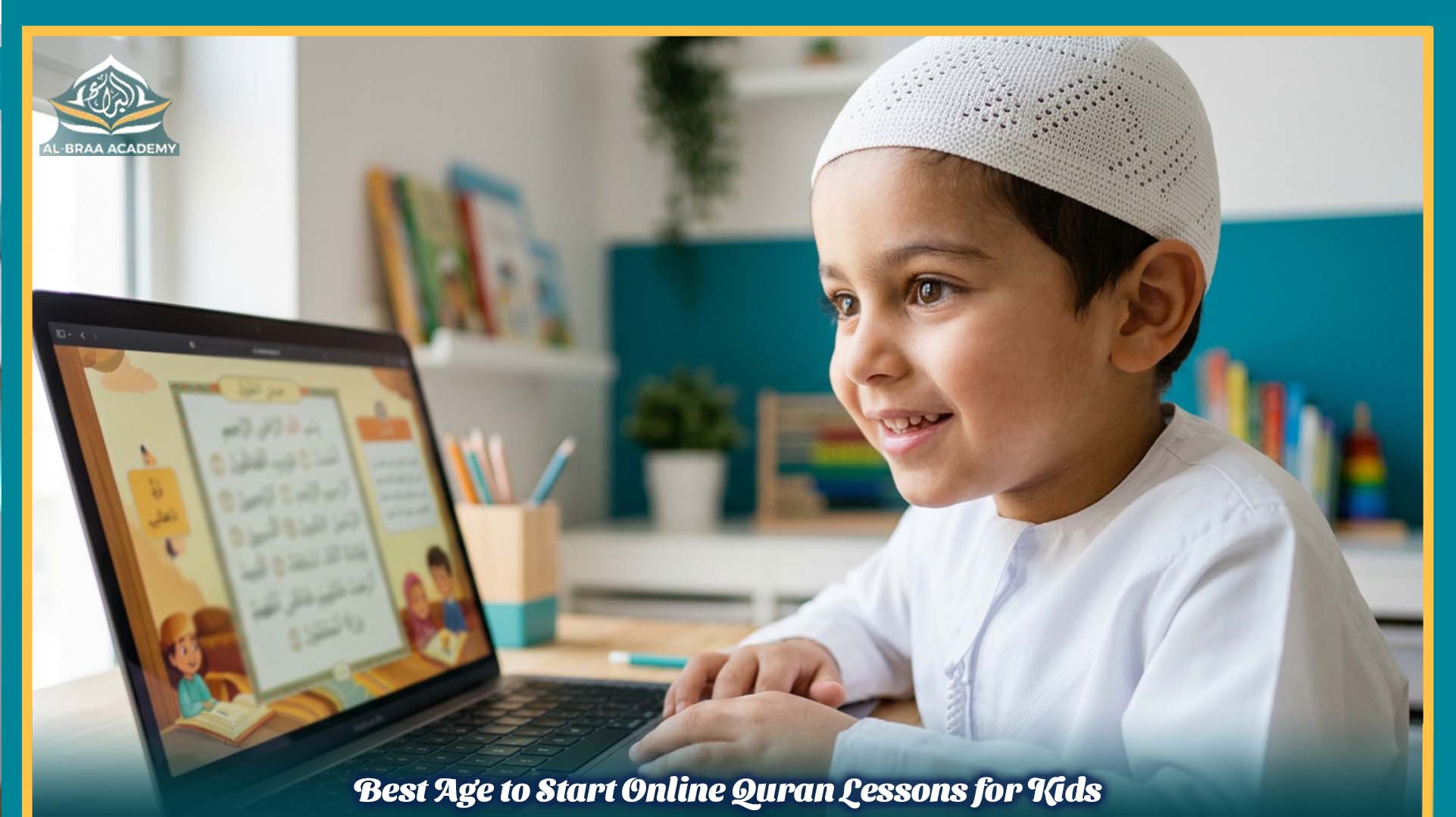
How We Track Progress in Our Quran Classes for Kids
Every parent enrolling in quran classes for kids wants visibility into real progress, not just attendance. Teachers share short written updates after key milestones so you can see exactly which surahs have been memorized and which Tajweed rules still need practice. For general reading on how spaced repetition supports memorization in children, resources like the American Psychological Association describe the same principles we apply in our weekly review sessions.
More Quran & Islamic Learning Options for Kids
Looking for more ways to help your child learn? Explore our Online Noorani Qaida for Kids course, our Online Islamic Academy for Kids, and our Online Arabic Lessons for Kids. You can also browse our full range of Online Quran Classes for Kids, ranked among the Best Online Quran Classes for Kids by our students’ families.