
1. The Islamic Studies program at Al-Braa Academy provides students with a solid foundation in the essential sciences of Islam. Covering subjects such as Fiqh (Islamic jurisprudence), Aqeedah (belief), Seerah (the life of the Prophet ﷺ), Tafseer, and Hadith, this course is designed to strengthen both knowledge and practice.
2. Lessons are taught in a clear and engaging way, making them suitable for children, adults, and new Muslims. The goal is not only to provide information but to help students live by the teachings of Islam in their daily lives with confidence and understanding.
3. Our teachers, graduates of Al-Azhar University, ensure authentic learning while tailoring lessons to each student’s level and needs. With flexible scheduling and bilingual instruction (Arabic and English), the program makes Islamic knowledge accessible to learners worldwide.
Our Online Islamic Studies Program
Islamic Studies at Al-Braa Academy goes beyond memorizing facts, it is built to help students understand the “why” behind Islamic beliefs and practices, so that knowledge translates into everyday character and confidence in their faith. Whether you are enrolling a child who is just starting to learn about their religion, a teenager preparing for more independent worship, or an adult seeking a structured refresher, our one-on-one classes are shaped around where the student currently stands.
What the Curriculum Covers
Our Islamic Studies program is organized around several core areas that build on one another over time. Aqeedah (belief) lessons cover the foundations of Islamic monotheism, the six pillars of Iman, and age-appropriate discussions of the attributes of Allah. Fiqh (jurisprudence) lessons walk through the practical rules of worship, wudu, salah, fasting, zakat, and the basics of halal and haram in daily life, explained with real examples rather than abstract rules to memorize. Seerah (the life of Prophet Muhammad, peace be upon him) is taught chronologically, giving students a narrative understanding of Islamic history rather than disconnected stories. We also cover Islamic manners (Akhlaq), core duas for daily situations, and an introduction to the stories of earlier prophets mentioned in the Quran.
Age-Appropriate Teaching for Every Student
A seven-year-old and a fifteen-year-old need very different explanations of the same core beliefs, and our teachers adjust accordingly. Younger students learn through storytelling, simple repetition, and visual explanation, while older students and adults engage in more detailed discussion, including the reasoning (hikmah) behind rulings and space to ask harder questions without feeling judged. For adult learners in particular, we recognize many are returning to structured Islamic education after years away from it, and lessons are paced to rebuild foundational knowledge without feeling remedial or slow.
One-on-One Format, Real Conversation
Because every class is one-on-one, Islamic Studies lessons at Al-Braa Academy are genuinely conversational rather than lecture-style. Students are encouraged to ask questions as they come up, about a Fiqh ruling that seems to conflict with something they heard elsewhere, about a Seerah event they want explained in more depth, or about how a concept applies to a real situation in their own life. Teachers are trained to answer honestly and, where there is legitimate scholarly difference of opinion, to explain that rather than presenting a single view as the only one.
How Islamic Studies Fits With Quran and Arabic Learning
Many of our students combine Islamic Studies with our Quran and Arabic language programs, since the three reinforce each other naturally, understanding the meaning behind a verse deepens Quran recitation, and a growing Arabic vocabulary makes Islamic terminology easier to grasp in its original language rather than only in translation. That said, Islamic Studies can also be taken entirely on its own for students who want to focus specifically on belief, worship, and history without additional Quran or language components.
Certified Teachers You Can Trust
Islamic Studies touches on sensitive and foundational aspects of a child’s upbringing, which is why we are selective about who teaches it. Our Islamic Studies teachers have formal study of Aqeedah and Fiqh, typically from recognized Islamic institutes, and are chosen not just for what they know but for how clearly and patiently they can explain it to students of different ages. If you would prefer a female teacher for a daughter or a teacher experienced specifically with a particular age group, let us know when you enroll.
Getting Started
New students begin with a free trial class so you can see how a teacher explains concepts and how your child responds before committing to a regular schedule. From there, we build a weekly plan around your family’s availability, with progress updates so you always know what topics have been covered and what is coming next. Contact us to get started, or explore our other programs on the programmes page.
Frequently Asked Questions
What age can start Islamic Studies classes?
We work with students from around age five through adulthood. Lesson content and pacing are adjusted to the student’s age and existing knowledge rather than following a single fixed curriculum for everyone.
Do I need any prior knowledge to enroll?
No. Many students, both children and adults, start with very little formal Islamic education and build up from the basics. Our teachers assess your starting point in the first session and plan accordingly.
Is this suitable for adults, not just children?
Yes. A significant number of our Islamic Studies students are adults looking to deepen or refresh their understanding of their faith, and lessons for adult students are structured with more depth and discussion than our children’s curriculum.
How Progress Is Measured
Unlike subjects with standardized tests, Islamic Studies progress is measured through consistent conversation and application rather than memorized answers alone. Teachers regularly check whether a student can explain a concept in their own words, apply a Fiqh ruling to a new scenario, or retell a Seerah event with the correct sequence and lesson attached to it, not just recite a definition. Parents receive periodic summaries covering which topics have been completed, which are in progress, and any areas where extra review would help.
A Typical Class Session
Sessions usually begin with a short review of the previous lesson, both to reinforce retention and to give the teacher a quick sense of what stuck and what needs revisiting. The bulk of the class is spent on new material, presented through explanation, guided questions, and, for younger students, stories and examples that make abstract ideas concrete. Classes typically close with a short recap and, where relevant, a simple practical takeaway the student can apply that same day, such as a dua to memorize or a point of etiquette to practice.
Why Structured Islamic Studies Matters
Children and adults alike often pick up fragments of Islamic knowledge informally, from family, from social media, from mosque khutbahs, without ever building a coherent, structured foundation. This can leave gaps or, in some cases, misunderstandings that go uncorrected simply because no one walked through the fuller picture in order. A structured program addresses this directly: concepts are introduced in a logical sequence, prerequisite ideas are covered before more advanced ones build on them, and a dedicated teacher is available to correct misunderstandings as they surface rather than letting them persist.
Supporting Character Development, Not Just Knowledge
Islamic Studies at Al-Braa Academy is not only about facts and rulings, a meaningful part of every course track is Akhlaq, or Islamic character and manners. Lessons cover honesty, kindness, patience, respect toward parents, and how the example of the Prophet Muhammad (peace be upon him) applies to everyday situations a student actually faces, whether that is handling conflict with a sibling, staying honest at school, or being consistent in worship without a parent reminding them. The goal is a student who not only knows what Islam teaches but is actively encouraged to practice it.
How long does a typical Islamic Studies program take?
There is no single fixed length, some families continue for years as an ongoing part of their child’s upbringing, while others focus on a specific unit, such as Fiqh of worship, over a few months. Your teacher can suggest a realistic timeline once they understand your goals.
Can Islamic Studies be combined with school or other commitments?
Yes. Most of our students attend regular school alongside their Islamic Studies classes, and sessions are scheduled around that, typically one or two sessions per week at a time that does not compete with homework or other activities.
Ready to Begin?
If you are unsure whether your child, or you, should start with Islamic Studies, Quran, or Arabic first, our team is happy to talk through your goals and suggest a starting point during a free consultation. Many families end up combining two or three programs once they see how naturally they reinforce one another, but there is no requirement to commit to more than one at the outset. Book a free trial class today and let your teacher build a plan around exactly where you are right now.
Whatever your starting point, our team is glad to talk through the right path forward with you.
Who Benefits Most from Online Islamic Studies Classes
Our online Islamic studies classes suit students at very different stages: children building their first vocabulary of Islamic concepts, teenagers preparing for more structured study, and adults who want a clear, teacher-guided overview rather than scattered self-study. Every online Islamic studies class here is planned around the individual student, with topics such as Aqeedah basics, Fiqh of worship, and Seerah introduced gradually and reviewed regularly so the material actually sticks.
How We Structure Online Islamic Studies Classes for Steady Progress
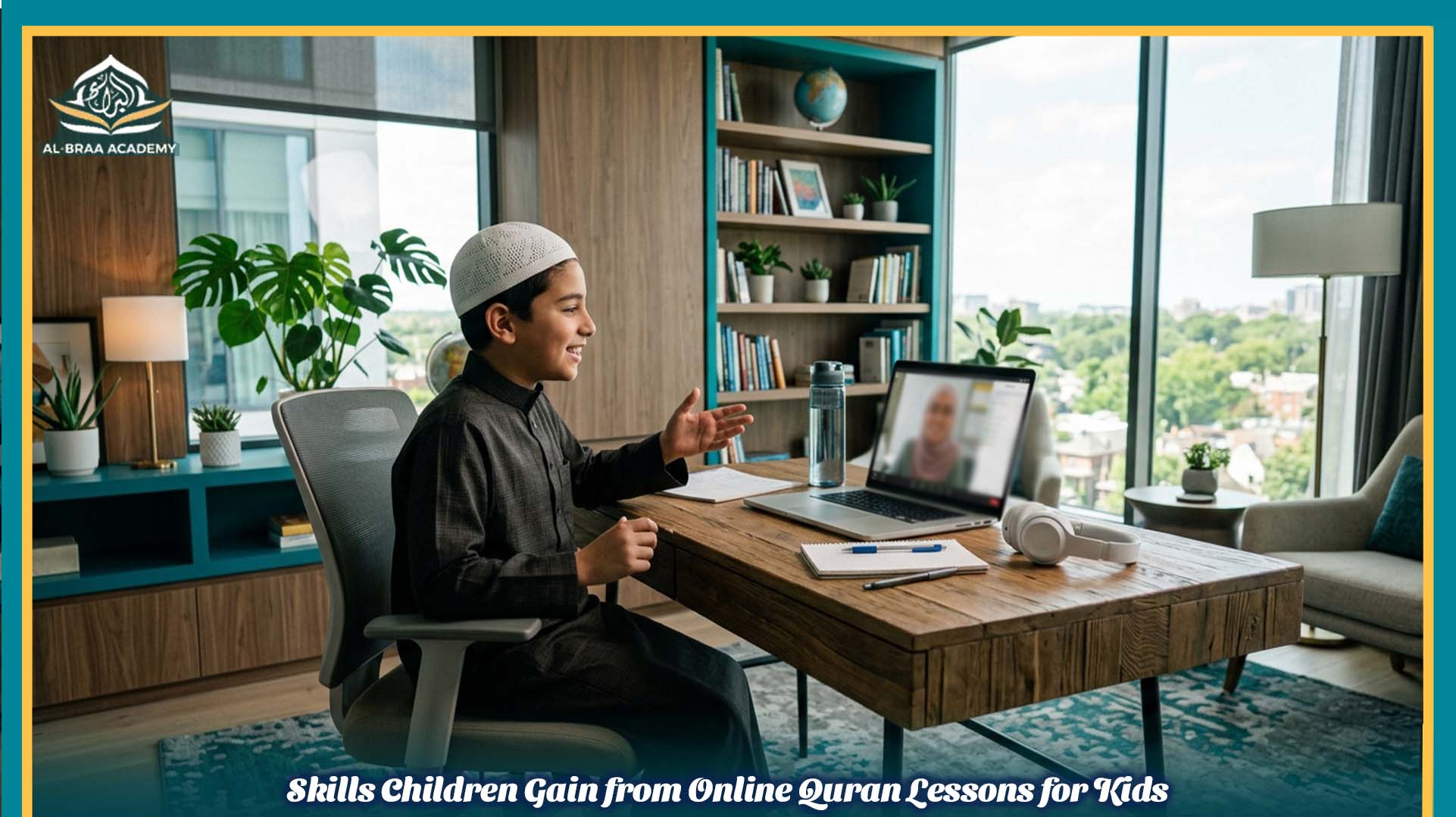
Each of our online Islamic studies classes follows a simple loop: a short review of the previous lesson, new material explained in plain language, and a few minutes of guided discussion so the teacher can check understanding before moving on. Independent education researchers, including those cited by UNESCO, note that this kind of spaced review meaningfully improves long-term retention, which is exactly why we build it into every session rather than treating it as optional.
Explore More Islamic Studies Options
Deepen your knowledge with our Islamic Classes Online, our practical Islamic Manners Online Course, and our comprehensive Islamic Online Quran Academy. Students in the US can join our Islamic Online School for Quran Learning in the USA, and beginners can learn Fiqh online with qualified teachers.