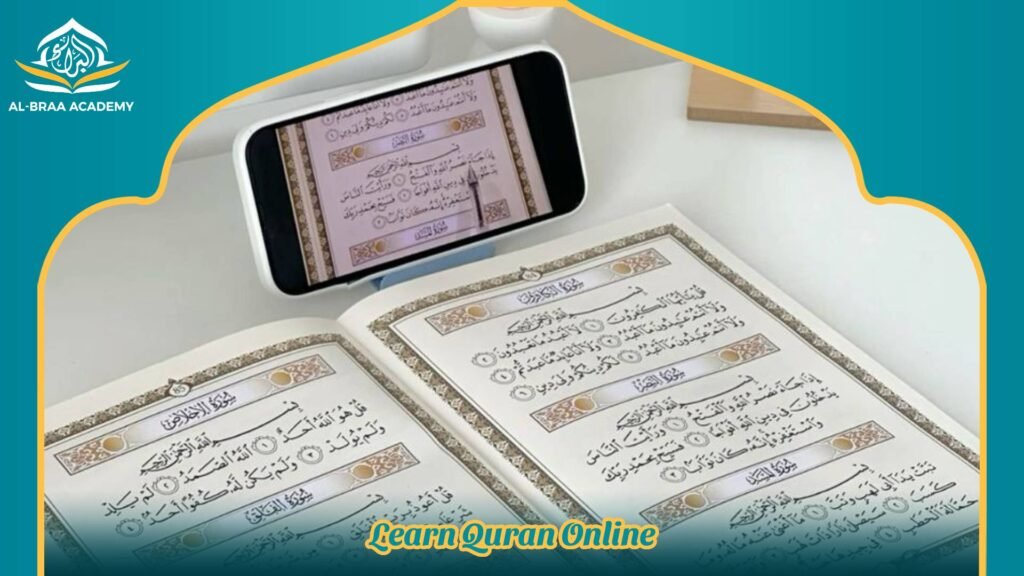
Quran tuition online gives learners a practical way to study the Quran with structured guidance without having to attend a physical learning center. Instead of relying only on self-study, students can work with a teacher who listens to their recitation, identifies areas that need improvement, and adjusts the lesson according to their current level.
For beginners, this approach can make the first steps less confusing. The learner may start with Arabic letters, correct pronunciation, and basic reading skills before moving toward Tajweed, recitation, or memorization. More experienced students, on the other hand, may need focused correction rather than introductory instruction.
The quality of an online Quran learning experience depends on several factors. These include the teacher’s ability to explain clearly, the structure of the lessons, the learner’s consistency, and the suitability of the study plan. Therefore, choosing a program should involve more than looking for an available class.
For families considering online Quran education, Al Braa Quran Academy can provide a starting point for exploring guided Quran learning and selecting lessons according to the learner’s needs.
What Can You Learn Through Quran Tuition Online?

quran tuition online refers to Quran instruction delivered through live internet-based lessons between a student and a Quran teacher. The format can support different learning goals, including Quran reading, pronunciation, Tajweed, memorization, and revision.
Unlike independent study, live tuition allows the learner to receive direct feedback. For example, a teacher can hear how a student pronounces a letter and explain how to correct it. Similarly, a memorization student can recite a passage while the teacher identifies mistakes immediately.
The online format also changes how learners organize their study time. Instead of traveling to a learning center, they can attend lessons from a suitable location at home. This can be particularly useful for parents, working adults, university students, and learners whose daily schedules vary.
However, online tuition still requires active participation. A stable internet connection, a quiet learning environment, suitable lesson times, and regular practice can all influence the experience.
As a result, online Quran tuition should not be viewed simply as a digital replacement for a classroom. It is a learning format that works best when the teacher, student, schedule, and curriculum are properly matched.
Start Your Quran Journey With Al Braa Quran Academy Today
If you are ready to begin a meaningful journey with the Holy Quran, Al Braa Quran Academy is here to guide you step by step. Our qualified teachers help you improve your Quran recitation, understand Tajweed rules, and build strong confidence in reading the Quran correctly.
Moreover, you can join flexible online classes designed to suit all ages and learning levels. As a result, you can learn at your own pace while maintaining consistency and focus. In addition, our structured lessons ensure steady progress and a clear understanding. Start today and take the first step toward mastering Quran reading with clarity, consistency, and a strong spiritual connection.

Who Can Benefit From Quran Tuition Online?
quran tuition online can serve learners at very different stages. A complete beginner may need to start with the Arabic alphabet and basic reading, while another student may already read fluently but want to improve Tajweed.
Children can benefit when lessons are adapted to their age and attention span. Adults may need a different pace because they often balance Quran study with work, family, and other responsibilities. Meanwhile, learners who have studied the Quran before may prefer revision, correction, or memorization support. The main groups that may consider online tuition include:
- Complete beginners: Students starting with Arabic letters and basic reading.
- Children: Young learners who need gradual instruction and engaging practice.
- Adults: Students returning to Quran learning or starting later in life.
- Tajweed learners: Students seeking more accurate pronunciation and recitation.
- Memorization students: Learners who need regular recitation and revision.
- Returning learners: People who previously studied the Quran but need to rebuild consistency.
Because these needs differ, the same lesson structure will not necessarily work for everyone. A suitable program should therefore begin by understanding the student’s level and objective.
How Does Quran Tuition Online Work?
A typical quran tuition online lesson begins with the student joining a scheduled live session with the teacher. The exact structure can vary according to the learner’s age, level, and goal.
For a beginner, the teacher may first assess letter recognition and pronunciation. After that, the lesson can move gradually into combining letters, reading words, and practicing Quranic passages. Once the student develops a stronger foundation, Tajweed concepts can be introduced at an appropriate pace.
A more advanced student may spend less time on basic reading and more time on recitation correction, memorization, or revision. Consequently, the first lesson or initial assessment can help determine where teaching should begin. A lesson may include:
- A short review of previous material.
- Introduction of a new skill or passage.
- Guided reading or recitation.
- Correction of pronunciation mistakes.
- Practice under the teacher’s supervision.
- A brief review of what should be practiced before the next class.
This structure gives the learner a clear connection between one lesson and the next. More importantly, it helps prevent students from moving ahead while repeatedly making the same mistakes.
Quran Tuition Online for Beginners
quran tuition online can be especially useful for beginners because early mistakes can become habits when they are not corrected. A learner may recognize Arabic letters but still struggle to pronounce them correctly or connect them while reading.
For this reason, beginner instruction should move gradually rather than introducing advanced rules too quickly. The learner first needs a reliable foundation. A beginner’s learning path may include:
- Recognizing the Arabic alphabet.
- Distinguishing between similar-looking letters.
- Practicing correct letter sounds.
- Learning short vowels and basic signs.
- Combining letters into readable words.
- Developing smoother Quran reading.
- Introducing essential Tajweed rules.
- Practicing short Quranic passages.
The teacher’s role is important throughout this process. Instead of simply telling the student to repeat a word, an effective explanation identifies what caused the mistake. The learner can then practice the specific sound or reading pattern before returning to the full verse.
At Al Braa Quran Academy, beginners can explore structured Quran instruction that focuses on building skills progressively rather than expecting immediate fluency.
What Should Beginners Learn First?
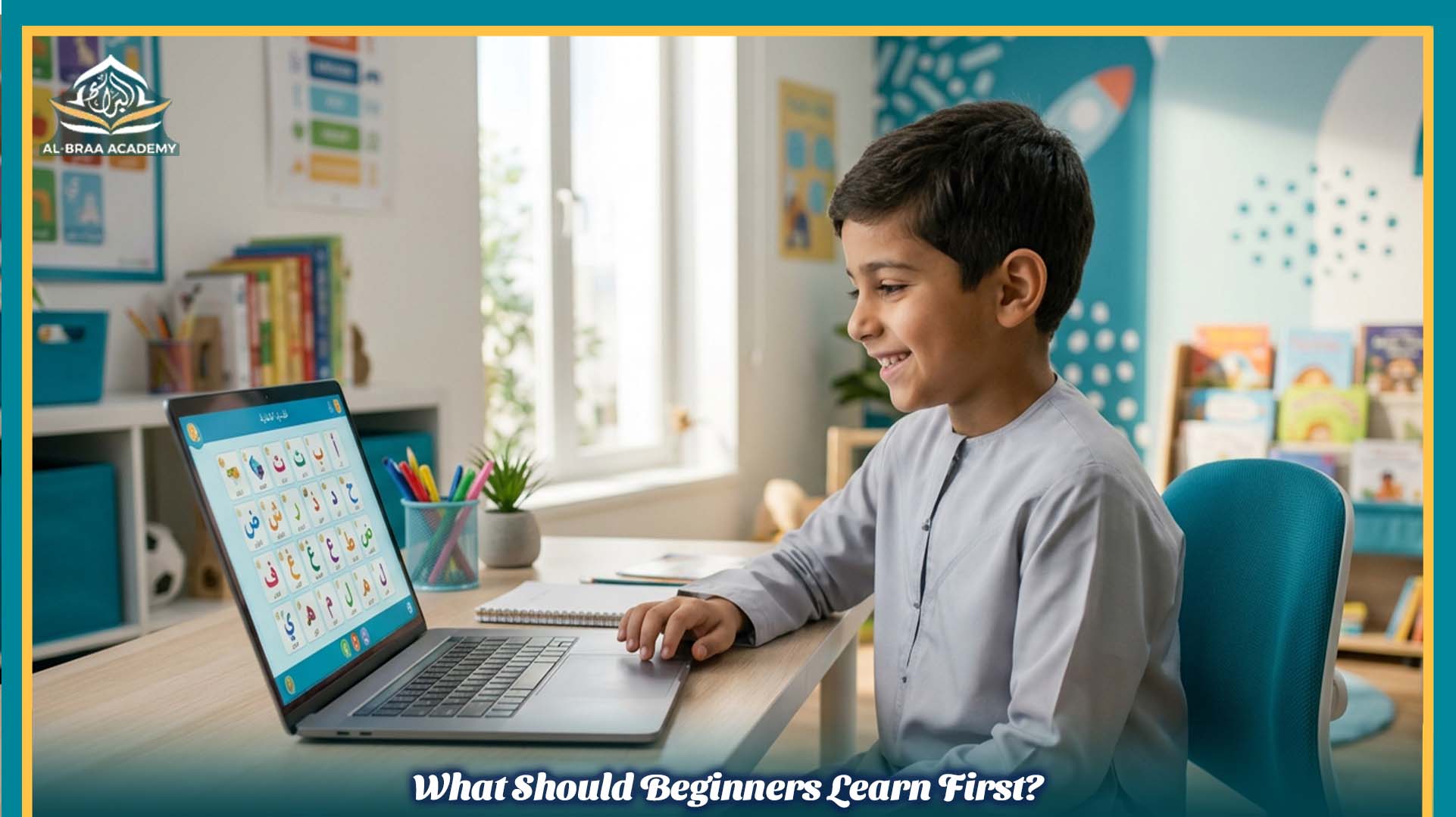
A common mistake among new learners is trying to memorize large amounts of Quran before developing accurate reading skills. Although memorization can be part of a learning plan, beginners often benefit from establishing pronunciation and reading fundamentals first.
The exact order may differ from one learner to another. Nevertheless, several areas usually deserve attention at the beginning:
Arabic Letter Recognition
Students need to recognize the letters quickly enough to read without stopping at every symbol. Similar letters should be practiced carefully so that visual recognition becomes more reliable.
Correct Pronunciation
Arabic contains sounds that may not exist in a learner’s first language. Therefore, simply knowing the written form of a letter does not guarantee correct pronunciation.
Basic Reading Skills
Once individual letters are familiar, the student can practice joining them into words and reading short passages. Repetition is useful here, especially when it is guided by immediate correction.
Introductory Tajweed
Tajweed should be introduced according to the learner’s level. Beginners do not necessarily need to study every rule at once. Instead, the teacher can introduce the rules that directly affect the student’s current recitation.
This gradual progression can make learning more manageable and give students a clearer sense of progress.
Quran Tuition Online and Tajweed
quran tuition online becomes particularly valuable when the learner wants to improve Quran recitation through Tajweed. Tajweed concerns the correct pronunciation and articulation of Quranic letters and the application of established recitation rules.
A student may know the words being read but still make errors in articulation, elongation, pauses, or other aspects of recitation. Reading silently or relying only on written material cannot always reveal these problems.
With live instruction, the learner recites aloud while the teacher listens. The teacher can then point out the specific error and demonstrate the correct form. Depending on the learner’s stage, Tajweed study may include topics such as:
- Makharij: The points from which Arabic letters are articulated.
- Sifaat: Characteristics associated with Arabic letters.
- Madd: Rules related to elongation.
- Noon and Meem rules: Important pronunciation patterns in Quranic recitation.
- Stopping and starting: Learning how pauses can affect recitation.
The objective should not be to memorize terminology without understanding its application. Instead, students should connect each rule with actual Quranic reading.
Quran Tuition Online for Kids
Children often require a different teaching approach from adults. quran tuition online for kids should take into account of attention span, learning speed, age, and previous exposure to Arabic.
A young child may lose concentration during a long explanation. Therefore, lessons can be divided into shorter activities that alternate between explanation, repetition, reading, and interaction.
Parents can also help by creating a predictable study environment. A regular lesson time, quiet space, and limited distractions may make it easier for the child to focus. For younger learners, useful teaching priorities can include:
- Recognizing letters through repeated exposure.
- Practicing difficult sounds individually.
- Reading short words before longer passages.
- Reviewing previously learned material.
- Encouraging the child without rushing progress.
- Building a regular Quran study habit.
At the same time, parents should avoid comparing one child’s progress with another’s. Children develop reading skills at different rates. A slower pace does not necessarily indicate a lack of ability.
Al Braa Quran Academy can be considered by parents looking for an online setting where Quran instruction can be organized around a child’s learning stage and ongoing practice.
Quran Tuition Online for Adults
Adults frequently approach Quran learning with different circumstances. Some already know how to read Arabic but want to improve recitation. Others may have studied the Quran during childhood and want to rebuild skills after years away from regular practice.
quran tuition online can make this process easier to fit around existing responsibilities. Instead of traveling to a physical class, an adult learner can organize lessons around work, family commitments, or other parts of the day. Adult learners may have goals such as:
- Learning Quran reading from the beginning.
- Correcting long-standing pronunciation mistakes.
- Studying Tajweed in a structured way.
- Memorizing selected Surahs.
- Reviewing previously memorized passages.
- Becoming more consistent with Quran recitation.
Adults can also communicate their difficulties directly to the teacher. For instance, someone who understands the basic rules but struggles with particular letters can focus practice on those areas.
As progress develops, the learning plan can be adjusted. That flexibility matters because adult students may not have the same amount of time available every day.
One-to-One Quran Tuition Online
One-to-one quran tuition online gives the teacher an opportunity to focus on one learner during the lesson. This can be useful when the student needs frequent correction or has a learning pace that differs from a group.
In a group class, a teacher has to divide attention among several students. Consequently, each learner may receive less time for individual recitation. A private lesson removes much of that competition for attention. The benefits of individualized instruction can include:
- Direct correction during recitation.
- Lessons adjusted to the learner’s current level.
- More opportunities for the student to ask questions.
- A pace that can change as skills develop.
- Focused practice on recurring pronunciation problems.
- Clearer tracking of areas that require additional work.
Still, private instruction does not automatically produce progress. The student must participate actively and practice between lessons. Consistency remains an essential part of Quran learning regardless of the teaching format.
How to Choose a Quran Tuition Online Program?

Selecting a quran tuition online program should begin with the learner’s actual needs rather than promotional language. A program that works well for one student may not suit another. Before enrolling, consider the following points:
Teacher Qualifications
Look for clear information about the teacher’s Quran and Tajweed background. If the learner has a specific objective, such as memorization or advanced recitation, the teacher’s relevant experience becomes especially important.
Lesson Structure
Find out whether lessons follow a clear progression. Students should know what they are working toward rather than moving randomly from one passage to another.
Individual Attention
Ask whether the learner will have sufficient time to recite and receive correction. This is particularly important for beginners and students working on pronunciation.
Scheduling
Consider whether the available lesson times fit the student’s routine. A schedule that is difficult to maintain can eventually interrupt learning consistency.
Learning Environment
A quiet room, reliable connection, and appropriate device can make live lessons more productive. Younger children may also need parental support before and after the session.
Communication
The teacher should be able to explain mistakes in a way the student understands. Clear communication is often more valuable than simply increasing the number of lessons.
When evaluating a provider such as Al Braa Quran Academy, learners should focus on how the teaching approach matches their level, goals, and preferred learning routine.
Building a Consistent Quran Study Routine
Even the most suitable quran tuition online program needs a consistent learner. Missing lessons frequently or avoiding practice can make progress slower. Listening to skilled reciters can also give learners a useful reference for rhythm, pronunciation, and fluent recitation. Exploring the best quran reciters to listen to online can help students choose recitations that support their regular practice.
A realistic routine is usually easier to maintain than an ambitious schedule that quickly becomes difficult. For example, a student may choose specific days for live lessons and reserve shorter periods for individual review. A simple routine can involve:
- Reviewing the previous lesson before the next class.
- Practicing difficult letters or rules separately.
- Reading a small amount of Quran regularly.
- Recording recurring mistakes in a notebook.
- Revising memorized passages instead of always adding new ones.
- Asking the teacher about unclear points during the next lesson.
Progress should also be evaluated over time rather than after every single class. Some skills develop gradually, particularly pronunciation and fluent reading.
Furthermore, learners should distinguish between learning a rule and applying it correctly. Understanding a Tajweed explanation is only one stage. Repeated recitation is what helps turn that knowledge into practice.
Common Challenges in Online Quran Learning
Online learning offers convenience, but it also has challenges. Understanding them in advance can help students prepare for a better experience.
One issue is distraction. Home environments can include phones, television, family conversations, or other interruptions. Setting aside a dedicated study space can reduce these problems.
Another challenge is inconsistent practice. A student may understand a lesson but forget parts of it after several days without review. Short, regular practice can therefore be more useful than occasional long sessions.
Some beginners also feel embarrassed about making pronunciation mistakes. However, correction is a normal part of Quran learning. Students should expect mistakes and use teacher feedback to improve them. For children who need additional educational support, adapting the lesson to their pace and learning style can make practice more manageable. Parents may also find guidance on how to teach quran to children with learning difficulties useful when supporting Quran study at home.
Technical problems can create another obstacle. Internet interruptions, poor audio quality, or unsuitable devices may affect communication. Testing the equipment before the lesson can help prevent avoidable disruptions.
Finally, students sometimes expect rapid results. Quran learning involves several skills, and they do not always develop at the same speed. A learner may improve letter recognition quickly while needing more time to develop fluent recitation.
How to Make Quran Tuition Online More Effective?
The quality of the learning experience depends on what happens both during and outside the lesson. Students can take several practical steps to make their tuition more productive.
First, arrive prepared. Keep the Quran and any required learning materials available before the class starts. This prevents unnecessary interruptions.
Next, listen carefully to corrections. Instead of simply repeating the corrected word once, practice it several times and try to understand the reason behind the mistake.
Afterward, review the material while the lesson is still fresh. Even a short practice session can reinforce what was covered. For younger learners, adding age-appropriate Islamic material can also make their routine more engaging. For example, prophet stories for kids can complement Quran learning by connecting lessons with meaningful stories and values. It is also helpful to maintain a simple progress record. The learner can write down:
- New rules introduced.
- Letters or sounds that remain difficult.
- Passages that need additional practice.
- Memorization targets.
- Questions for the next lesson.
Over time, these notes can show patterns that are difficult to notice from individual classes. The teacher can then use that information to adjust the learning plan.
For families, parents can support children by asking what they learned rather than testing them constantly. A positive learning environment can encourage children to continue.
What Does a Good Quran Learning Plan Include?
A useful plan should connect the student’s current ability with a realistic next step. quran tuition online works best when the learner knows what is being practiced and why.
For a beginner, the plan may start with reading foundations before moving toward longer Quranic passages. A student who already reads confidently may instead require Tajweed correction or memorization support. A balanced plan can include four elements:
- Assessment: Identify the learner’s current reading and pronunciation level.
- Instruction: Introduce the next appropriate skill or rule.
- Practice: Give the student enough opportunity to apply it aloud.
- Review: Revisit earlier material so that progress remains stable.
The balance can change over time. For example, a student preparing for a religious journey may need to understand the sequence of its rituals and review the practical steps beforehand. A guide such as How to perform Umrah step by step can serve as supplementary reading when the learner wants to connect Quranic study with broader Islamic knowledge.
This approach avoids treating Quran education as a fixed sequence that every student must follow in the same way.
Why does Teacher Feedback Matters?
Teacher feedback is one of the clearest differences between guided tuition and completely independent Quran study. When a student reads alone, it can be difficult to identify an error that has become familiar.
During a live lesson, the teacher can hear the recitation and respond immediately. That makes it possible to address pronunciation before the same mistake is repeated many times.
Good feedback should also be specific. Rather than saying that a reading is simply “wrong,” the teacher can explain which letter, sound, rule, or reading pattern needs attention.
Additionally, learners benefit when feedback is balanced. Constant correction without encouragement can make beginners hesitant, while excessive praise without useful guidance does not help them improve.
The most productive approach combines correction with clear explanation and repeated practice. Students can also strengthen their learning outside class by incorporating beneficial daily Islamic practices into their routine, including the benefits of daily duas and supplications, when appropriate to their personal study goals.
Is Quran Tuition Online Suitable for Complete Beginners?

Yes, provided that the program starts at the learner’s actual level. A person who does not know Arabic letters should not be expected to begin by reading complete Quranic passages independently.
The initial stage can focus on letter recognition, pronunciation, vowel signs, and simple combinations. Gradually, the student can move toward words and short passages.
Beginners should also understand that making mistakes is expected. Learning to read the Quran accurately takes practice, and pronunciation may require repeated correction.
For this reason, choosing a teacher who can explain basic concepts patiently is more important than selecting a program simply because it offers a large number of courses.
Al Braa Quran Academy can be explored as an option for learners who want guided Quran instruction online, while the final choice should depend on the student’s needs and the teaching approach offered.
Frequently Asked Questions About Quran Tuition Online
Here are answers to common questions about quran tuition online, including lesson preparation, learning progress, teacher selection, and what students can expect from online Quran classes.
1. How long does it take to learn Quran reading online?
The time varies according to the learner’s starting level, consistency, pronunciation ability, and amount of practice. Someone familiar with Arabic letters may progress differently from a complete beginner.
2. Can I learn Quran online if I do not speak Arabic?
Yes. Quran reading and Arabic language fluency are not the same skill. A learner can begin with reading and pronunciation fundamentals without already being fluent in Arabic.
3. What should I prepare before my first online Quran lesson?
Prepare a suitable device, a reliable internet connection, a quiet place, and the Quran or learning material requested by the teacher. It is also useful to know your main learning goal.
4. How can I know whether my Quran teacher is suitable for me?
Pay attention to how clearly the teacher explains mistakes, whether you receive enough time to practice, and whether the lessons match your level. A suitable teacher should make the learning process understandable and structured.
In conclusion,quran tuition online can make Quran education more accessible for learners who need guided instruction without attending a physical classroom. Nevertheless, the online format itself is not the main measure of quality. The teacher, lesson structure, learner’s commitment, and suitability of the study plan all matter.
Beginners can start with foundational reading skills, while children may need age-appropriate activities and adults may prefer a flexible routine. Meanwhile, students with previous experience can focus on Tajweed, recitation correction, memorization, or revision.
The best starting point is therefore a realistic assessment of what you already know and what you want to achieve next.
If you are considering Al Braa Quran Academy, explore the available learning options and choose a program that corresponds with your level, schedule, and Quran learning objectives. A clear starting point, regular practice, and constructive teacher feedback can make the journey more organized and sustainable.