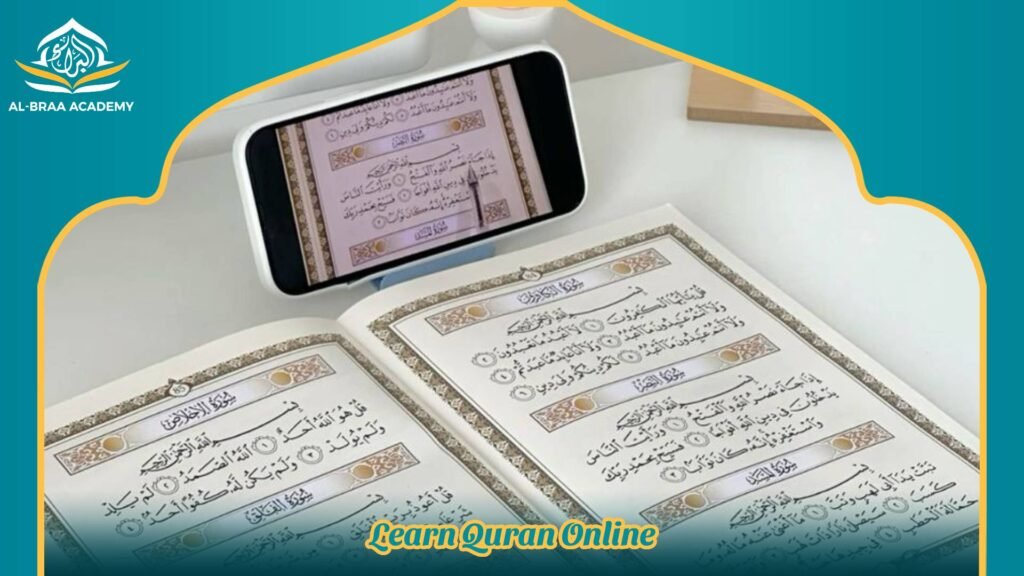
Online Noorani Qaida for kids is one of the best ways to help children build a strong foundation for reading the Holy Quran with confidence and correct pronunciation. At Al Braa Quran Academy, children learn through structured one-to-one online lessons that introduce Arabic letters, proper Makharij, Harakat, and the fundamentals of Tajweed simply and engagingly.
With experienced teachers, interactive teaching methods, and flexible scheduling, parents can ensure their children develop accurate Quran reading skills from the comfort of home. This guide explains why Noorani Qaida is the ideal first step in a child’s Quran learning journey, what children will learn, and how online classes can make the experience both effective and enjoyable.
What Is Noorani Qaida?
Those who found this helpful often continue with our quran courses. Those who found this helpful often continue with our quran.
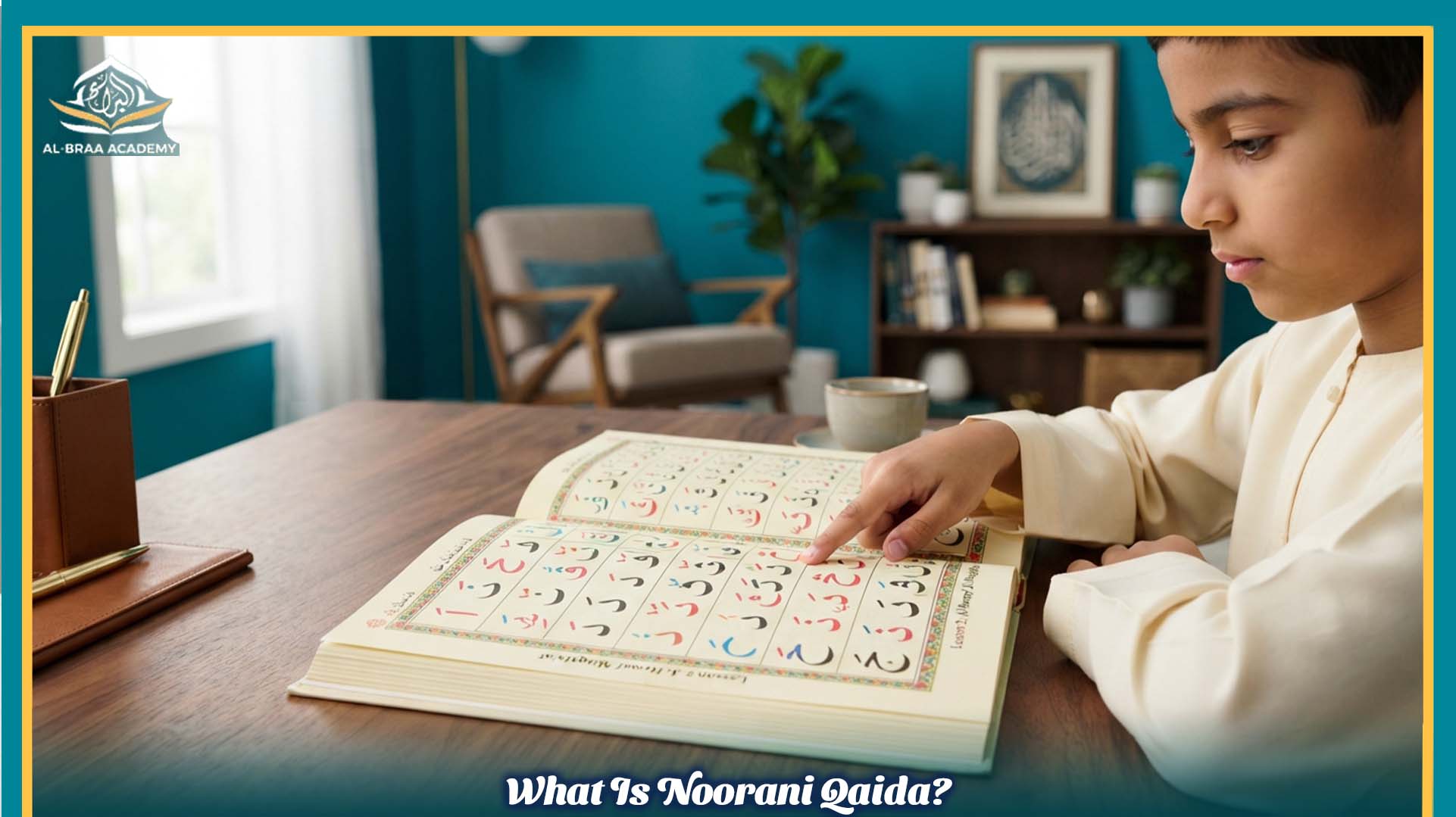
Noorani Qaida is one of the most widely used introductory books for learning Quranic Arabic. It is specially designed to teach beginners—particularly children—how to recognize Arabic letters, pronounce them correctly, and gradually progress toward fluent Quran reading.
Instead of asking children to memorize Quranic verses before understanding Arabic pronunciation, Noorani Qaida introduces every concept in a logical order. Students first learn individual letters, then short vowels, joined letters, words, and finally complete Quranic reading patterns.
This gradual approach allows children to develop their reading ability naturally without feeling overwhelmed. For non-Arabic-speaking children, Noorani Qaida acts as the bridge between learning the Arabic alphabet and confidently reading the Quran.
Start Your Quran Journey With Al Braa Quran Academy Today
If you are ready to begin a meaningful journey with the Holy Quran, Al Braa Quran Academy is here to guide you step by step. Our qualified teachers help you improve your Quran recitation, understand Tajweed rules, and build strong confidence in reading the Quran correctly.
Moreover, you can join flexible online classes designed to suit all ages and learning levels. As a result, you can learn at your own pace while maintaining consistency and focus. In addition, our structured lessons ensure steady progress and a clear understanding. Start today and take the first step toward mastering Quran reading with clarity, consistency, and a strong spiritual connection. Our quran lessons can be a good complement for anyone following this path.

Why Every Child Should Learn Noorani Qaida Before Reading the Quran?
Many parents wonder whether their child can begin directly with Quran recitation. While this may seem like a faster approach, it often creates pronunciation mistakes that become difficult to correct later. Beginning with Noorani Qaida offers several important advantages.
Establishes Correct Pronunciation
Arabic contains sounds that do not exist in many other languages. Letters such as ع، ح، خ، ص، ض، ط، and ق require specific articulation points that children need to learn from the beginning.
Noorani Qaida introduces these sounds gradually, allowing children to pronounce every letter correctly before moving to complete Quranic words.
Prevents Future Reading Errors
Children naturally develop reading habits during their earliest lessons. If those habits are incorrect, fixing them later becomes much more challenging.
Learning Noorani Qaida first helps students build accurate pronunciation from day one, reducing common Tajweed mistakes in future Quran recitation.
Creates Confidence
Children learn best when they experience steady progress. Each completed lesson gives them a sense of achievement, encouraging them to continue learning with enthusiasm rather than frustration.
How does Noorani Qaida build strong Quran Reading Skills?
One reason Noorani Qaida has remained popular for generations is its carefully organized structure. Every lesson prepares students for the next stage without introducing unnecessary difficulty.
- Instead of overwhelming beginners, the book develops one skill at a time.
- Children first recognize Arabic letters.
- Next, they learn how vowels change pronunciation.
- They then practice joining letters together.
- Finally, they begin reading Quranic words and short passages naturally.
This gradual progression allows children to build their Quran reading skills with confidence while strengthening their memory and pronunciation step by step. By learning at a comfortable pace, they stay motivated, understand each lesson thoroughly, and enjoy a positive, engaging learning experience that supports long-term success.
Learning the Arabic Alphabet
The first stage introduces children to every Online Arabic lesson for kids letter individually, helping them recognize each letter’s shape, name, and sound. This essential foundation prepares them to combine letters confidently and read Quranic words correctly. Children learn: This connects closely with our quran kids USA, which many families find useful.
- Letter names
- Letter sounds
- Different letter shapes
- Visual recognition
- Correct pronunciation
Teachers usually combine repetition with visual exercises so children can quickly identify each letter. Young learners especially benefit from hearing and repeating sounds several times until pronunciation becomes natural.
Mastering Makharij (Articulation Points)
One of the most valuable aspects of Noorani Qaida is its emphasis on Makharij. Makharij refers to the exact place from which each Arabic letter is pronounced. For example:
- ق originates from the back of the tongue.
- ت is pronounced by touching the tongue to the upper teeth.
- ح comes from the middle of the throat.
- م is produced using both lips.
Children who master Makharij early usually find Tajweed much easier later because they already understand how every letter should sound. This early training also helps them avoid confusing similar Arabic letters.
Understanding Harakat
After recognizing the Arabic alphabet, students begin learning Harakat, the short vowels used throughout the Quran. These vowel marks teach children how letter sounds change, improving pronunciation, reading fluency, and preparing them for accurate Quran recitation. These include:
- Fatha (َ)
- Kasra (ِ)
- Damma (ُ)
For example, adding Harakat changes how a letter is pronounced: بَ is read as Ba, بِ as Bi, and بُ as Bu. Practicing these combinations helps children develop accurate pronunciation and stronger reading fluency.
Children practice reading hundreds of simple combinations until vowel recognition becomes automatic. This stage dramatically improves reading fluency.
Learning Joined Letters
After mastering individual letters, children learn how Arabic letters connect to form words. This step strengthens reading fluency and prepares them to recognize and read Quranic words with greater confidence and accuracy.
- Arabic letters rarely appear alone inside Quranic verses.
- Instead, they connect with surrounding letters to create complete words.
- Noorani Qaida teaches children how each letter changes its shape depending on its position within a word.
- Students gradually move from reading isolated letters to reading connected syllables, then complete words.
- This transition prepares them to read the actual Quranic text without confusion.
Reading Complete Words
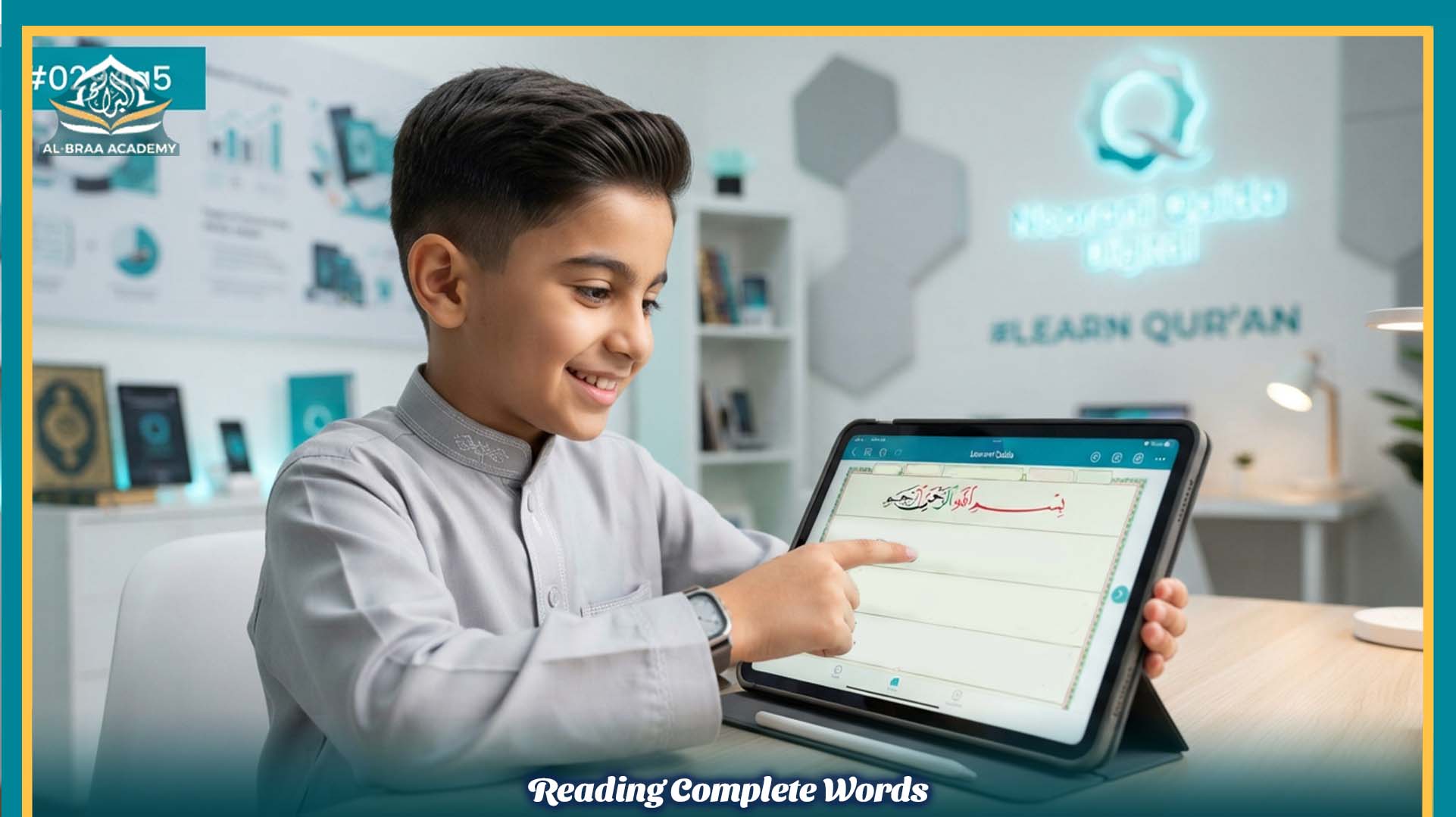
Once children can connect Arabic letters, they begin reading complete words with confidence. This stage improves reading accuracy, strengthens fluency, and prepares them to transition smoothly to reading verses from the Holy Quran.
- Once children recognize connected letters, they begin reading complete Arabic words.
- Instead of memorizing words by sight, they learn to decode each word letter by letter.
- This approach develops independent readers who can confidently read unfamiliar Quranic vocabulary.
- Rather than depending on memorization, children understand how every word is constructed.
- That skill becomes invaluable as they continue studying the Quran.
Introducing Basic Tajweed
Noorani Qaida is much more than an alphabet book. It introduces children to the essential foundations of Tajweed, helping them develop correct pronunciation, proper articulation, and accurate Quran recitation skills from the very beginning. Children gradually become familiar with important concepts such as:
- Sukoon
- Shaddah
- Madd
- Tanween
Learning these rules before beginning Quran recitation helps students develop smooth, beautiful reading habits from the beginning. Instead of correcting mistakes later, children learn the correct method from their very first lessons.
Mastering Sukoon for Smooth Quran Reading
Sukoon teaches children how to pronounce non-vowel letters correctly and connect sounds smoothly while reading. Mastering this rule improves fluency, strengthens pronunciation, and helps children recite the Quran with greater accuracy and confidence.
- Sukoon teaches children how to stop the movement of a letter while maintaining proper pronunciation.
- Although this concept seems simple, it plays an essential role in Quran reading.
- Correct application of Sukoon improves fluency and helps children connect letters naturally.
- As students practice more examples, their reading becomes smoother and more confident.
Learning the Rules of Madd (Elongation)
Madd teaches children how to lengthen specific vowel sounds correctly during Quran recitation. Learning this rule improves fluency, preserves accurate pronunciation, and helps children recite the Quran with proper rhythm and Tajweed.
- Madd refers to elongating certain vowel sounds during recitation.
- Children first learn the basic natural Madd before progressing to longer forms used throughout the Quran.
- Understanding elongation helps preserve the beauty and accuracy of Quran recitation.
- Without proper Madd, the meaning or rhythm of certain words may change.
- Noorani Qaida introduces these concepts gradually, allowing children to develop natural reading habits.
Why does online learning make Noorani Qaida Easier?
Online learning makes Noorani Qaida more accessible and convenient for families worldwide. Children can learn from qualified teachers at home, enjoy interactive lessons, receive personalized guidance, and progress at a pace that matches their individual learning needs.
- Technology has transformed Quran education in remarkable ways.
- Families living in countries without nearby Quran teachers can now provide high-quality Islamic education from home.
- Choosing an online Noorani Qaida for kids allows children to learn in a familiar environment while receiving personalized instruction from qualified teachers.
- Instead of spending time traveling to classes, students can focus entirely on learning.
- Parents also appreciate the flexibility of scheduling lessons around school hours and family routines.
- Online learning has become especially valuable for busy families seeking consistency without sacrificing quality.
Interactive Lessons Keep Children Motivated
Children learn best in online quran classes for kids when lessons are engaging. Modern online classrooms include interactive whiteboards, pronunciation exercises, visual demonstrations, and guided repetition that keep young learners actively involved. Many students pair this with our quran classes kids to round out their learning. For a deeper dive, take a look at our clear quran kids.
Rather than sitting through long lectures, children participate throughout every lesson. Teachers encourage questions, provide immediate corrections, and celebrate progress after every achievement. These positive experiences help children associate Quran learning with enjoyment instead of pressure.
Individual Attention Makes a Difference
One-to-one lessons allow teachers to focus on each child’s strengths and areas for improvement. Personalized guidance helps children learn at their own pace while building confidence and improving their Quran reading skills.
- One-to-one instruction allows teachers to adapt every lesson according to the child’s pace.
- Some children quickly recognize Arabic letters but need extra practice with pronunciation.
- Others may master Makharij early while requiring additional support with joined letters.
- Private lessons ensure no child feels rushed or left behind.
This personalized approach often produces faster progress than crowded classrooms because every minute is dedicated to the student’s development. At Al Braa Online Arabic Academy for kids, individualized learning plans help children progress confidently while maintaining accuracy in every lesson.
How Parents Can Support Their Child’s Learning Journey?

A child’s success in Noorani Qaida does not depend only on the teacher. Parents play a significant role in helping children remain motivated and consistent throughout the learning process.
One of the simplest ways to support a child is by establishing a regular study routine. Even if the daily lesson is only twenty or thirty minutes long, maintaining a consistent schedule helps children develop discipline and retain what they learn more effectively.
Parents can also encourage progress by listening to their child recite newly learned lessons, celebrating small achievements, and creating a calm learning environment free from distractions. Positive reinforcement builds confidence and encourages children to look forward to each class.
It is equally important to avoid comparing children with others. Every child learns at a different pace, and steady progress is always more valuable than rushing through lessons without mastering the basics.
Signs That Your Child Is Progressing Well
As children continue studying Noorani Qaida, parents often wonder whether they are making satisfactory progress. Although every learner develops differently, several signs indicate that the learning process is moving in the right direction.
A child who is progressing well will gradually recognize Arabic letters without hesitation and pronounce them more accurately. Reading speed naturally improves while maintaining clear pronunciation rather than sacrificing accuracy for speed.
Another positive sign is increased confidence. Children begin volunteering to read aloud, asking thoughtful questions, and correcting some of their own mistakes. These behaviors show that they are becoming comfortable with Arabic reading rather than simply memorizing lessons.
As their skills develop, children also become more prepared to transition smoothly into reading the Quran with proper pronunciation and confidence.
Common Challenges Children Face and How to Overcome Them
Learning Arabic is a new experience for many children, especially those growing up in non-Arabic-speaking environments. It is normal for beginners to face certain challenges during the early stages.
Some children initially confuse similar-looking letters, while others struggle with sounds that do not exist in their native language. These difficulties usually disappear through patient instruction, regular revision, and consistent practice.
Another common challenge is maintaining concentration during online Quran classes for kids. Short, interactive sessions with frequent participation often help young learners stay engaged. Teachers who understand child psychology know how to vary activities, encourage participation, and keep lessons enjoyable without compromising educational quality. This connects closely with our best quran classes kids, which many families find useful. It’s worth pairing this with our how to learn quran kids for a fuller picture.
Parents should remember that occasional mistakes are a natural part of learning. The goal is continuous improvement rather than immediate perfection.
Why Qualified Teachers Make a Difference?
The quality of instruction has a lasting impact on a child’s Quran learning journey. Experienced teachers understand not only Tajweed rules but also how children learn best. They know when to introduce new concepts, when to review previous lessons, and how to explain difficult pronunciation in simple, understandable ways.
Effective teachers also provide immediate correction. Instead of allowing pronunciation mistakes to become habits, they gently guide students toward the correct articulation from the beginning. This careful supervision builds strong reading skills that benefit children throughout their Quran studies.
Choosing the Right Online Quran Program
With many online Quran programs available today, parents should carefully evaluate several important factors before enrolling their child.
A high-quality program should offer qualified instructors with strong knowledge of Quran recitation and experience teaching children. Lessons should follow a structured curriculum that progresses gradually rather than rushing students through the material.
Interactive teaching methods are equally important. Young learners benefit from lessons that include visual explanations, repetition, reading practice, and continuous encouragement.
Parents should also look for flexible scheduling, regular progress reports, and opportunities to communicate with teachers about their child’s development.
Families searching for online Noorani Qaida for kids should prioritize educational quality, individualized instruction, and consistency over simply choosing the shortest or least expensive program.
Why do families choose Al Braa Quran Academy?
Many parents seek an online learning environment that combines authentic Quran education with modern teaching methods. Al Braa online Islamic academy for kids focuses on helping children develop strong Quran reading skills through carefully structured Noorani Qaida lessons delivered by qualified teachers. It’s worth pairing this with our egyptian quran teacher for a fuller picture. For learners who want to go further, take a look at our quran lessons kids.
The academy emphasizes correct pronunciation, gradual skill development, and individual attention so that every child can learn acc
ording to their own pace. Lessons are designed to keep young learners engaged while ensuring they understand each concept before moving to the next stage.
Parents also benefit from regular communication regarding their child’s progress, making it easier to support learning at home and celebrate every milestone.
For families looking for online Noorani Qaida for kids, choosing a structured program with experienced teachers can make the learning journey more enjoyable and far more effective.
From Noorani Qaida to Confident Quran Reading
Completing Noorani Qaida marks the beginning of a lifelong relationship with the Quran rather than the end of the learning journey.
Once children master Arabic letters, pronunciation, Harakat, Makharij, and the basic rules of Tajweed, they possess the tools needed to approach Quran recitation with confidence. Instead of struggling to recognize words, they can focus on improving fluency, deepening their understanding of Tajweed, and strengthening their connection with the Book of Allah.
This strong foundation also makes future goals—such as Quran memorization and advanced Tajweed studies—much easier to achieve.
Frequently Asked Questions: Online Noorani Qaida for Kids
Find answers to the most common questions about online Noorani Qaida for kids, including class requirements, learning methods, and what parents can expect.
What is the best age for a child to start Noorani Qaida?
Most children can begin learning Noorani Qaida between the ages of four and six, depending on their ability to recognize letters, follow simple instructions, and maintain attention during short lessons.
Do children need previous knowledge of Arabic before starting?
No. Noorani Qaida is specifically designed for complete beginners. It starts with the Arabic alphabet and gradually introduces pronunciation, reading skills, and foundational Tajweed concepts without requiring any prior Arabic knowledge.
How often should children attend Noorani Qaida lessons?
For consistent progress, most teachers recommend three to five lessons each week, combined with short daily revision sessions at home. Regular practice helps children strengthen their pronunciation and retain what they learn more effectively.
In conclusion, giving children a strong start with Noorani Qaida is one of the best investments parents can make in their Quran education. By learning the Arabic alphabet, mastering correct pronunciation, and understanding the basic rules of Tajweed, children develop the confidence and skills needed to read the Quran accurately and fluently.
With expert guidance, interactive online lessons, and a child-friendly learning approach, Al Braa Quran Academy helps young learners progress step by step in a supportive environment. If you are searching for a reliable program that builds a solid Quran reading foundation, online Noorani Qaida for kids provides the perfect starting point for a successful and lifelong journey with the Holy Quran. For a deeper dive, take a look at our quran lessons.