
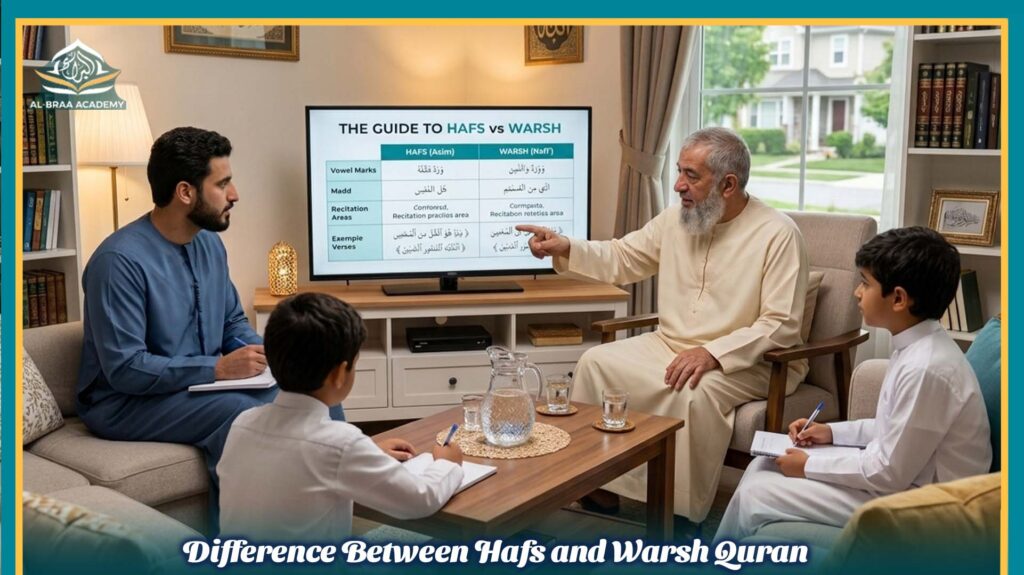
Difference Between Hafs and Warsh Quran Explained Guide
The difference between Hafs and Warsh Quran is a common topic among Quran learners who want to understand why some Muslims recite certain verses with slightly different pronunciations and rhythms. Although these variations may sound different to listeners, they represent authentic methods of Quran recitation that have been preserved carefully throughout Islamic history. Many students who begin learning the Holy Quran ask whether Hafs and Warsh are two different versions of the Quran or whether these recitations have different meanings. However, the truth is that both are authentic narrations of the same Quran that was revealed to Prophet Muhammad ﷺ. The differences between Hafs and Warsh mainly appear in pronunciation, Tajweed rules, vowel sounds, elongation methods, and some linguistic details. Therefore, understanding these differences helps Muslims appreciate the beauty of Quranic sciences and the careful efforts of scholars who transmitted the Quran from one generation to another. Moreover, learning about these recitations gives students a deeper understanding of how the Quran has been preserved with accuracy and precision. Whether a person learns Hafs or Warsh, they are learning the same divine message with the same beliefs, guidance, and teachings. This complete guide explains the history, rules, examples, and learning methods related to Hafs and Warsh while answering the most important questions that Quran students usually ask. What Is the Difference Between Hafs and Warsh Quran Recitations? To understand the Difference Between Hafs and Warsh Quran, we first need to understand the meaning of Quranic recitations and how they were transmitted. Quran recitation, known as Qira’at, refers to the different authentic ways of reading the Quran that were taught through reliable chains of teachers and students. These readings were passed from the Prophet Muhammad ﷺ to his companions and then continued through generations of Quran scholars. The science of Qira’at developed because Arabic has a rich linguistic structure that allows different accepted pronunciations while maintaining the same meaning and message. Among the ten authentic Quran recitations recognized by scholars, Hafs and Warsh are among the most famous and widely practiced. The two main narrations are: Hafs ‘an Asim Warsh ‘an Nafi’ Both narrations follow strict rules of transmission and Tajweed. In addition, both have strong scholarly foundations that confirm their authenticity. They are not separate Qurans. Instead, they are different methods of reciting the same Quranic text. Start Your Quran Journey With Al Braa Quran Academy Today If you are ready to begin a meaningful journey with the Holy Quran, Al Braa Quran Academy is here to guide you step by step. Our qualified teachers help you improve your Quran recitation, understand Tajweed rules, and build strong confidence in reading the Quran correctly. Moreover, you can join flexible online classes designed to suit all ages and learning levels. As a result, you can learn at your own pace while maintaining consistency and focus. In addition, our structured lessons ensure steady progress and a clear understanding. Start today and take the first step toward mastering Quran reading with clarity, consistency, and a strong spiritual connection. Hafs ‘an Asim Recitation Explained Hafs ‘an Asim is the most widespread Quran recitation style in the world today. Millions of Muslims learn and memorize the Quran using this narration because most printed Mushafs and digital Quran applications follow the Hafs reading. The narration was transmitted through: Hafs ibn Sulayman Imam Asim ibn Abi Al-Najud The companions of Prophet Muhammad ﷺ Furthermore, Hafs became especially common in many Muslim countries, including: Egypt Saudi Arabia Turkey Pakistan India Indonesia Malaysia Many international Quran learning communities Because of its global availability, most beginners encounter Hafs when they start reading the Quran. In addition, many online Quran teachers use Hafs as the primary recitation for new students. Hafs is known for its clear pronunciation and straightforward Tajweed application, which makes it suitable for beginners and advanced learners alike. Warsh ‘an Nafi’ Recitation Explained Warsh ‘an Nafi’ is another authentic Quranic narration that has been preserved through a strong chain of Quran scholars. This narration comes from: Warsh Imam Nafi’ of Madinah Earlier Quran teachers who transmitted the recitation Warsh is especially popular in North and West Africa, where many Muslim communities have maintained this tradition for centuries. Countries where Warsh is commonly practiced include: Morocco Algeria Tunisia Mauritania Parts of Libya Several regions in West Africa Furthermore, many Quran students in these areas memorize the entire Quran using Warsh from a young age because local Quran schools continue teaching this narration. Although Warsh may sound different from Hafs, it follows the same Quranic text and represents a respected method of Quran recitation. Why Do Different Quran Recitations Exist in Islam? Many beginners wonder why Muslims have different ways of reciting the Quran. Therefore, understanding the history of Qira’at helps answer this important question. The Prophet Muhammad ﷺ taught the Quran to his companions using different accepted forms of recitation. These forms helped various Arab tribes read and memorize the Quran according to their linguistic abilities. However, these variations never changed the main message of the Quran. Instead, they reflected the flexibility and richness of the Arabic language. Over time, Quran scholars created detailed systems to preserve each authentic reading. Every accepted Qira’ah needed to meet important conditions, including: A reliable chain of transmission from qualified teachers. Agreement with the Arabic language rules. Compatibility with the Uthmani script of the Quran. Therefore, Hafs and Warsh represent examples of the remarkable preservation of Quranic knowledge. Main Difference Between Hafs and Warsh Quran Explained The Difference Between Hafs and Warsh Quran appears in several technical areas related to Quran pronunciation and recitation. These differences include: Tajweed rules. Vowel pronunciation. Madd and elongation. Hamzah treatment. Stopping and starting rules. Some word pronunciation patterns. However, these differences do not affect the message, beliefs, or teachings of the Quran. Instead, they show the depth of Quranic sciences and the careful methods used by scholars to preserve every detail of recitation. Difference Between Hafs and Warsh Quran in Pronunciation Rules One of the most noticeable differences between