Signs your kid is progressing in Quran learning are not always measured by how many verses a child memorizes or how quickly they complete their lessons. Real progress involves several skills, including recognizing Arabic letters, reading words correctly, improving pronunciation, memorizing verses, and developing a positive relationship with the Quran.
As a parent, you may sometimes wonder whether your child is learning at the right pace. Perhaps your child still makes mistakes during recitation or needs help remembering certain verses. However, these situations do not necessarily mean that learning has stopped.
Children develop Quran reading skills gradually, and even small improvements can make a meaningful difference. Understanding what to look for helps you recognize your child’s achievements and provide the right encouragement. Here are ten practical indicators that can help you understand your child’s Quran learning progress.
Recognizing Arabic Letters Without Constant Help
One of the earliest improvements appears when children begin recognizing Arabic letters independently.
At first, your child may confuse letters with similar shapes, such as ب، ت، and ث. They may also need repeated reminders to remember the correct sounds.
With regular practice, these difficulties usually become easier to manage. If your child can identify letters without looking at a chart or asking for help every time, this is one of the clearest signs your kid is progressing in quran learning.
Parents can support this stage through short exercises and letter recognition games. Children who need additional foundational practice may benefit from structured madani qaida online classes that introduce Arabic reading step by step.
Reading Complete Quranic Words More Smoothly
Recognizing individual letters is only the beginning. The next important step is learning how to connect them to read complete words.
For example, a child who previously pronounced every letter separately may gradually become able to read familiar Quranic words without stopping after each sound.
You may notice that your child needs fewer prompts and can complete short verses more independently. These are encouraging signs your kid is progressing in Quran learning.
Give your child enough time to practice familiar words before introducing longer passages. Reading comfortably is more important than rushing through a lesson.
Pronouncing Arabic Letters More Accurately
Reading fluency and correct pronunciation are related, but they are not the same skill. A child may read a verse smoothly while still struggling with certain Arabic sounds.
Pay attention to how your child pronounces letters that have similar sounds or require specific articulation points. For example, they may gradually improve their pronunciation of ع، ح، and ه after receiving appropriate instruction.
This improvement is among the important signs your kid is progressing in Quran learning, even if occasional pronunciation mistakes remain.
A qualified Quran teacher can identify these difficulties and provide suitable exercises without making the child feel discouraged.
Recognizing and Correcting Repeated Mistakes
Making mistakes is a normal part of learning. What matters is whether children gradually become aware of them and improve their reading.
Imagine that your child repeatedly confused two similar letters during previous lessons. After some practice, they begin noticing the difference and correcting themselves before the teacher intervenes.
This ability to recognize and reduce recurring errors is one of the valuable signs your kid is progressing in Quran learning.
Parents can also benefit from understanding common mistakes in Quran recitation to recognize difficulties that may need additional attention.
Memorizing Short Surahs and Remembering Them Later
Memorization is another area where parents can observe meaningful development. A child may initially memorize only a few verses at a time. Later, they may remember longer passages or recite familiar surahs with fewer reminders.
However, memorizing a surah once does not necessarily mean the child has retained it. A better indicator is the ability to recite previously learned verses after several days without starting from the beginning again.
These achievements are positive signs your kid is progressing in Quran learning, especially when new memorization is supported by regular revision.Encourage your child to review familiar surahs instead of focusing entirely on learning new ones.
Becoming More Independent During Quran Practice
Children often depend on parents or teachers for every instruction when they first begin learning.
As their confidence develops, they may start preparing their learning materials, opening the Quran independently, or reviewing previous lessons without being reminded repeatedly.
For example, your child might decide to practice a familiar surah before the next lesson or attempt to read a difficult word before asking for help. This growing independence is another example of signs your kid is progressing in Quran learning.
Parents can encourage this behavior by giving children small responsibilities while remaining available whenever they need guidance.
Showing Genuine Interest in Quran Lessons
A child’s attitude toward learning deserves attention just as much as reading and memorization skills. You may notice that your child asks when the next Quran lesson will take place, enjoys listening to recitation, or voluntarily practices a surah they recently learned.
Such behaviour suggests that Quran learning is becoming a positive part of their routine. These are meaningful signs your kid is progressing in Quran learning, although interest may naturally change from one day to another.
Avoid forcing children to practice when they are exhausted. A comfortable learning environment and reasonable expectations can help maintain their motivation.
Understanding Basic Tajweed Rules
As children become more comfortable with Quran recitation, they can gradually begin learning basic Tajweed rules.
For example, they may recognize when a particular sound requires a specific pronunciation or understand why certain letters are pronounced differently in different situations.
A useful way to assess this development is to see whether your child can recognize a familiar rule in a new Quranic example rather than simply repeat its definition.This practical application is among the important signs your kid is progressing in Quran learning.
Parents interested in understanding one of these rules can explore Ikhfa Rules in Tajweed to become more familiar with this aspect of Quranic recitation.
Remembering Previous Lessons With Fewer Reminders
Progress does not only mean learning something new. It also involves retaining previously learned material.
Try asking your child to read a short passage from an earlier lesson. If they can remember the words and pronounce them more accurately than before, this indicates that their skills are becoming more established.
For example, a child who needed frequent corrections when reading Surah Al-Ikhlas may eventually recite it independently with greater confidence.
Consistent retention is one of the strongest signs your kid is progressing in Quran learning because it shows that learning continues beyond the classroom. A simple weekly revision schedule can help reinforce these skills.
Developing a Positive Connection With the Quran
Perhaps the most meaningful improvement is when children begin to see the Quran as more than a school subject or a daily assignment.
They may listen attentively to recitation, ask questions about familiar surahs, or show curiosity about the meanings of simple verses.
These changes reflect a developing connection with the Quran that goes beyond reading speed or memorization ability.
They are also important signs your kid is progressing in Quran learning, because a positive learning experience can encourage children to continue studying as they grow older.
Parents can strengthen this connection by listening to Quran together, discussing simple Islamic values, and praising their children’s genuine efforts.
How Can Parents Support Their Child’s Quran Learning Progress?
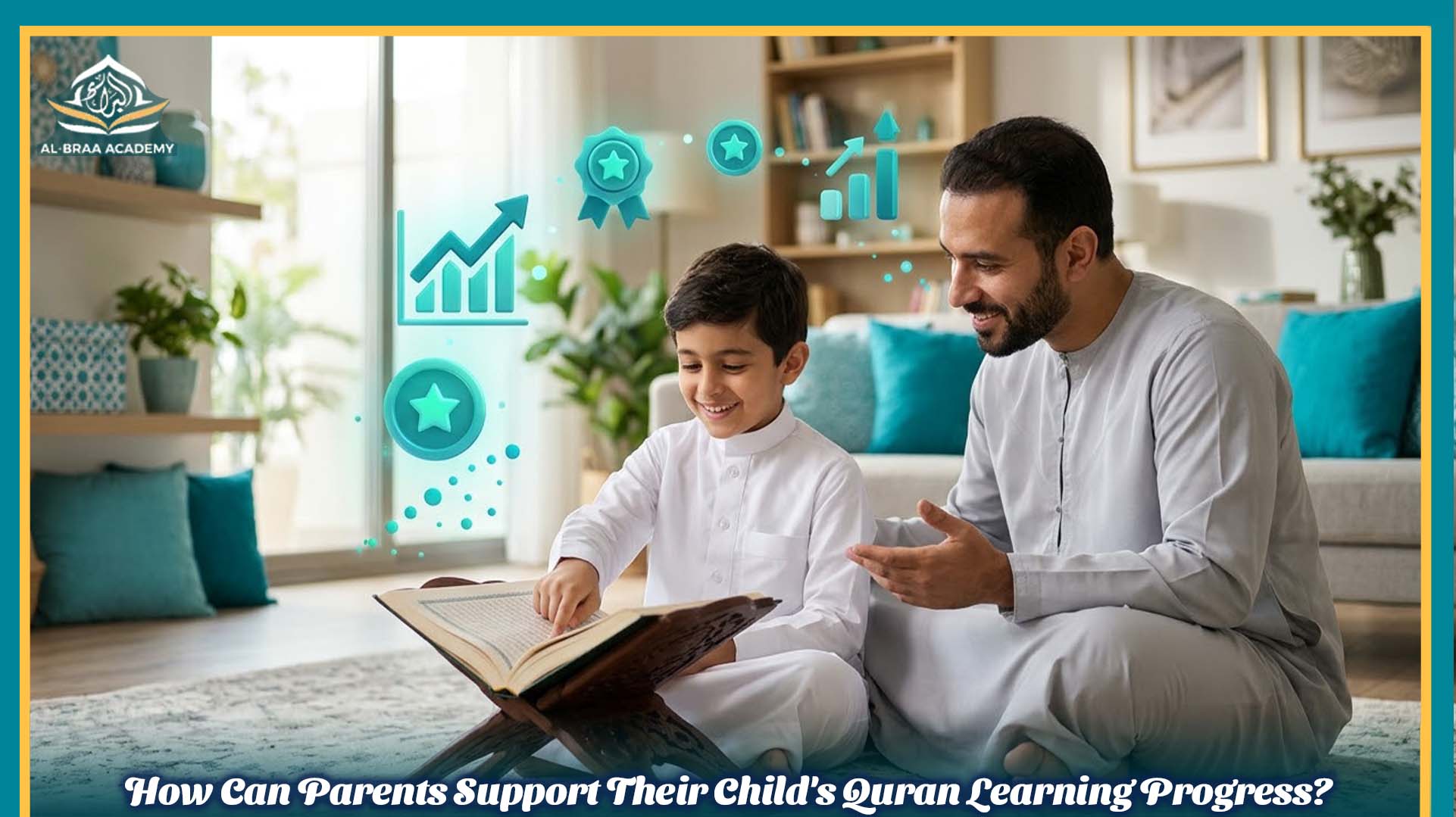
Recognizing improvement is important, but children also need consistent support to maintain their development. Here are five practical ways to help:
- Create a realistic schedule: Set aside a suitable time for Quran practice without making sessions unnecessarily long.
- Celebrate small achievements: Praise your child for pronouncing a difficult letter correctly or remembering a previously learned verse.
- Make revision part of the routine: Regularly revisit older lessons instead of focusing only on new material.
- Avoid comparing children: Every child develops reading, pronunciation, and memorization skills at a different pace.
- Stay in contact with the teacher: Discuss your child’s strengths, challenges, and the skills that need additional practice.
Families looking for organized Quran instruction can also explore Al Braa Quran Academy and its Quran tuition online option. Parents should discuss the teaching approach, lesson schedule, and their child’s individual learning needs before choosing a suitable program.
Frequently Asked Questions: Signs Your Kid Is Progressing in Quran Learning
The following frequently asked questions about signs your kid is progressing in Quran learning will help parents understand their child’s development and recognize the improvements that matter most.
1. How do I know if my child is learning the Quran correctly?
Look for gradual improvements in letter recognition, pronunciation, reading fluency, memorization, and the ability to apply Tajweed rules. Feedback from a qualified Quran teacher can also help you assess your child’s accuracy.
2. How long does it take for a child to improve Quran reading?
There is no fixed timeline. Progress depends on the child’s age, starting level, lesson frequency, practice habits, and teaching approach. Some children improve within weeks, while others need several months to develop stronger reading skills.
3. Should I correct my child every time they make a recitation mistake?
Not necessarily. Correct important mistakes gently and give your child enough time to understand the correct pronunciation. Too many interruptions may affect confidence and make lessons frustrating.
4. How often should children practice Quran reading?
Short, consistent sessions are generally more helpful than occasional long lessons. Depending on the child’s age and daily schedule, 10–20 minutes of practice can provide a useful starting point.
Conclusion
Every child’s Quran learning journey is different. Some children improve their pronunciation quickly, while others need more time to become confident readers or memorize short surahs.
The important thing is to recognize small achievements rather than expect perfection from the beginning. A child who reads one verse more accurately today than yesterday is already making meaningful progress.
With patience, regular practice, and appropriate guidance, parents can help their children build stronger reading skills and develop a lasting connection with the Quran. Al Braa Quran Academy can be an option for families exploring organized online Quran instruction, while consistent encouragement at home remains an important part of the learning journey.