
What is Islamic Fiqh? is one of the most common questions asked by Muslims, new converts, and anyone interested in learning how Islamic law guides everyday life. Although many people hear the word Fiqh, they often confuse it with Sharia. However, the two concepts are closely connected but not identical. Fiqh represents the human understanding and practical application of Islamic teachings derived from authentic sources. As a result, it helps Muslims worship correctly, conduct business ethically, maintain family relationships, and address modern-day issues according to Islamic principles.
Understanding what Islamic Fiqh is gives Muslims confidence in practicing their religion correctly while appreciating the wisdom behind Islamic rulings. Moreover, whether you are beginning your Islamic studies or looking to deepen your knowledge, learning Fiqh is an essential step.
At Al Braa Quran Academy, students learn Islamic Fiqh alongside Quran recitation, Tajweed, and authentic Islamic knowledge through structured lessons taught by qualified teachers. Consequently, this balanced approach helps learners understand both the evidence behind Islamic rulings and their practical application in daily life.
Guide for Islamic Fiqh

Islamic Fiqh is the science of understanding and interpreting Islamic law through detailed study of the Quran and the authentic Sunnah of Prophet Muhammad ﷺ. Rather than creating new religious laws, Fiqh explains how divine guidance should be understood and applied in different situations. Therefore, it provides Muslims with practical solutions that remain firmly rooted in authentic Islamic teachings.
Simply put, Fiqh provides practical answers to everyday questions such as:
- How should Muslims perform Salah correctly?
- What are the rulings of fasting during Ramadan?
- How is Zakat calculated?
- What makes a business transaction halal?
- What are the Islamic guidelines for marriage and family life?
- How should inheritance be divided?
Because new situations continue to arise throughout history, scholars study Islamic sources carefully to provide rulings that remain faithful to the teachings of Islam while addressing contemporary issues.
Start Your Quran Journey With Al Braa Quran Academy Today
If you are ready to begin a meaningful journey with the Holy Quran, Al Braa Quran Academy is here to guide you step by step. Our qualified teachers help you improve your Quran recitation, understand Tajweed rules, and build strong confidence in reading the Quran correctly.
Moreover, you can join flexible online classes designed to suit all ages and learning levels. As a result, you can learn at your own pace while maintaining consistency and focus. In addition, our structured lessons ensure steady progress and a clear understanding. Start today and take the first step toward mastering Quran reading with clarity, consistency, and a strong spiritual connection.

What Does the Word “Fiqh” Mean?
The Arabic word Fiqh (فقه) literally means deep understanding, comprehensive knowledge, or profound comprehension.
More importantly, unlike general knowledge, Fiqh refers to understanding the wisdom and legal implications behind Islamic teachings. Instead, it focuses on understanding why rulings exist and how scholars derive them from authentic evidence.
- Why a ruling exists.
- When it applies.
- How scholars reached that conclusion.
- What evidence supports it.
Therefore, Islamic scholars describe Fiqh as the science of understanding Allah’s guidance through detailed study and careful reasoning.
What Is the Difference Between Fiqh and Sharia?
One of the biggest misunderstandings about what Islamic Fiqh is is assuming that it is the same as Sharia. However, although the two terms are closely related, they have different meanings.
In other words, Sharia represents Allah’s perfect guidance, while Fiqh represents the scholarly effort to understand and implement that guidance in practical situations. Therefore, qualified scholars may sometimes differ in secondary legal matters while remaining united upon the same Quran and Sunnah.
Why Is Islamic Fiqh Important?
Without Islamic Fiqh, many Muslims would struggle to understand how to apply Islamic teachings to real-life situations. Instead, Fiqh provides practical guidance for every stage of life, including worship, family relationships, financial matters, and ethical conduct.
Furthermore, studying what Islamic Fiqh is builds confidence and helps Muslims worship Allah with knowledge rather than imitation. Fiqh provides practical guidance for every stage of life, including:
- Daily worship
- Family relationships
- Financial transactions
- Ethical business practices
- Community responsibilities
- Personal conduct
- Social justice
Instead of leaving people uncertain about religious matters, Fiqh offers structured guidance rooted in authentic Islamic sources.
Likewise, for beginners, studying what Islamic Fiqh is builds confidence and helps them worship Allah correctly with understanding rather than imitation.
The Main Sources of Islamic Fiqh
Islamic jurists derive rulings from carefully established sources. As a result, every ruling remains connected to authentic Islamic teachings.
The Quran
The Quran is the primary source of Islamic law. Therefore, every discussion in Islamic Fiqh begins with the Quran before scholars examine other evidence. For example, it contains direct guidance on matters such as:
- Prayer
- Fasting
- Charity
- Divorce
- Marriage
- Justice
- Inheritance
- Financial ethics
Every discussion in Islamic Fiqh begins with the Quran.
The Sunnah
The Sunnah explains how Prophet Muhammad ﷺ practiced and implemented the teachings of the Quran. Consequently, Muslims learn fiqh online the practical application of many Quranic commands through authentic Hadith.
Likewise, through authentic Hadith, Muslims learn:
- The correct method of performing Salah.
- Practical rules for fasting.
- Business ethics.
- Family responsibilities.
- Judicial principles.
Without the Sunnah, many Quranic commands would lack practical explanation.
Ijma
When qualified scholars unanimously agree on a ruling based on authentic evidence, this agreement is called Ijma. As a result, it strengthens legal certainty and preserves unity among Muslims.
Ijma strengthens legal certainty and preserves unity among Muslims while preventing confusion in important religious matters.
Qiyas
Not every modern issue is mentioned directly in classical Islamic texts. Therefore, scholars use Qiyas to compare new situations with established rulings that share the same legal reasoning.
Through Qiyas, scholars compare new situations with existing rulings that share the same underlying legal reason.
Examples include:
- Modern financial contracts.
- Medical ethics.
- Digital commerce.
- Contemporary business practices.
This method allows Islamic law to remain relevant while staying faithful to its original principles.
History of Islamic Fiqh
To fully understand what Islamic Fiqh is, it is important to explore how Islamic jurisprudence developed over time. Fiqh did not emerge all at once. Instead, it evolved gradually as Muslims sought guidance for new situations while remaining faithful to the Quran and Sunnah.
After the Prophet’s passing, Islam spread rapidly across different regions. Consequently, scholars carefully studied the Quran and Sunnah to address new circumstances without compromising Islamic manners online course principles.
The Early Development of Islamic Jurisprudence
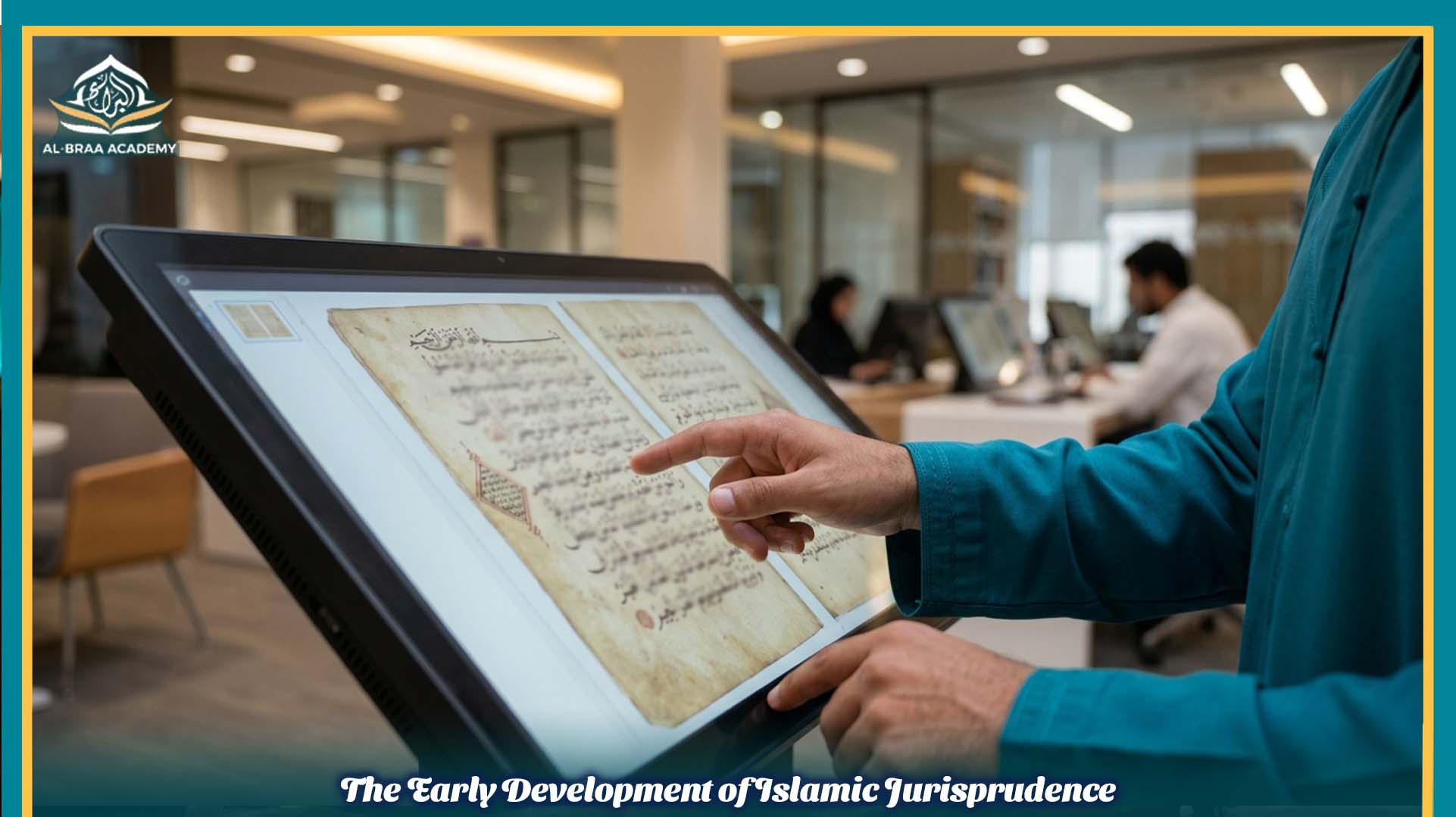
The first generation of Muslims played a vital role in preserving Islamic knowledge. Afterward, their students continued this tradition by teaching communities and answering legal questions based on authentic evidence.
As Islam expanded, scholars encountered entirely new situations. Rather than relying solely on personal opinions, they carefully examined the Quran and Sunnah before reaching legal conclusions.
- New trade systems
- Different marriage customs
- Land ownership issues
- Government administration
- International agreements
- Commercial partnerships
Rather than relying on personal opinions alone, scholars examined the Quran, authentic Hadith, and the established practices of the Prophet ﷺ before reaching carefully reasoned conclusions.
This process allowed Islamic law to remain practical while preserving its original foundations.
History of Islamic Fiqh
To fully understand what Islamic Fiqh is, it is important to explore how Islamic jurisprudence developed over time. Fiqh did not emerge all at once. Instead, it evolved gradually as Muslims sought guidance for new situations while remaining faithful to the Quran and Sunnah. They helped scholars answer questions such as:
- Identify the Quranic verses that apply to a particular issue.
- Evaluate which Hadiths are authentic and legally applicable.
- Understand how apparently different texts should be interpreted together.
- Recognize when analogical reasoning (Qiyas) is appropriate.
- Learn when scholarly consensus (Ijma) becomes legally binding.
This organized approach strengthened the reliability of Islamic legal scholarship and reduced confusion among Muslims.
Imam Al-Shafi’i and the Foundations of Fiqh
One of the most influential scholars in Islamic history was Imam Al-Shafi’i.
He organized the principles used to derive Islamic rulings into a structured legal methodology that continues to guide scholars today.
Furthermore, his work emphasized that Islamic rulings should always prioritize:
1. The Quran
2. The authentic Sunnah
3. Scholarly consensus (Ijma)
4. Analogical reasoning (Qiyas)
By establishing this hierarchy, Imam Al-Shafi’i helped create a unified framework for Islamic jurisprudence that balanced authenticity with careful reasoning.
His contributions continue to influence Islamic legal studies around the world.
The Difference Between Usul al-Fiqh and Furu’ al-Fiqh
When learning what Islamic Fiqh is, students often encounter two important terms: Usul al-Fiqh and Furu’ al-Fiqh. Although they are closely connected, they serve different purposes.
Usul al-Fiqh
Usul al-Fiqh refers to the principles and methods scholars use to derive Islamic rulings.For instance, it answers questions like:
- Interpreting Islamic evidence correctly.
- Identifying which sources carry the highest authority.
- Learning how scholars reconcile apparently conflicting texts.
Think of Usul al-Fiqh as the methodology behind Islamic legal reasoning.
Furu’ al-Fiqh
Furu’ al-Fiqh refers to the practical rulings that result from applying those principles. Examples include rulings related to:
- Prayer
- Fasting
- Hajj
- Zakat
- Marriage
- Divorce
- Business contracts
- Inheritance
- Criminal justice
- Ethical conduct
In simple terms:
* Usul al-Fiqh explains how rulings are derived.
* Furu’ al-Fiqh contains the rulings themselves.
The Four Major Sunni Schools of Fiqh
One reason people ask what Islamic Fiqh is is that they hear about different schools of thought.
These schools do not represent different religions. Instead, they are scholarly methodologies developed to interpret Islamic evidence. The four recognized Sunni schools are:
Hanafi School
The Hanafi school is known for its careful use of analogy and legal reasoning alongside the Quran and Sunnah. Today, for example, it is widely followed
- Turkey
- Pakistan
- India
- Bangladesh
- Central Asia
Maliki School
The Maliki school places significant importance on the established practice of the people of Madinah because they preserved many traditions directly connected to the Prophet ﷺ. Similarly, it is common in:
- North Africa
- Parts of West Africa
- Some Gulf countries
Shafi’i School
The Shafi’i school is famous for its structured legal methodology and balanced approach to interpreting Islamic texts. Likewise, it is widely followed in:
- Indonesia
- Malaysia
- Yemen
- Egypt
- East Africa
Hanbali School
The Hanbali school emphasizes direct reliance on authentic Quranic verses and Hadith whenever possible. Meanwhile, it is commonly followed in:
- Saudi Arabia
- Qatar
- Parts of the Gulf region
Despite their differences in certain secondary issues, all four schools agree on the core beliefs and essential acts of worship in Islam.
Why Do Scholars Sometimes Have Different Opinions?
Many beginners wonder why qualified scholars occasionally reach different conclusions. The reason is not disagreement about Islam itself. Instead, scholars may differ because of:
- Different interpretations of evidence.
- Variations in authentic Hadith available to them.
- Different methods of legal reasoning.
- Different circumstances requiring specific applications.
These differences are considered part of the richness of Islamic Online Quran Academy scholarship rather than a contradiction in the religion.
As long as opinions are supported by authentic evidence and recognized scholarly methodology, they remain respected within Islamic tradition.
The Role of Fatwas in Islamic Fiqh
A Fatwa is a scholarly opinion issued by a qualified Islamic jurist in response to a specific question. In practice, Fatwas help Muslims understand how Islamic principles apply to new or complex situations. Examples include:
- Online business transactions
- Environmental responsibility
- Digital currencies
- Medical treatments
- Organ donation
- Artificial intelligence
Furthermore, a Fatwa is based on careful research and evidence from the Quran, Sunnah, and established legal principles.
Because circumstances vary, different Fatwas may exist for different situations while remaining rooted in authentic Islamic scholarship.
Why Learning Islamic Fiqh Matters Today?
Modern life presents Muslims with questions that previous generations never encountered. Issues involving technology, finance, education, healthcare, and international business require knowledgeable scholars who understand both Islamic principles and contemporary realities. Studying what Islamic Fiqh is equips Muslims to:
- Worship correctly with confidence.
- Make ethical financial decisions.
- Build strong family relationships.
- Avoid doubtful practices.
- Understand the wisdom behind Islamic rulings.
- Practice Islam with knowledge rather than assumption.
This deeper understanding strengthens faith and encourages responsible decision-making in everyday life.
How Does Islamic Fiqh Guide Everyday Life?

Many people think Islamic Fiqh only applies to scholars or judges. In reality, what is Islamic Fiqh becomes relevant in nearly every aspect of a Muslim’s daily life. From the moment a person wakes up until the end of the day, Islamic classes and online teachings provide guidance on worship, personal behavior, family responsibilities, and social interactions.
Consequently, Fiqh helps Muslims understand not only what to do but also how to do it according to authentic Islamic teachings.
Some everyday areas where Fiqh provides guidance include:
- Performing the five daily prayers correctly.
- Observing fasting during Ramadan.
- Calculating and paying Zakat.
- Following Islamic manners and ethics.
- Buying and selling in a halal manner.
- Marriage, divorce, and family rights.
- Business contracts and financial transactions.
- Inheritance and wills.
- Community responsibilities.
- Personal cleanliness and purification.
As a result, by learning these rulings, Muslims gain confidence in practicing their faith while avoiding actions that may conflict with Islamic principles.
The Main Categories of Islamic Rulings
A fundamental part of understanding what Islamic Fiqh is is learning how Islamic actions are classified. Scholars generally divide actions into five legal categories that help Muslims recognize the religious status of different behaviors.
1. Obligatory (Wajib or Fard)
These are actions that every Muslim must perform.
Examples include:
- The five daily prayers.
- Fasting during Ramadan.
- Paying Zakat when eligible.
- Performing Hajj once for those who are physically and financially able.
Neglecting these obligations without a valid excuse is considered sinful.
2. Recommended (Mustahabb)
These actions are encouraged but not mandatory. Examples include:
- Voluntary prayers.
- Reciting additional Quran.
- Giving extra charity.
- Smiling and greeting others with peace.
- Fasting on Mondays and Thursdays.
A Muslim is rewarded for performing these acts but is not sinful for leaving them.
3. Permissible (Mubah)
These are neutral actions that carry neither reward nor punishment unless they are accompanied by a good or bad intention.
Examples include:
- Choosing certain foods.
- Traveling.
- Playing permissible sports.
- Selecting a profession.
- Wearing culturally appropriate clothing that meets Islamic guidelines.
Intentions often transform ordinary activities into acts of worship.
4. Disliked (Makruh)
Makruh refers to actions that Islam discourages but does not strictly prohibit.
Avoiding them earns reward, while doing them does not usually result in punishment.
Examples may include certain manners or habits that contradict Islamic etiquette without reaching the level of prohibition.
5. Prohibited (Haram)
First, these are actions clearly forbidden in Islam.
Examples include:
- Theft
- Fraud.
- Consuming intoxicants.
- Interest-based financial dealings where prohibited.
- .Oppression and injustice.
- False testimony.
Avoiding Haram protects both individuals and society while preserving the ethical values of Islam.
Who Can Study Islamic Fiqh?
A common misconception is that only scholars should learn Fiqh. In reality, however, every Muslim benefits from studying the basic rulings related to their daily life.For example:
- Children should learn the rulings of prayer and purification.
- Teenagers benefit from understanding fasting and personal responsibility.
- Married couples should study family rights and responsibilities.
- Business owners should learn Islamic financial rulings.
- Travelers should know the rulings related to shortened prayers and fasting.
Advanced legal interpretation remains the responsibility of qualified scholars, but learning the essentials is recommended for every Muslim.
Common Misconceptions About Islamic Fiqh
As people search for what is Islamic Fiqh, they often come across misunderstandings that can create confusion. Clarifying these misconceptions helps learners build a stronger and more accurate foundation.
“Fiqh is only about punishments.”
In fact, this is incorrect.
Most of Islamic Fiqh focuses on worship, ethics, family life, business transactions, social responsibilities, and personal conduct rather than legal penalties.
“All scholars always agree.”
Although scholars agree on the core beliefs and pillars of Islam, they may differ on secondary issues due to differences in interpreting evidence or applying legal principles.
These scholarly differences are part of the richness of Islamic jurisprudence and have existed since the earliest generations.
“Fiqh never changes.”
The core principles of Islam remain constant because they are based on the Quran and the Sunnah.
Nevertheless, scholars may issue new rulings for modern situations by applying established principles to contemporary issues such as digital commerce, medical ethics, and emerging technologies.
“Anyone can issue Islamic rulings.”
Moreover, issuing legal rulings requires extensive knowledge of the Quran, Hadith, Arabic language, principles of jurisprudence, and scholarly methodology.
For this reason, Muslims are encouraged to seek guidance from qualified scholars rather than relying on unverified opinions found online.
Learn Islamic Fiqh with Al Braa Quran Academy

Understanding what Islamic Fiqh is becomes much easier when students learn through qualified teachers who combine authentic knowledge with practical instruction.
At Al Braa online Islamic academy for kids, students receive structured Islamic education designed for children, teenagers, and adults. Additionally, lessons are organized according to each learner’s level, making Islamic studies accessible whether someone is beginning their journey or expanding their existing knowledge.
As a result, students benefit from:
- Qualified and experienced Islamic teachers.
- One-to-one online classes.
- Step-by-step explanations of Islamic rulings.
- Practical examples from everyday life.
- Lessons based on authentic Quran and Sunnah.
- Flexible schedules suitable for families worldwide.
- Interactive learning that encourages questions and discussion
Furthermore, alongside Quran recitation and Tajweed, students develop a deeper understanding of Islamic beliefs and practices, enabling them to apply their knowledge confidently in daily life.
Frequently Asked Questions About What Is Islamic Fiqh
Find clear answers to the most common questions about Islamic Fiqh, including its meaning, importance, sources, and role in guiding Muslims’ daily lives.
1. Is learning Islamic Fiqh obligatory for every Muslim?
Every Muslim is required to learn the rulings that relate to their daily acts of worship and responsibilities. Advanced studies in Fiqh are generally pursued by scholars and students of Islamic knowledge.
2. Can someone study Islamic Fiqh without speaking Arabic?
Yes. Many reliable institutions and qualified teachers offer Islamic Fiqh courses in English and other languages. However, learning Arabic gradually can help students understand Islamic sources more deeply.
3. How long does it take to learn the basics of Islamic Fiqh?
The basics can often be learned within a few months through consistent study. Mastering Islamic jurisprudence, however, requires years of structured learning under qualified scholars.
4. What should I study before learning advanced Islamic Fiqh?
It is beneficial to begin with Quran recitation, basic Aqeedah (Islamic creed), purification, prayer, and introductory Hadith studies before moving to more advanced topics in Islamic jurisprudence.
In conclusion, understanding what Islamic Fiqh is is essential for every Muslim who wants to practice Islam with knowledge, confidence, and sincerity. Indeed, Fiqh serves as the practical application of the Quran and the Sunnah, helping believers navigate worship, family life, business, and personal conduct according to authentic Islamic guidance.
Furthermore, although scholars may differ on certain secondary issues, the principles of Islamic jurisprudence remain firmly rooted in the teachings of Allah and the example of Prophet Muhammad ﷺ. As a result, Islamic Fiqh has remained relevant for centuries while continuing to address the changing needs of Muslim communities.
Ultimately, whether you are a beginner or seeking to deepen your Islamic education, studying under qualified teachers strengthens both your knowledge and your faith. For this reason, Al Braa Quran Academy provides structured programs that help students understand Islamic rulings while building a stronger connection with the Quran and Sunnah.