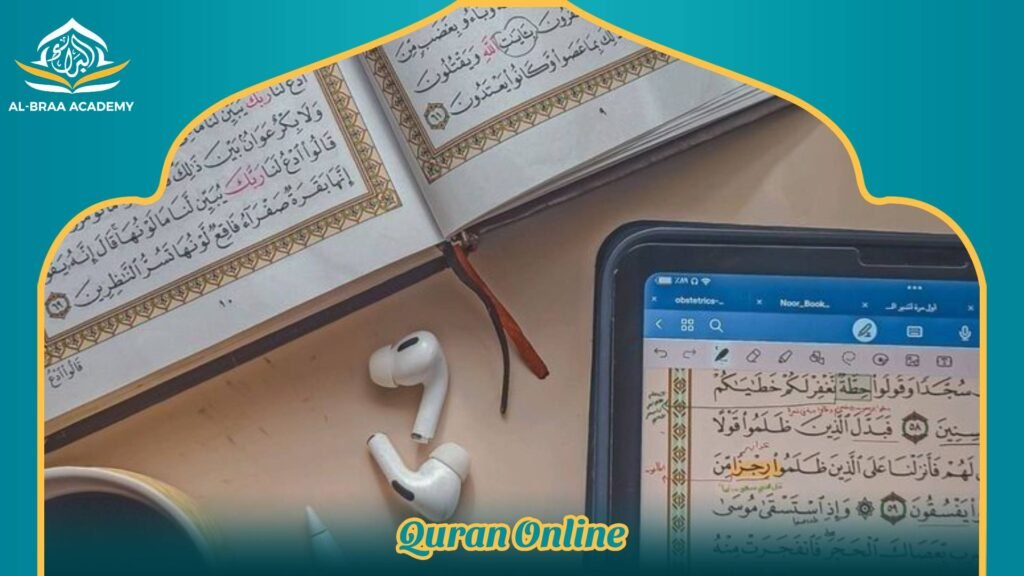
Online Quran classes in Dubai offer Muslim families a convenient way to study the Holy Quran, improve recitation, and develop a stronger understanding of Islamic teachings. Whether you are a parent looking for Quran lessons for your child or an adult hoping to improve your reading skills, online education makes it possible to learn with a qualified teacher from home.
Dubai has a diverse Muslim community with different educational needs, languages, and daily schedules. Consequently, finding a Quran program that accommodates school hours, professional commitments, and family responsibilities can make a significant difference in maintaining a consistent learning routine.
However, choosing the right program involves more than finding an available class. Students should consider the teacher’s qualifications, teaching experience, curriculum, individual attention, and opportunities to monitor progress.
Al Braa Quran Academy provides live, one-on-one Quran lessons for children and adults worldwide. Its programs cover Quran reading, Tajweed, memorization, Arabic language, and Islamic Studies. The academy also offers male and female teachers, personalized learning plans, and a free trial lesson for new students.
This guide explores the available learning options, explains how to choose a suitable teacher, and discusses what Dubai families should consider before enrolling in an online Quran program.
Why Choose Online Quran Classes in Dubai?

Modern family life often involves several competing responsibilities. Children attend school, adults manage professional commitments, and parents organize household activities. Finding time to travel to a physical Quran learning center may therefore become challenging.
Online education provides an alternative that allows students to attend lessons without leaving home. More importantly, private instruction can give learners the opportunity to practice recitation and receive direct feedback from their teachers. Here are some reasons families consider online Quran classes in Dubai:
- Convenience: Students can attend lessons from home without arranging transportation.
- Flexible scheduling: Class times can be discussed around school, work, and family commitments.
- Individual attention: Private lessons allow teachers to concentrate on one student’s pronunciation and learning needs.
- Access to qualified instructors: Students can connect with Quran teachers regardless of their physical location.
- Different learning levels: Beginners and experienced readers can follow suitable educational programs.
- Regular practice: A recurring schedule encourages students to maintain consistent Quran study habits.
Furthermore, online lessons can help parents organize Quran education alongside their children’s regular school activities. Nevertheless, the quality of the teaching experience depends on the instructor, curriculum, and students’ participation. Families should therefore evaluate the educational approach before selecting a program.
Start Your Quran Journey With Al Braa Quran Academy Today.
If you are ready to begin a meaningful journey with the Holy Quran, Al Braa Quran Academy is here to guide you step by step. Our qualified teachers help you improve your Quran recitation, understand Tajweed rules, and build strong confidence in reading the Quran correctly.
Moreover, you can join flexible online classes designed to suit all ages and learning levels. As a result, you can learn at your own pace while maintaining consistency and focus. In addition, our structured lessons ensure steady progress and a clear understanding. Start today and take the first step toward mastering Quran reading with clarity, consistency, and a strong spiritual connection.

Online Quran Classes in Dubai for Children
Children need a learning environment that considers their age, attention span, and previous knowledge. A child who is unfamiliar with Arabic letters, for example, requires a different teaching approach from someone who already reads Quranic passages.
For this reason, online Quran classes in Dubai should begin with an appropriate assessment of the child’s reading ability. This helps the teacher determine whether the student needs basic Arabic instruction, Quran reading practice, or more advanced recitation lessons.
Al Braa Quran Academy offers dedicated Quran lessons for children starting from the age of four. Its teaching approach focuses on individual attention and age-appropriate instruction.
Noorani Qaida for Beginners in Dubai
Noorani Qaida is an important starting point for children who are learning to read Arabic. It introduces the letters, pronunciation, vowel marks, and basic reading combinations needed to develop Quran reading skills. During this stage, children gradually learn to:
- Recognize Arabic letters and distinguish between similar shapes.
- Pronounce individual letters correctly.
- Understand Fatha, Kasra, and Damma.
- Read combinations of letters and vowel marks.
- Recognize Sukoon, Shaddah, and other basic reading signs.
- Connect letters to form simple words.
- Practice reading exercises before moving to Quranic passages.
After developing these skills, the teacher can introduce Quran reading and explain basic Tajweed rules. However, children do not always progress at the same pace. Some may recognize letters quickly but need additional pronunciation practice.
Others may understand individual sounds but require more time to read connected words. A personalized learning plan helps address these differences without creating unnecessary pressure.
Making Online Quran Lessons Enjoyable for Children
Young learners generally respond better when lessons include interaction rather than continuous explanation. For example, the teacher can introduce an Arabic letter, demonstrate its sound, and ask the child to identify it in different words.
Similarly, short reading exercises encourage children to participate instead of simply listening. Parents can support this process by creating a comfortable learning environment. Some useful practices include:
- Preparing a quiet study area before the lesson.
- Keeping the Quran and learning materials nearby.
- Encouraging short revision sessions between classes.
- Praising effort and improvement.
- Avoiding distractions during the lesson.
- Communicating with the teacher about any learning difficulties.
Online Quran Classes in Dubai for Adults and Beginners
Adults may begin Quran lessons for several reasons. Some have never learned Arabic, while others can read the Quran but want to improve their pronunciation and understand Tajweed rules.
There are also learners who studied Quran during childhood but stopped practicing regularly. Returning to structured lessons can help them rebuild their reading skills and develop a more consistent routine.
A suitable adult program should consider the student’s existing knowledge rather than assuming everyone needs the same starting point. At Al Braa Quran Academy, adult learners can explore programs covering Quran reading, Tajweed, memorization, Arabic, and Islamic studies.
Learning Quran Reading from Scratch
Adults with limited Arabic knowledge can begin with the alphabet and basic pronunciation. A beginner learning plan may include:
- Recognizing Arabic letters and their different forms.
- Practicing the correct pronunciation of each letter.
- Understanding short vowels and reading signs.
- Combining letters to read simple words.
- Practicing connected Arabic text.
- Progressing toward Quranic passages.
Starting with these fundamentals can prevent common pronunciation mistakes from becoming established habits. Moreover, one-on-one teaching allows the instructor to explain difficult sounds, repeat exercises, and adjust the lesson according to the student’s understanding.
Improving Recitation Through Online Tajweed Lessons
Tajweed is the study of rules governing the correct pronunciation of Quranic letters and sounds during recitation. Students who already read Arabic may benefit from lessons focusing on articulation points, letter characteristics, elongation, and other recitation rules. A Tajweed learning program can cover:
- Makharij Al-Huroof, or articulation points of Arabic letters.
- Sifat Al-Huroof, or characteristics of letters.
- Rules of Noon Sakinah and Tanween.
- Rules of Meem Sakinah.
- Different types of Madd.
- Qalqalah and other recitation rules.
- Practical application during Quran reading.
Learning Tajweed requires regular listening and practice. Therefore, students should have opportunities to recite directly to their teachers and receive corrections.
Quran Memorization and Hifz Programs for Dubai Students

Memorizing the Holy Quran is a goal for many Muslim children and adults. However, successful memorization involves more than learning new verses. Students also need a consistent revision system to retain previously memorized portions. A structured Hifz program can divide memorization into manageable stages while allowing sufficient time for repetition.
Building a Consistent Quran Memorization Routine
The appropriate memorization schedule depends on several factors, including age, reading ability, available time, and previous memorization. A beginner may start with a few verses, whereas an experienced student may be able to memorize longer passages. A practical routine can include three main activities:
- 1. New memorization
The student works on a selected passage with the teacher. Repeated listening and recitation help establish familiarity with the verses. - 2. Recent revision
Previously memorized portions are reviewed to strengthen retention and identify mistakes before moving forward. - 3. Long-term revision
Older memorized passages are revisited regularly to maintain accuracy and continuity.
Additionally, students should avoid setting unrealistic targets. A manageable routine that can be maintained over several months is often more practical than an intensive schedule that becomes difficult to follow.
Individual Hifz Support at Al Braa Quran Academy
Al Braa Quran Academy offers a Quran memorization program for students who want to work toward memorizing selected Surahs or larger portions of the Quran. Teachers provide guidance during memorization and help students practice revision. The learning plan can be adjusted according to the student’s level and goals.
For families in Dubai, online instruction offers an opportunity to arrange memorization lessons without traveling to a physical learning center. Parents should discuss their child’s current reading ability and expected memorization schedule before selecting a program.
How to Choose a Qualified Quran Teacher in Dubai?
Choosing the right teacher is one of the most important decisions when selecting a Quran learning program. An instructor should have accurate recitation skills, understand Tajweed, and communicate effectively with students. In addition, teaching experience matters because children, beginners, and advanced learners often require different explanations.
Quran Teacher Qualifications and Ijazah
Students studying Quran recitation should ask about the teacher’s educational background and Quranic qualifications. An Ijazah is a formal authorization associated with a connected chain of transmission, known as Sanad, in Quran recitation or related disciplines. Families may want to ask:
- Has the teacher studied Quran recitation under qualified scholars?
- Does the instructor hold an Ijazah?
- What age groups has the teacher worked with?
- Can the instructor explain Tajweed rules clearly?
- Does the teacher have experience teaching non-Arabic speakers?
According to its official website, Al Braa Quran Academy has teachers who graduated from Al-Azhar University. Many are Quran memorizers, and many hold Ijazah certifications.
Male and Female Quran Teachers for Dubai Families
Teacher preference is another important consideration for Muslim households. Some families prefer female instructors for their daughters, while other students may feel more comfortable studying with a male teacher.
Having both male and female teachers available gives students additional flexibility when discussing their learning arrangements. Al Braa Quran Academy offers male and female instructors. Students can communicate their preferences during enrollment, subject to teacher availability.
Communication and Teaching Style
A qualified instructor should also be able to explain lessons in a way that matches the student’s understanding. For example, a young beginner may need simple explanations and repeated pronunciation exercises. In contrast, an advanced student studying Tajweed may benefit from detailed discussions of articulation points and recitation rules.
Language is equally important. Students who are more comfortable speaking English may benefit from teachers who can explain Quranic concepts in English while demonstrating Arabic pronunciation. Before enrolling, families should consider whether the teacher’s communication style is appropriate for the intended student.
Quran Courses Available Through Online Learning in Dubai
Quran education includes several connected subjects. Some students want to learn basic reading, while others focus on memorization, recitation, or understanding Quranic meanings. Choosing the right subject depends on the learner’s goals and previous experience. Al Braa Quran Academy provides several educational programs that support these different objectives.
Quran Reading and Basic Quranic Studies
This program is suitable for beginners who want to develop Arabic reading skills and become familiar with Quranic text. Students can start with Arabic letters, pronunciation, and basic reading combinations before progressing to Quranic passages. The aim is to establish a reliable foundation for further study.
Tajweed and Quran Recitation Courses
Tajweed lessons help students understand the rules of proper Quranic pronunciation. They are particularly useful for learners who already read Arabic but want to improve their recitation accuracy. Teachers can listen to students, identify pronunciation difficulties, demonstrate the correct sounds, and recommend additional exercises.
Quran Memorization and Hifz Lessons
The Hifz program is intended for students who want to memorize selected Surahs or work toward memorizing the entire Quran. A structured plan should include new memorization, revision, and regular assessment. The pace should reflect the student’s ability rather than following a fixed target for everyone.
Islamic Studies for Children and Adults
Islamic Studies helps students develop a broader understanding of Islamic beliefs, practices, and values. Lessons can be adapted to different ages and levels of understanding. The subjects covered by the academy include:
- Aqeedah: Islamic beliefs.
- Fiqh: Islamic jurisprudence.
- Seerah: The biography of Prophet Muhammad ﷺ.
- Hadith: Prophetic teachings.
- Islamic manners and values.
Arabic Language and Quranic Arabic
Arabic language education can support students who want to understand Quranic vocabulary and develop broader language skills. It is useful to distinguish between the two learning paths. Students can choose the subject that best matches their learning goals.
- Quranic Arabic focuses on the vocabulary and grammatical structures found in the Holy Quran.
- Modern Standard Arabic develops wider reading, writing, and speaking abilities.
Online Ijazah Course
An Ijazah is an important qualification for students pursuing advanced Quran recitation and transmission. Learners interested in this path should have a strong foundation in Quran reading and Tajweed. They may also need to complete specific assessments before progressing toward certification.
Al Braa Quran Academy offers an Ijazah course under qualified instructors. Prospective students should contact the academy to confirm the admission requirements, recitation route, assessment process, and certification details.
Why Choose Al Braa Quran Academy for Online Quran Classes?

Selecting a Quran academy requires evaluating more than the number of available courses. Families should consider whether the teaching approach provides individual attention, whether instructors have suitable qualifications, and whether the program can accommodate different learning levels. Al Braa Quran Academy highlights several features of its educational approach:
- One-on-one instruction: Lessons are delivered individually, allowing teachers to focus on each student’s needs.
- Qualified instructors: The academy has teachers with Al-Azhar educational backgrounds and Quranic qualifications.
- Male and female teachers: Students can communicate their teacher preferences.
- Personalized learning plans: Lessons are adapted to the student’s level and goals.
- Progress monitoring: The academy uses regular examinations and monitors attendance and participation.
- Different educational programs: Students can study Quran, Tajweed, Hifz, Arabic, and Islamic Studies.
- Free trial lesson: New students can experience a lesson before deciding whether to enroll.
Another useful feature is the opportunity to discuss learning objectives before starting regular classes. For example, parents enrolling a four-year-old beginner may need a different plan from an adult preparing for advanced Tajweed study. The academy’s individual teaching approach allows these different requirements to be discussed during the initial assessment.
How to Start Online Quran Classes in Dubai?
Starting Quran lessons online is relatively straightforward. However, families should understand the enrollment process and prepare the necessary information before their first session. The process at Al Braa Quran Academy begins with requesting a free trial lesson.
Step 1: Book a Free Trial Lesson
The first step is to contact the academy and request a free trial. Provide basic information about the intended student, such as age, current reading level, and preferred subject. For example, parents enrolling a child who has never studied Arabic should mention that the student needs beginner-level instruction.
Step 2: Meet Your Quran Teacher
During the trial, the student has an opportunity to meet a potential instructor and experience the teaching approach. Parents can observe how the teacher communicates with their child and whether the lesson is appropriate for their age.
Adult students can also explain their learning objectives and ask questions about the available programs. Those interested in Islamic studies may also want to explore practical topics, such as how to perform Umrah step by step.
Step 3: Review Your Current Learning Level
The teacher needs to understand what the student can already do. A complete beginner may need Arabic alphabet instruction, while an experienced reader may benefit from an assessment of Tajweed and pronunciation. This initial review helps establish a suitable starting point.
Step 4: Arrange Your Weekly Schedule
After discussing the student’s requirements, the next step is to agree on a suitable class schedule. Families should consider school hours, work commitments, prayer times, and other responsibilities. Students can also use short periods outside class to develop consistent Islamic habits, including learning about the Benefits of daily duas and supplications.
Step 5: Begin Regular Quran Lessons
Once the schedule and learning plan are confirmed, students can begin their regular sessions. They should attend consistently, follow the teacher’s instructions, and review previously studied material. Parents can also request progress updates to understand their children’s development.
Flexible Online Quran Class Schedules for Dubai Families
Scheduling is an important consideration for families living in Dubai. Children may have school lessons and extracurricular activities, while adults often balance professional responsibilities with household commitments.
Therefore, online Quran classes in Dubai should be arranged around a realistic weekly routine. Dubai follows Gulf Standard Time (GST), which is UTC+4. Students should confirm that their agreed lesson times follow Dubai local time to avoid confusion when coordinating with teachers based in another country. Different students may need different arrangements:
- School-age children: Parents can consider lesson times after school or during other suitable periods when children are not tired.
- Working adults: Evening sessions or mutually convenient time slots may be more practical.
- University students: A recurring schedule can be arranged around lectures, examinations, and independent study.
- Families with several children: Parents may discuss separate lesson times so that each child receives individual attention.
Al Braa Quran Academy states that it serves students across different international time zones, including the Gulf region. Families should contact the academy to confirm the availability of their preferred Dubai time slots.
Helping Children Progress in Online Quran Classes in Dubai
Parents play an important role in helping children benefit from online Quran classes in Dubai. Although qualified teachers provide structured instruction, the home environment and parental encouragement can influence how comfortably children participate and how consistently they practice.
Children may also have different learning needs. Parents whose children experience learning difficulties can explore practical guidance on how to teach quran to children with learning difficulties. By establishing healthy study habits and maintaining communication with the teacher, families can support their children’s Quran learning journey.
Establish a Consistent Routine for Online Quran Classes in Dubai
Children benefit from predictable study habits and regular learning schedules. Parents can choose a suitable lesson time when their child is alert and less likely to become distracted.
Additionally, the frequency of classes should reflect the child’s age, attention span, and learning objectives. Rather than creating a demanding schedule, focus on maintaining a realistic routine that allows enough time for Quran practice and other daily activities.
Prepare a Suitable Environment for Online Quran Lessons in Dubai
A comfortable study environment helps children concentrate during their lessons. Before each session, parents should prepare:
- A quiet and comfortable study area.
- A stable internet connection.
- A suitable device with a working microphone.
- A Quran and the required learning materials.
- A distraction-free space away from television and unnecessary devices.
Encourage Children to Practice Quran Reading Between Online Classes
Regular practice helps children remember previously studied material and improve their reading skills. However, parents do not need to turn every practice session into a long lesson.
Instead, they can encourage children to repeat Arabic letters, read familiar words, or revise selected verses for a short period each day. Parents looking for additional memorization strategies can also explore tips to memorize quran faster. Furthermore, sharing age-appropriate Prophet stories for kids can make Islamic learning more engaging and help children connect with the lessons they study.
Maintain Communication with Your Online Quran Teacher in Dubai
Parents should maintain regular communication with the Quran teacher to understand their child’s development. For instance, if a student struggles with pronunciation or needs additional revision, the instructor can recommend suitable exercises and adjust the learning plan accordingly.
At Al Braa Quran Academy, the educational approach includes progress monitoring through regular assessments and reviews of attendance and participation. Consequently, parents can gain a clearer understanding of their children’s progress, identify areas that need additional attention, and provide appropriate support at home.
Online Quran Classes in Dubai vs. Traditional Quran Lessons
Both online and traditional Quran education can provide valuable learning opportunities. The appropriate choice depends on the student’s preferences, family circumstances, access to qualified teachers, and preferred learning environment.
| Comparison | Online Quran Learning | Traditional Quran Learning |
|---|---|---|
| Location | From home or another suitable place | Physical classroom or learning center |
| Transportation | Not required for attendance | May require daily travel |
| Teacher access | Connect with teachers remotely | Depends on locally available instructors |
| Scheduling | Can be arranged around personal routines | Usually follows the institution’s timetable |
| Individual attention | Available through private lessons | Depends on class size |
| Learning environment | Requires a device and internet | Takes place in person |
| Family involvement | Parents can observe lessons at home | Depends on the learning center |
Online education may suit families who prefer learning from home and want access to individual instruction. Traditional lessons, meanwhile, may appeal to students who prefer direct face-to-face interaction and studying alongside other learners.
Neither format automatically guarantees better results. Teacher qualifications, lesson quality, student commitment, and consistent practice remain important. For families comparing online Quran classes in Dubai, the decision should be based on their actual needs rather than assuming one format is suitable for everyone.
Common Mistakes When Choosing Online Quran Classes in Dubai
Selecting a Quran learning program requires careful consideration. Choosing a course based only on advertisements, price, or availability may lead to an unsuitable learning experience. Here are several mistakes worth avoiding.
Choosing a Program Based Only on Price
Affordable lessons may be attractive, especially for families planning long-term enrollment. Nevertheless, price should not be the only consideration. Parents should evaluate teacher qualifications, curriculum, lesson duration, available programs, and the level of individual attention. It is also important to understand what is included in the fees before enrolling.
Ignoring the Teacher’s Quranic Qualifications
Quran education requires accurate recitation and a sound understanding of Tajweed. Students should therefore ask about the instructor’s Quranic background, relevant Ijazah qualifications, and teaching experience. A teacher should also be able to explain mistakes clearly and help students correct them through practical exercises.
Selecting an Advanced Course Too Early
Some learners choose advanced Tajweed or memorization programs before developing the necessary reading foundation. This can make lessons unnecessarily difficult. Instead, the instructor should review the student’s current level and recommend an appropriate starting point.
Overlooking the Importance of Revision
Memorizing new verses without reviewing previous portions can make it difficult to retain information. A suitable learning plan should include sufficient time for revision, especially for students enrolled in Hifz programs.
Ignoring Schedule Compatibility
A schedule that repeatedly conflicts with school, work, or family responsibilities can become difficult to maintain. Before enrolling, discuss available lesson times and select a realistic routine.
Skipping the Trial Lesson
A trial lesson allows families to evaluate the teacher’s communication style and understand the teaching process. It also allows students to ask questions before making a longer-term commitment.
How to Measure Progress in Online Quran Classes?
Progress in Quran education should not be measured only by the number of lessons completed or pages read. Students develop different skills over time, and each deserves attention. For example, a beginner may make meaningful progress by recognizing Arabic letters independently, even before becoming fluent in Quran reading.
Similarly, an experienced student may improve through more accurate pronunciation and better application of Tajweed rules. Useful indicators of development include:
- Recognizing Arabic letters and reading signs correctly.
- Reading Quranic passages with increasing fluency.
- Correcting previously repeated pronunciation mistakes.
- Applying Tajweed rules during recitation.
- Memorizing new verses while retaining older portions.
- Understanding more Quranic vocabulary.
- Becoming more confident when reading aloud.
Teachers can use regular assessments to identify areas of improvement and determine which subjects require additional practice. Parents should also consider their child’s confidence and willingness to participate. These factors help indicate whether the learning environment is comfortable and supportive.
Preparing for Your First Online Quran Class in Dubai
Preparing before the first lesson can make the experience more comfortable, particularly for children and students who have never attended a virtual Quran class. Before the session, consider the following checklist:
- Internet connection: Make sure the connection is stable enough for live audio and video.
- Learning device: Prepare a computer, tablet, or suitable device with a clear screen.
- Audio equipment: Check the microphone and speakers or headphones.
- Study materials: Keep the Quran, notebook, and requested learning materials nearby.
- Quiet surroundings: Choose a location where the student can listen and speak comfortably.
- Learning objectives: Prepare questions about the program and the student’s goals.
Parents enrolling young children should help them become familiar with the device before the lesson begins. Meanwhile, adult learners can prepare a brief description of their current reading ability and the skills they want to improve. These simple preparations allow the teacher to focus on instruction rather than technical difficulties.
Enroll in Online Quran Classes in Dubai with Al Braa Quran Academy

Learning the Holy Quran is a continuous journey that requires patience, suitable guidance, and regular practice. For Muslim families in Dubai, online education provides an opportunity to organize Quran lessons around everyday responsibilities while connecting with qualified instructors.
Al Braa Quran Academy offers live, one-on-one Quran education for children and adults, with programs covering beginner Quran reading, Tajweed, memorization, Arabic, Islamic Studies, and Ijazah studies.
Its educational approach includes individual lesson plans, male and female teacher options, progress monitoring, and a free trial for new students. Before choosing a program, consider the student’s age, reading ability, preferred subject, and available study time. These details can help determine an appropriate starting point.
If you are exploring online quran classes in Dubai, you can visit the official website of Al Braa Quran Academy to review the available courses and request a free trial lesson. Start with a suitable learning plan and take a practical step toward improving Quran recitation, memorization, and understanding.
Frequently Asked Questions About Online Quran Classes in Dubai
This section answers common questions about online Quran classes in Dubai, including lesson arrangements, suitable age groups, teaching methods, and enrollment with Al Braa Quran Academy.
1. Can someone with no Arabic background start learning the Quran online?
Yes. Complete beginners can start by learning Arabic letters, pronunciation, and basic reading combinations. Once they develop these skills, they can gradually progress toward reading Quranic passages with teacher guidance.
2. How much time should I dedicate to Quran study each week?
The required study time depends on your learning objectives, current level, and personal schedule. A student focusing on basic reading may need a different routine from someone pursuing Hifz or advanced Tajweed.
3. Can parents monitor their children’s Quran learning progress?
Yes. Parents can communicate with teachers and request updates about reading development, pronunciation, memorization, and areas requiring additional practice. This communication also helps families support learning between lessons.
4. What should I ask before enrolling in an online Quran program?
Ask about the teacher’s qualifications, course curriculum, lesson duration, available schedules, assessment methods, rescheduling arrangements, and payment terms. It is also useful to confirm whether a free trial is available and how the academy matches students with teachers.
Conclusion
Choosing the right online Quran classes in Dubai can help children and adults develop their Quran reading, Tajweed, and memorization skills through structured lessons that fit their daily routines. Before enrolling, consider the teacher’s qualifications, the student’s learning level, class flexibility, and the availability of individual guidance.
Al Braa Quran Academy offers online Quran programs for different ages and learning levels, with personalized instruction and progress monitoring. Families can request a free trial lesson to explore the teaching approach, discuss their goals, and determine whether the available classes meet their needs.