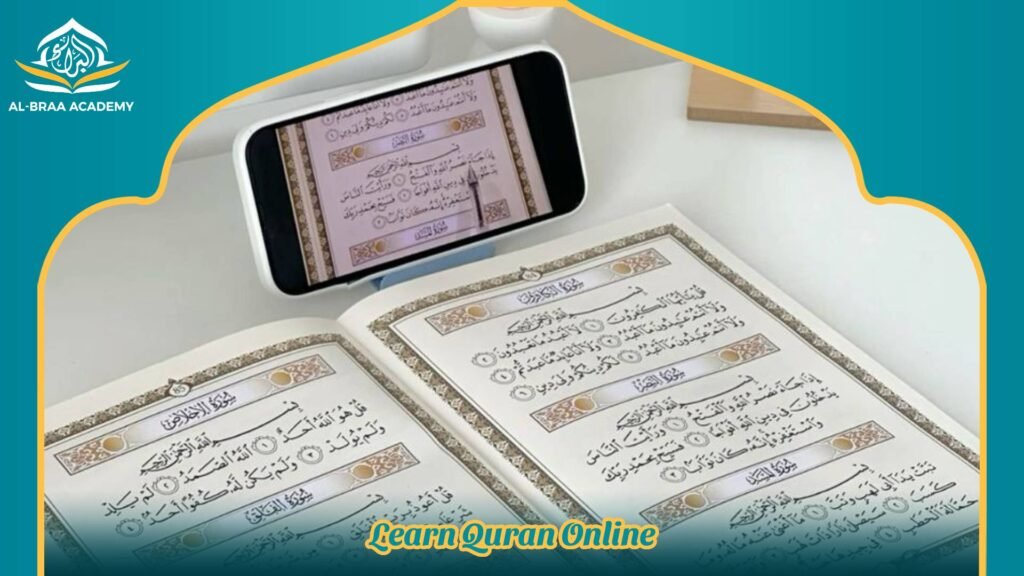
Common mistakes in quran recitation can affect pronunciation, the application of Tajweed rules, and the way a reader connects words and verses. Although many learners recognize the Arabic letters, they may still struggle to pronounce certain sounds accurately, maintain the correct length of vowels, or pause at appropriate places. Therefore, understanding these errors is an important step toward more confident and careful Quran reading.
Both beginners and experienced readers can develop incorrect habits. For example, someone may consistently confuse two similar Arabic letters without noticing the difference. Another reader might understand a Tajweed rule theoretically but forget to apply it while reading a complete verse. These challenges require more than memorization; they call for focused listening, deliberate practice, and reliable feedback.
Fortunately, learners can improve their recitation by identifying specific weaknesses and addressing them one at a time. Rather than attempting to correct every aspect simultaneously, readers should begin with letter pronunciation, then work on essential Tajweed rules, reading pace, and stopping points. This approach makes practice more manageable and helps learners recognize their progress.
Al Braa Quran Academy can be considered by learners seeking structured Quran instruction and guidance from a qualified teacher. However, regardless of the learning method, understanding the source of an error is essential before attempting to correct it.
Main Causes of Common Mistakes in Quran Recitation
Common mistakes in Quran recitation often result from incorrect pronunciation, misapplied Tajweed rules, excessive reading speed, and improper pauses. Identifying these causes helps learners correct recurring errors and improve their recitation accuracy.
- Incorrect articulation: Arabic letters can sound similar, but their articulation points and characteristics distinguish them.
- Misapplied Tajweed: Rules involving Noon Sakinah, Meem Sakinah, Madd, and other recitation features require careful application.
- Excessive speed: Rushing can weaken pronunciation, shorten required elongations, and obscure the natural structure of words.
- Incorrect pauses: Stopping and restarting without considering meaning can disrupt the connection between phrases.
- Insufficient feedback: Independent practice is useful, but a qualified teacher can identify errors that learners may overlook.
- Inconsistent revision: Short, focused practice sessions help learners maintain improvements and recognize recurring difficulties.
Start Your Quran Journey With Al Braa Quran Academy Today
If you are ready to begin a meaningful journey with the Holy Quran, Al Braa Quran Academy is here to guide you step by step. Our qualified teachers help you improve your Quran recitation, understand Tajweed rules, and build strong confidence in reading the Quran correctly.
Moreover, you can join flexible online classes designed to suit all ages and learning levels. As a result, you can learn at your own pace while maintaining consistency and focus. In addition, our structured lessons ensure steady progress and a clear understanding. Start today and take the first step toward mastering Quran reading with clarity, consistency, and a strong spiritual connection.

Common Mistakes in Quran Recitation: Incorrect Pronunciation of Arabic Letters
One of the most serious common mistakes in quran recitation involves pronouncing Arabic letters from the wrong articulation points, known as Makharij al-Huruf. Arabic contains sounds that may appear similar to learners, especially those whose first language does not include the same distinctions. Nevertheless, each letter has particular characteristics that should remain clear during recitation.
For instance, the letters س and ص differ in their sound characteristics. The letter ص is pronounced with heaviness, whereas س has a lighter quality. Similarly, ق and ك have different articulation points and should not be treated as interchangeable sounds.
Incorrect articulation can affect the identity of a letter and, in some cases, alter a word’s meaning. Consequently, learners should avoid relying entirely on the way a word appears in writing. Correct pronunciation requires attention to the tongue, throat, lips, and other parts of the vocal tract involved in producing each sound.
Arabic Letter Pairs That Learners Often Confuse
| Letter pair | Important distinction |
|---|---|
| س / ص | Light pronunciation versus the emphatic quality of ص |
| ت / ط | ط has an emphatic quality that ت does not share |
| ق / ك | Different articulation points and sound characteristics |
| ذ / ظ | Different articulation and emphatic qualities |
| ح / هـ | ح is a deeper throat sound, while هـ is produced differently |
| د / ض | These letters have distinct articulation points and characteristics |
This table provides a starting point, not a complete explanation of every letter’s articulation. Learners should listen to reliable recitations and seek correction when they cannot consistently distinguish a pair.
How to Improve Makharij?
Begin with two or three letters that cause the most difficulty. Listen to a qualified reciter, repeat each sound separately, and then practice it within familiar Quranic words. Afterward, read a short passage and check whether the distinction remains clear in connected speech.
Al Braa Quran Academy may be an option for learners who prefer teacher-guided pronunciation practice. The important consideration is whether instruction includes individual correction, clear explanations, and opportunities to repeat difficult sounds.
Common Mistakes in Quran Recitation: Ignoring Essential Tajweed Rules
Tajweed provides principles for reciting the Quran accurately. However, knowing the names of its rules does not automatically mean a learner applies them correctly. Some readers can explain a rule during a lesson but overlook it when reading continuously. Others imitate a reciter’s sound without understanding why a particular pronunciation occurs.
This gap between theoretical knowledge and practical application contributes to common mistakes in quran recitation. For that reason, Tajweed should be practiced within actual Quranic passages rather than studied only as a collection of definitions. Important areas include:
- Noon Sakinah and Tanween: Applying Izhar, Idgham, Iqlab, and Ikhfa according to the following letter.
- Meem Sakinah: Distinguishing its relevant rules, including Ikhfa Shafawi, Idgham Shafawi, and Izhar Shafawi.
- Ghunnah: Maintaining the required nasal sound and duration where applicable.
- Madd: Observing the appropriate lengthening associated with different types of elongation.
- Heavy and light letters: Preserving the characteristics of letters without exaggerating their sounds.
- Qalqalah: Producing its characteristic echoing quality where the rule applies.
A common example is reading a passage too quickly and shortening a Madd that requires a particular duration. Another is overlooking Ikhfa because the reader concentrates on recognizing individual words rather than connecting the letters correctly.
How to Apply Tajweed During Daily Reading
Choose a short passage and identify one rule before beginning. Read slowly, paying attention to each relevant occurrence. Then repeat the passage while maintaining a natural rhythm.
Next, ask a qualified teacher to check whether the rule has been applied correctly. If a mistake occurs, return to the specific word or phrase rather than restarting the entire passage repeatedly without a clear objective.
Al Braa Quran Academy can be considered by students looking for structured Tajweed instruction, provided the available lessons match their level and learning needs. Ultimately, successful practice depends on understanding the rules, applying them consistently, and correcting errors as they arise.
Common Mistakes in Quran Recitation: Reading Too Quickly
Reading quickly can make it difficult to maintain accurate pronunciation. Although some learners measure progress by the number of pages completed, quantity alone does not indicate whether the recitation is correct. A reader may finish a long passage while repeatedly shortening vowels, confusing letters, or overlooking important pronunciation rules.
Speed becomes particularly problematic when a learner has not yet developed reliable control over the articulation of individual letters. Instead of producing each sound clearly, the reader may allow neighboring sounds to blend together. Moreover, rapid reading can make it harder to notice breathing difficulties and incorrect stopping points.
Why a Balanced Pace Matters
- Pronounce each letter according to its characteristics.
- Apply the relevant Tajweed rules.
- Observe required elongations.
- Recognize appropriate stopping points.
- Maintain concentration throughout the passage.
For example, when practicing Surah Al-Fatihah, learners can focus on clear pronunciation and appropriate elongation before attempting to increase their speed. Once the reading becomes more accurate, they can gradually develop fluency without sacrificing essential rules.
A Practical Method for Slowing Down
Start by reading three to five lines at a comfortable pace. If a word causes difficulty, repeat that word separately and then return to the complete phrase. Record recurring errors in a notebook so that the next practice session addresses a specific weakness.
Avoid making every word unnaturally slow. The goal is a measured, connected recitation that respects Tajweed requirements, not an artificial rhythm that interrupts the natural flow of the text.
Common Mistakes in Quran Recitation: Incorrect Stopping and Pausing
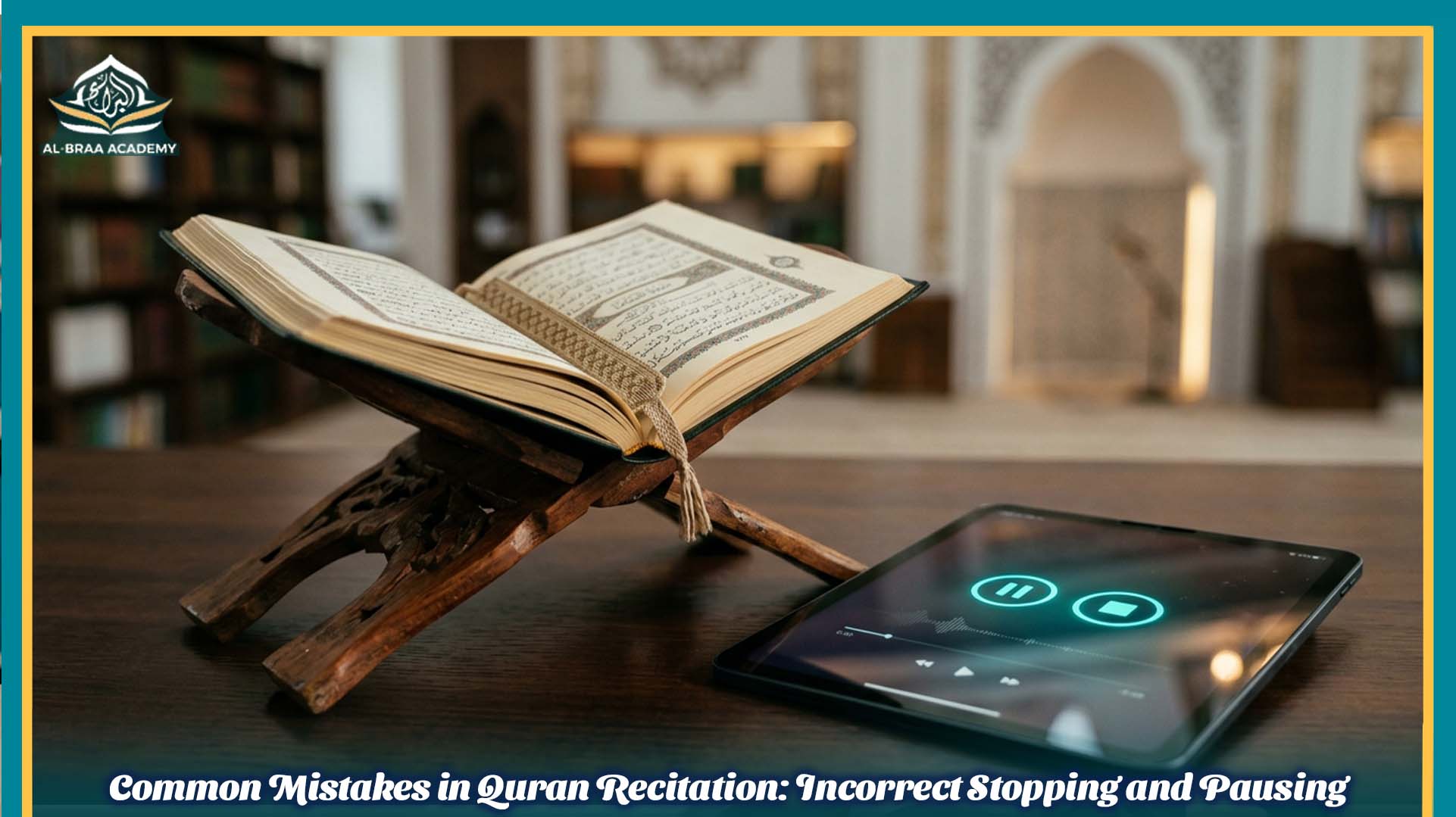
Correct pronunciation is only one aspect of Quran recitation. Readers must also learn when to stop, when to continue, and where to resume after a pause. These matters are studied through Waqf and Ibtida, which concern stopping and beginning during recitation.
A reader may pronounce every letter correctly yet interrupt a phrase before its meaning is complete. In other cases, someone may continue despite a stop sign or resume from a word that does not form a suitable beginning. Such mistakes can weaken the connection between phrases and make the passage difficult to follow.
Common Waqf and Ibtida Errors
- Stopping at a point that separates closely connected parts of a meaning.
- Ignoring stop signs without understanding their purpose.
- Continuing until breath control becomes difficult.
- Resuming from a word that does not provide a suitable starting point.
- Treating every printed stopping symbol as if it had the same significance.
The appropriate stopping decision depends on the verse, its wording, the relevant signs, and the rules being followed. Therefore, learners should not rely on breathing alone or assume that every pause is equally appropriate.
How to Practice Correct Stopping
Select a short passage and examine its stopping signs with a reliable teacher or recognized instructional resource. Read the passage while paying attention to where each phrase connects with the next. Then practice restarting from appropriate points after pauses.
When a stopping decision is unclear, ask for an explanation instead of memorizing a rule without understanding its context. This method helps learners develop better judgment as well as smoother recitation.
Al Braa Quran Academy may suit learners who want guidance in connecting pronunciation practice with the wider structure of Quran reading. Before enrolling, ask how lessons address stopping rules and whether students receive individual feedback on their recitation.
Common Mistakes in Quran Recitation: Confusing Similar Arabic Letters
Confusing similar letters is related to articulation, but it deserves separate attention because the problem can persist even after learners understand the basic Makharij. Some students can identify a letter when reading it in isolation but confuse it when it appears in a longer word. Others recognize the correct sound while listening but struggle to reproduce it themselves.
These difficulties can arise from limited exposure to Arabic sounds, insufficient repetition, or an attempt to memorize entire words before mastering their component letters. In addition, the learner’s first language may encourage pronunciation patterns that do not match Arabic.
Examples of Letter Confusion
- س and ص: Learners may use the lighter quality of س when the word requires ص.
- ت and ط: The emphatic quality of ط may disappear during connected reading.
- ق and ك: A reader may produce one letter using the articulation associated with the other.
- ذ and ظ: Their different characteristics may become less clear when reading quickly.
- ح and هـ: Learners may replace the deeper throat sound of ح with the sound of هـ.
The exact correction depends on how the learner produces the sound. Therefore, a teacher should listen to the actual pronunciation rather than assume that every learner makes the same error.
A Letter-by-Letter Correction Exercise
First, select one difficult letter and practice producing it clearly. Next, compare it with the letter that is frequently confused with it. After that, repeat several familiar words containing both sounds.
Finally, read a short passage that includes those words. This last step is essential because correct pronunciation in isolation does not always transfer automatically to connected recitation.
Keep a simple record of recurring errors and review it weekly. Over time, this record can show whether the problem occurs with particular letters, at certain positions within words, or mainly when reading at a faster pace.
Common Mistakes in Quran Recitation: Incorrect Madd Lengthening
Madd refers to the lengthening of a vowel sound according to established Tajweed rules. The letters associated with Madd are ا, و, and ي when the relevant conditions apply. However, the presence of one of these letters does not mean that every occurrence should receive the same duration.
Some readers shorten a required elongation because they want to maintain speed. Others lengthen sounds unnecessarily, making the recitation uneven. Both habits can interfere with the correct application of Tajweed.
Understanding Madd Rules to Avoid Recitation Mistakes
The appropriate duration depends on the type of Madd and the conditions surrounding it. For example, Madd Tabii has a different duration from certain types of Madd associated with a Hamzah or a Sukoon. Learners should therefore avoid applying one memorized counting pattern to every elongation.
Beginners who need help recognizing Arabic letters and vowel marks can benefit from madani qaida online classes before progressing to more advanced Tajweed practice.
A familiar example appears in الضَّالِّينَ in Surah Al-Fatihah. The required elongation should be observed according to the recitation rules being learned, rather than shortened simply to finish the word quickly.
How to Correct Madd Errors in Quran Recitation
- Identify the type of Madd in a short Quranic example.
- Listen to a qualified reciter who follows the same recognized recitation tradition.
- Repeat the example while maintaining the appropriate duration.
- Ask a teacher to check the lengthening and correct any inconsistency.
- Apply the same rule in a complete verse rather than practicing isolated examples indefinitely.
Avoid judging Madd solely by how long a sound feels. Different rules require different durations, so a clear understanding of the relevant rule is more reliable than guesswork.
Al Braa Quran Academy may be worth considering for learners who need guided practice with elongation and other Tajweed details. The useful question is whether instruction helps students apply each rule independently in their regular reading.
Common Mistakes in Quran Recitation: Incorrect Ghunnah Application
Ghunnah is a nasal sound associated with specific Tajweed rules involving Noon and Meem. Learners may produce it too weakly, shorten its required duration, or exaggerate it beyond what the rule requires. Some also confuse a correct nasal sound with simply prolonging a vowel.
For these reasons, Ghunnah should be practiced in context. Its pronunciation and duration depend on the particular rule, so learners need to recognize the surrounding letters before deciding how to read an example.
Understanding Ghunnah Through Examples
Consider مِن شَرِّ. In this example, Noon Sakinah before ش is governed by Ikhfa, which includes Ghunnah. The learner should apply the rule appropriately instead of pronouncing the Noon as though no following letter affected it.
Likewise, rules involving a doubled Noon or Meem require attention to their established characteristics. However, not every occurrence of Noon or Meem should be treated identically.
Exercises to Improve Nasal Pronunciation
- Listen carefully to a reliable recitation of the selected example.
- Identify the rule before repeating the word.
- Practice maintaining the required nasal sound without forcing it.
- Compare your attempt with the reference recitation.
- Ask a qualified teacher to correct the sound and duration when necessary.
Do not exaggerate the nasal quality merely to make it more noticeable. Correct application matters more than producing an unusually strong sound.
A useful practice session focuses on a small number of examples and repeats them accurately. Afterward, read the surrounding verse to check whether the rule remains consistent in connected recitation.
Practicing Without Consistent Review or Feedback

Independent practice is valuable because it allows learners to repeat difficult passages at a convenient pace. Nevertheless, it has a limitation: readers may not recognize their own errors. When a pronunciation habit feels familiar, it can seem correct even when it needs adjustment.
This is one of the common mistakes in quran recitation that affects learners at different stages. Repeating a passage many times does not necessarily solve a problem if the same error occurs during every repetition.
Listening to skilled reciters can help learners become familiar with correct sounds and rhythm. However, listening alone cannot always reveal whether they reproduce those sounds accurately. Likewise, recording a reading can help identify obvious hesitations, but some articulation and Tajweed errors require a trained listener.
Learners who prefer structured lessons and individual guidance can explore quran tuition online to find a learning arrangement that suits their reading level and practice goals.
Build a More Effective Practice Routine
- Review: Select a short passage that matches your current ability.
- Listen: Hear a reliable recitation before beginning your own practice.
- Read: Recite slowly while concentrating on one or two target skills.
- Check: Compare your reading with the reference or seek teacher feedback.
- Correct: Repeat the exact words in which errors occurred.
- Revisit: Return to the same passage in a later session to check retention.
Keep notes about recurring difficulties rather than recording only the amount of time spent reading. For example, write down whether you need more work on letter articulation, Madd, Ghunnah, or stopping points.
When Should You Seek a Teacher?
Consider seeking individual guidance when the same error persists despite regular practice, when you cannot distinguish between two pronunciation patterns, or when you are unsure how a Tajweed rule applies to a particular example.
Al Braa Quran Academy is an option to investigate if you prefer organized lessons and direct correction. Before choosing a program, ask about teacher qualifications, lesson structure, assessment methods, and how progress is reviewed. These details help you determine whether the instruction meets your needs without assuming that every learner requires the same approach.
How to Identify and Correct Common Mistakes in Quran Recitation?
Recognizing an error is only the beginning. The next step is to determine why it happens and choose an exercise that addresses the cause. For example, a reader who confuses ق and ك needs a different exercise from someone who understands those letters but repeatedly shortens Madd. A structured correction process can make practice more effective.
Step 1: Identify Common Mistakes in Quran Recitation
Avoid describing every difficulty as a general pronunciation issue. Instead, identify the exact letter, rule, or stopping point that causes trouble. A precise diagnosis makes it easier to select an appropriate exercise.
Step 2: Understand the Correct Tajweed Rule
Use a reliable Tajweed resource or ask a qualified teacher to explain the distinction. Do not rely on assumptions based only on how a word looks or sounds to an inexperienced listener.
Step 3: Practice Common Quran Recitation Errors in Small Sections
Work on one word or phrase before moving to the complete verse. Short exercises allow you to concentrate on the target skill without becoming distracted by several other difficulties.
Step 4: Correct Common Mistakes in Quran Recitation in Context
Once the individual sound or rule becomes clearer, return to the original passage. Check whether you can maintain the correction while connecting words naturally.
Step 5: Review Your Quran Recitation Progress
Repeat the same passage after a suitable interval. If the error returns, continue practicing it and seek additional feedback when necessary.
This method turns the correction of common mistakes in quran recitation into a manageable learning process. It also helps students distinguish genuine improvement from familiarity gained through repetition alone.
When children experience persistent reading difficulties, parents can review how to teach quran to children with learning difficulties for guidance on adapting instruction to individual learning needs.
Supporting Quran Learning Beyond Recitation Practice
Understanding the Quran can extend beyond pronunciation exercises. Parents can introduce children to Islamic history and values through age-appropriate prophet stories for kids, helping them explore important lessons alongside their regular learning.
Similarly, families preparing for pilgrimage may find how to perform Umrah step by step useful when learning about the sequence of Umrah rituals and their practical requirements.
A Daily Practice Plan for More Accurate Quran Recitation
Learners do not always need long sessions to make useful progress. A short, focused routine can help them maintain consistency, provided they use the time carefully and receive correction when needed.
The following schedule is an example that can be adjusted according to the learner’s level and available time.
| Practice activity | Suggested time | Main objective |
|---|---|---|
| Listen to a short passage | 3 minutes | Recognize the reference pronunciation |
| Practice difficult letters | 5 minutes | Improve articulation |
| Review one Tajweed rule | 5 minutes | Apply the rule accurately |
| Read a short passage | 5 minutes | Connect individual skills |
| Review notes and errors | 2 minutes | Plan the next session |
The schedule is a practical suggestion rather than a fixed requirement. Beginners may need more time for individual letters, whereas experienced readers may benefit from concentrating on subtle Tajweed distinctions or stopping rules.
Consistency matters, but it should not replace quality. If fatigue makes pronunciation less accurate, shorten the session and return to the passage when you can concentrate properly.
Adjusting Practice for Children and Adults
Children often benefit from short exercises, clear examples, repetition, and encouraging feedback. Adults may prefer a more explicit explanation of the rule before practicing it. Nevertheless, both groups need opportunities to hear accurate recitation, apply what they learn, and correct recurring mistakes.
Learners should also choose passages that match their current reading ability. A difficult passage may be useful for targeted instruction, but beginning with material that is manageable can make it easier to identify and correct specific errors.
Choosing Quran Recitation Instruction That Matches Your Needs

When self-study does not resolve recurring difficulties, structured instruction can provide a clearer path forward. However, not every learner needs the same course or teaching arrangement. Someone who struggles with basic Arabic letters may need foundational reading instruction, while another learner may already read fluently but need more detailed Tajweed correction.
Al Braa Quran Academy can be evaluated as one possible learning option. Rather than choosing a provider based only on promotional language, consider whether its available instruction matches your current level and goals. Before enrolling, ask questions such as:
- Does the teacher assess my pronunciation before recommending lessons?
- Will I receive specific feedback on my recurring mistakes?
- Can the lesson plan address the Tajweed rules I find difficult?
- How will progress be reviewed over time?
- Is the teaching format appropriate for my schedule and learning preferences?
These questions help you evaluate the learning process rather than relying on general promises. A suitable program should make it possible to understand your errors, practice the relevant skills, and recognize which areas still need attention.
What to Look for in a Quran Teacher
A qualified teacher should be able to explain pronunciation differences clearly, demonstrate the correct sound, and identify where a student’s attempt differs from the intended reading. Feedback should be specific enough to guide the next practice session.
For example, telling a learner to improve pronunciation is less helpful than explaining which letter is incorrect, where it should be articulated, and how to practice it within a word. Similarly, a teacher should explain why a Madd rule applies rather than simply instructing the student to lengthen a sound.
Al Braa Quran Academy may be suitable for learners seeking teacher-guided study, but prospective students should verify the available teaching arrangements and qualifications directly. The best choice is one that provides appropriate instruction and supports steady, realistic progress.
Frequently Asked Questions About Common Mistakes in Quran Recitation
This section answers common questions about common mistakes in Quran recitation, explaining their causes and offering practical ways to improve pronunciation, apply Tajweed rules, and develop more accurate recitation.
1. How can I tell whether a Quran recitation recording is reliable for practice?
Choose recordings from recognized reciters whose reading follows the recitation tradition you are studying. If you are unsure about a particular rule or pronunciation, ask a qualified teacher to verify the example before using it as your reference.
2. Should I learn the Arabic alphabet before studying detailed Tajweed terminology?
Learners who are still developing basic reading skills generally benefit from becoming comfortable with Arabic letters, vowel marks, and connected reading first. A teacher can then introduce Tajweed terminology at a suitable pace while helping students apply each rule.
3. Can I maintain a record of my recitation progress?
Yes. You can keep dated recordings, notes about corrected errors, and a list of passages you have reviewed. Comparing recordings over time may reveal improvements, although teacher feedback remains useful for identifying errors that are difficult to hear independently.
4. How should I prepare for my first Quran recitation assessment?
Choose a familiar passage, review the rules you have studied, and arrive ready to read at a comfortable pace. It is also helpful to explain which letters or Tajweed rules you find difficult so the teacher can assess those areas more carefully.
In conclusion, Correct Quran recitation develops through a combination of accurate pronunciation, sound Tajweed knowledge, careful pacing, appropriate stopping points, and regular review. Learners do not need to correct every weakness in a single session. Instead, they should identify recurring errors, understand the rules involved, and practice each skill in a structured way.
The most useful improvement strategy is to combine listening with active reading and reliable feedback. Repetition helps reinforce a correction, while a qualified teacher can identify mistakes that may remain unnoticed during independent study. Over time, this process can support clearer pronunciation and more consistent application of Tajweed.
If you are considering Al Braa Quran Academy, review its teaching approach, available courses, and feedback process before deciding whether it matches your goals. Whatever learning method you choose, focus on accuracy rather than speed and treat each correction as an opportunity to strengthen your recitation.