Teach Islam to kids is one of the greatest responsibilities entrusted to every Muslim parent. Beyond teaching prayers or helping children memorize short surahs, Islamic education is about nurturing faith, building strong character, and creating a lifelong connection with Allah. Children naturally learn through observation, kindness, and meaningful experiences, making the home the first and most influential place for Islamic learning.
At Al Braa Quran Academy, we believe that every child deserves an engaging and supportive environment where learning Islam becomes a joyful journey rather than a difficult obligation. Through qualified teachers, interactive lessons, and age-appropriate teaching methods, parents can confidently help their children grow into practicing Muslims with strong values and a sincere love for their faith.
Why Parents Should Teach Islam to Kids?
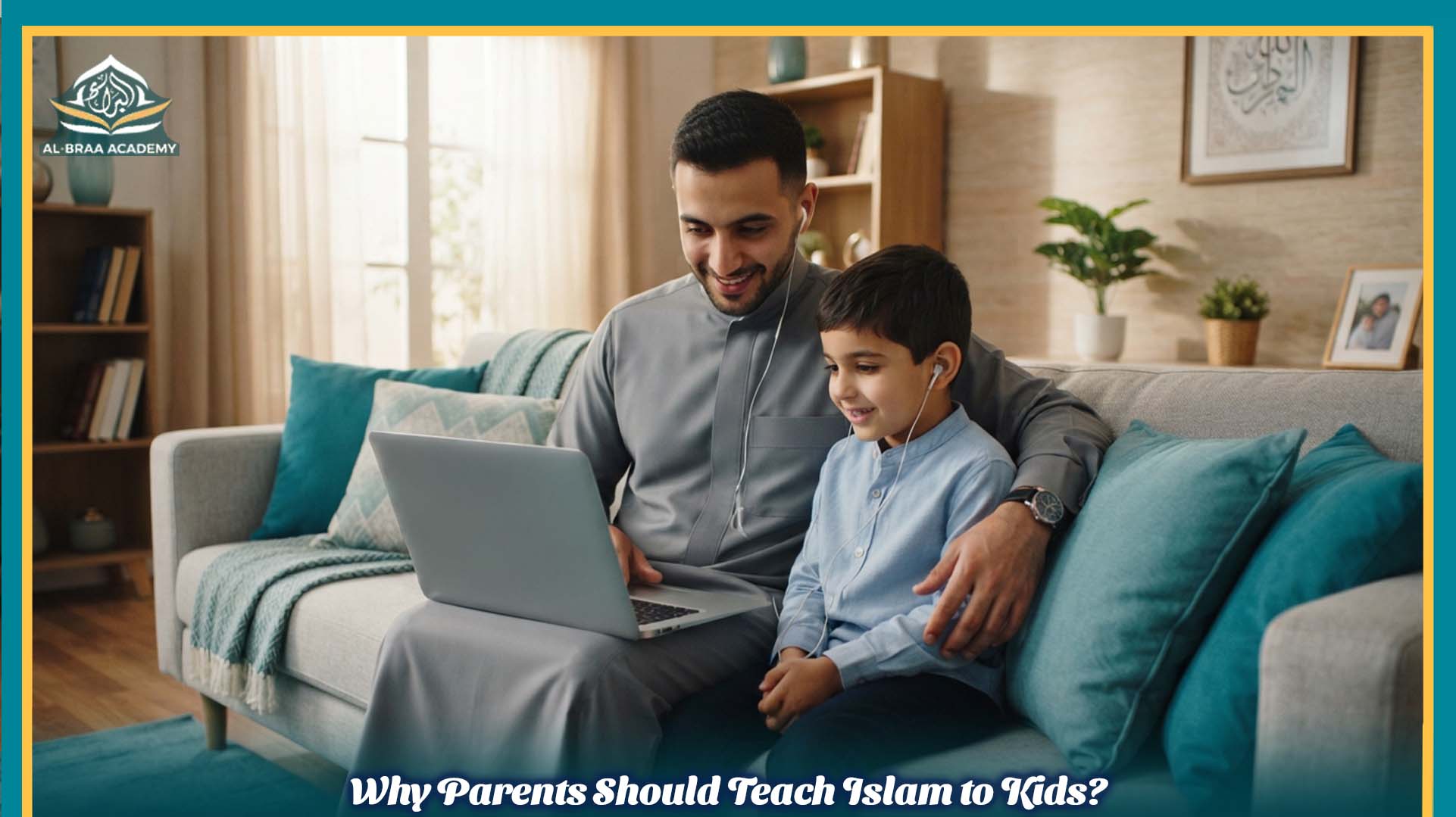
Raising righteous children is one of the greatest blessings and responsibilities that Allah has given parents. While schools and Islamic centers play an important role, the foundation of a child’s faith begins at home. Every conversation, action, and daily habit contributes to shaping their understanding of Islam.
Allah says in the Quran:
“O you who have believed, protect yourselves and your families from a Fire whose fuel is people and stones.”
(Surah At-Tahrim 66:6)
Furthermore, this verse reminds parents that teaching Islam is more than sharing knowledge. It is a lifelong commitment to guiding children toward worship, good manners, and obedience to Allah. Parents are the first role models their children follow, making their actions even more influential than their words.
The Prophet Muhammad ﷺ also emphasized this responsibility by teaching that every guardian is accountable for those under their care. This includes nurturing children spiritually, emotionally, and morally until they become responsible Muslims themselves.
Start Your Quran Journey With Al Braa Quran Academy Today
If you are ready to begin a meaningful journey with the Holy Quran, Al Braa Quran Academy is here to guide you step by step. Our qualified teachers help you improve your Quran recitation, understand Tajweed rules, and build strong confidence in reading the Quran correctly.
Moreover, you can join flexible online classes designed to suit all ages and learning levels. As a result, you can learn at your own pace while maintaining consistency and focus. In addition, our structured lessons ensure steady progress and a clear understanding. Start today and take the first step toward mastering Quran reading with clarity, consistency, and a strong spiritual connection.
Lead by Example to Teach Islam to Kids Effectively
First of all, children imitate what they see far more than what they hear. A parent who prays consistently, speaks kindly, and demonstrates honesty leaves a lasting impression on their child. Before expecting children to practice Islam, parents should strive to strengthen their own relationship with Allah.
Allah reminds believers:
“There has certainly been for you in the Messenger of Allah an excellent example.”
(Surah Al-Ahzab 33:21)
Following the Prophet’s example means showing patience, compassion, forgiveness, and sincerity in everyday life. When children witness these qualities regularly, they begin to associate Islam with peace, love, and good character instead of rules alone.
At the same time, it’s equally important to remember that guidance ultimately belongs to Allah. Parents are responsible for making every sincere effort, offering advice with wisdom, and continuously praying for their children’s success. Even small daily acts of encouragement can plant seeds of faith that grow throughout a child’s life.
Why Does Early Islamic Education Help Teach Islam to Kids?
Early childhood is one of the most influential stages in human development. Between the ages of three and twelve, children naturally develop their beliefs, values, and understanding of right and wrong. This period provides the ideal opportunity to introduce Islamic teachings simply and engagingly.
Studies in educational psychology suggest that children who receive consistent moral and spiritual education at an early age often develop:
- Stronger ethical decision-making skills.
- Greater emotional resilience.
- Higher self-confidence.
- A stronger sense of identity.
- Better relationships with family and community.
Additionally, for Muslim families living in multicultural societies, early Islamic classes online also help children confidently answer questions about their religion while maintaining pride in their Muslim identity.
Instead, the goal is not to overwhelm children with information. Instead, parents should gradually build love for Allah, the Quran, and the Sunnah through meaningful daily experiences.
Core Islamic Beliefs to Teach Islam to Kids
Parents do not need to be Islamic scholars to teach Islam to kids effectively. The Prophet ﷺ encouraged Muslims to convey even a single verse if they knew it. Simple lessons, repeated consistently, often leave the strongest impact.
Young children should become familiar with the foundations of faith, including:
- Allah is our Creator and Lord.
- Prophet Muhammad ﷺ is Allah’s final Messenger.
- The Quran is our divine guidance.
- Islam is the perfect way of life.
- Paradise is the reward for those who obey Allah.
For example, teaching these concepts through conversations, stories, and everyday examples helps children understand Islam naturally rather than memorizing facts without meaning.
The Prophet ﷺ often asked simple questions to strengthen faith and encourage understanding. Parents can follow this approach by asking age-appropriate questions and celebrating correct answers with encouragement instead of criticism.
Teach Islam to Kids with Love, Not Fear
One of the biggest mistakes parents sometimes make is presenting religion only through warnings and punishment. While children should learn about accountability, their first experience with Islam should be built on Allah’s mercy, forgiveness, and endless blessings. Children should associate Islam with:
- Love for Allah.
- Gratitude for blessings.
- Respect for others.
- Family unity.
- Kindness and generosity.
- Inner peace.
As a result, daily Islamic practices become much easier when children understand their purpose. Explaining why Muslims pray, fast, make dua, or read the Quran creates genuine motivation instead of forced obedience.
At Al Braa Quran Academy, lessons are designed to inspire curiosity and build positive emotional connections with Islamic learning, helping children enjoy every step of their educational journey.
Teach Islam to Kids with Love, Not Fear
While many parents hope their children will memorize the Quran, master Tajweed, or excel in Islamic studies, the greatest achievement is raising a child with sincere faith and outstanding character. The Prophet Muhammad ﷺ repeatedly emphasized that good manners are among the highest qualities of a believer.
Teaching children kindness, honesty, patience, humility, and respect should become part of everyday life. In fact, these values are not separate from Islam—they are Islam in practice. When children consistently witness these qualities at home, they naturally begin to reflect them in school, with friends, and within their community. Additionally, parents can strengthen good character by encouraging children to:
- Speak truthfully, even when it is difficult.
- Respect parents, relatives, teachers, and neighbors.
- Show kindness to younger children.
- Help others without expecting a reward.
- Practice patience during challenges.
- Forgive people who make mistakes.
The Messenger of Allah ﷺ said:
“Whoever would love to be delivered from Hellfire and admitted into Paradise, let him meet his end with faith in Allah and the Last Day, and let him treat people as he would love to be treated.”(Sahih Muslim)
This timeless teaching reminds us that Islamic education is not measured only by knowledge but also by how that knowledge shapes behavior.
Practical Ways to Teach Islam to Kids Every Day
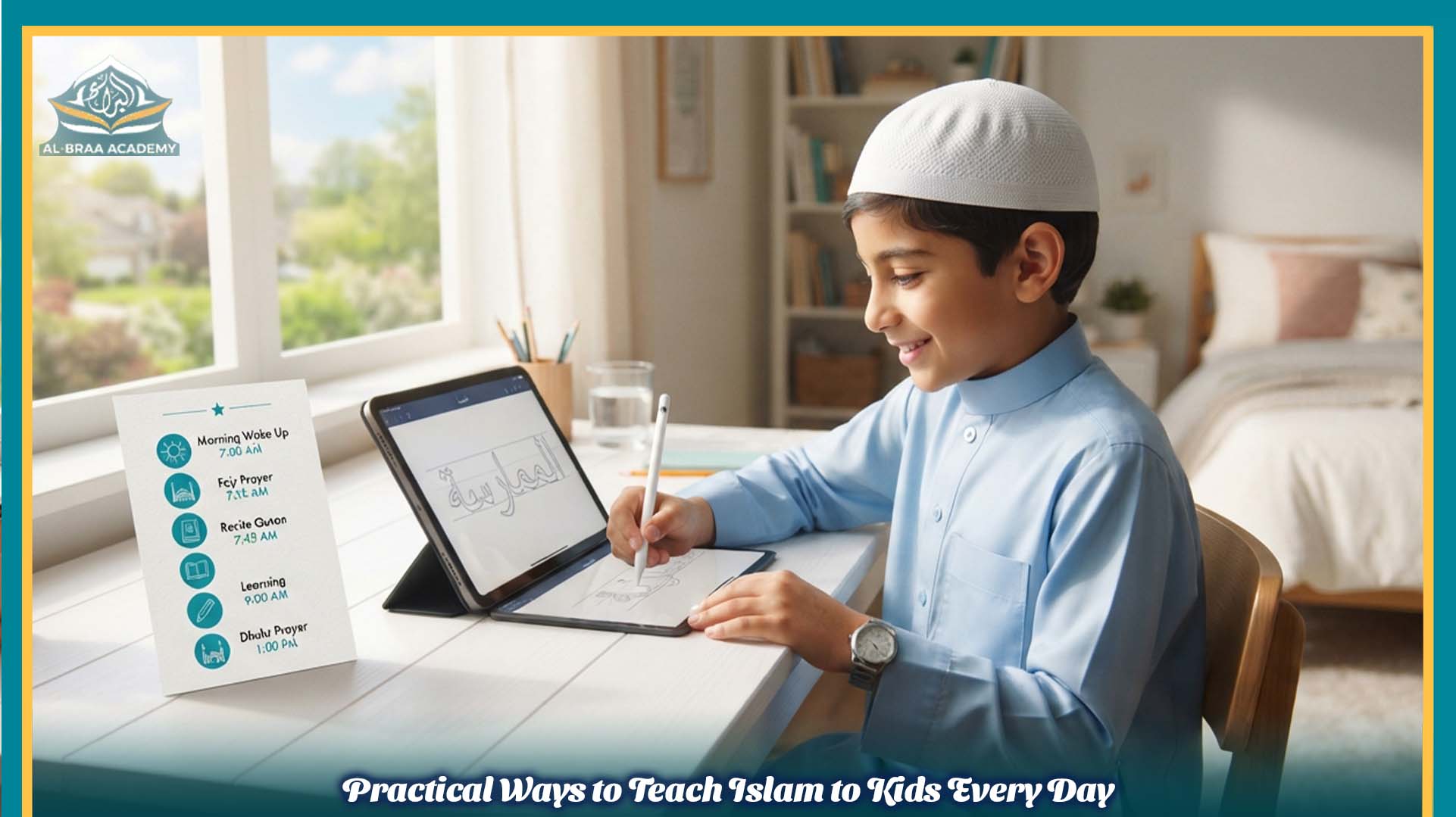
Parents often wonder how to include Islamic education in busy daily routines. The good news is that meaningful learning doesn’t always require formal lessons. Small, consistent moments throughout the day often have the greatest impact. Here are practical ways to make Islam part of everyday family life:
Build Daily Islamic Habits to Teach Islam to Kids
To begin with, simple routines help children develop consistency. Examples include:
- Saying Bismillah before eating.
- Thanking Allah after meals.
- Reading morning and evening adhkar together.
- Making dua before sleeping.
- Praying at least one salah together as a family whenever possible.
Use Quran Stories to Teach Islam to Kids
Children naturally connect with stories more than lectures. Share inspiring stories about:
- Prophet Nuh (AS) and patience.
- Prophet Ibrahim (AS) and complete trust in Allah.
- Prophet Yusuf (AS) and forgiveness.
- Prophet Musa (AS) and courage.
- Prophet Muhammad ﷺ and his mercy toward everyone.
After each story, ask simple questions like:
- What lesson did you learn?
- What would you do in that situation?
- Which character did you admire most?
Encourage Questions Without Judgment
Curious children become confident learners. Instead of dismissing difficult questions, welcome them with patience. If you don’t know the answer, search for authentic knowledge together. This teaches children that seeking Islamic knowledge is a lifelong journey.
As a result, a child who feels comfortable asking questions at home is more likely to develop a strong and informed understanding of Islam.
Make Quran Learning Enjoyable
Children learn quran online classes better when they enjoy the process. You can:
- Celebrate memorization milestones.
- Create weekly Quran challenges.
- Use reward charts.
- Review previously memorized surahs through games.
- Listen to beautiful Quran recitations together.
At Al Braa Quran Academy, experienced teachers use interactive teaching methods that transform Quran lessons into enjoyable learning experiences while maintaining authentic Islamic standards.
How Al Braa Quran Academy Helps Parents Teach Islam to Kids?
Many parents want to provide high-quality Islamic education but struggle with limited time, language barriers, or finding qualified teachers. This is where professional guidance becomes invaluable.
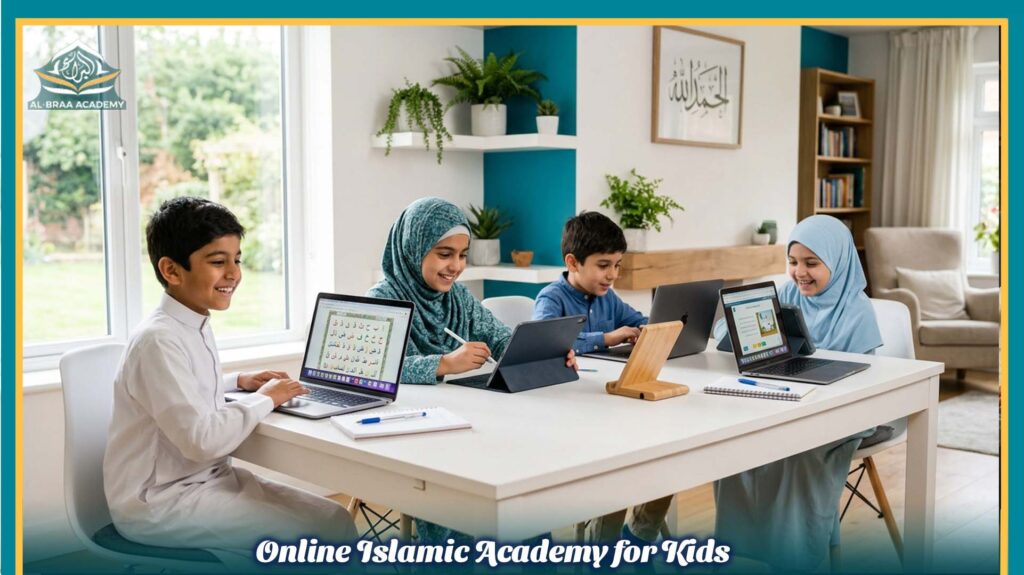
Al Braa Quran, the best quran academy online, supports families by offering a structured online Islamic academy for kids tailored to children’s ages and learning abilities. Every lesson is designed to strengthen faith while keeping students engaged through interactive activities. Parents benefit from:
- Qualified male and female Quran teachers.
- One-on-one personalized classes.
- Flexible scheduling for busy families.
- Step-by-step Islamic studies curriculum.
- Quran reading with proper Tajweed.
- Character-building lessons based on the Quran and Sunnah.
- Regular progress reports.
This balanced approach allows parents to reinforce lessons at home while children continue learning with experienced instructors.
Create an Islamic Environment at Home
Children thrive in environments that consistently reflect Islamic values. The atmosphere inside the home often influences faith more than occasional lectures. Simple changes can make a significant difference:
- Play Quran recitation regularly.
- Display beautiful Islamic reminders.
- Celebrate Islamic occasions with enthusiasm.
- Encourage family discussions after Jumu’ah.
- Read beneficial Islamic books together.
- Reduce exposure to inappropriate entertainment.
- Keep the home filled with remembrance of Allah.
When Islam becomes part of daily family culture, children naturally develop a stronger emotional connection to their religion.
Balance Love, Discipline, and Encouragement
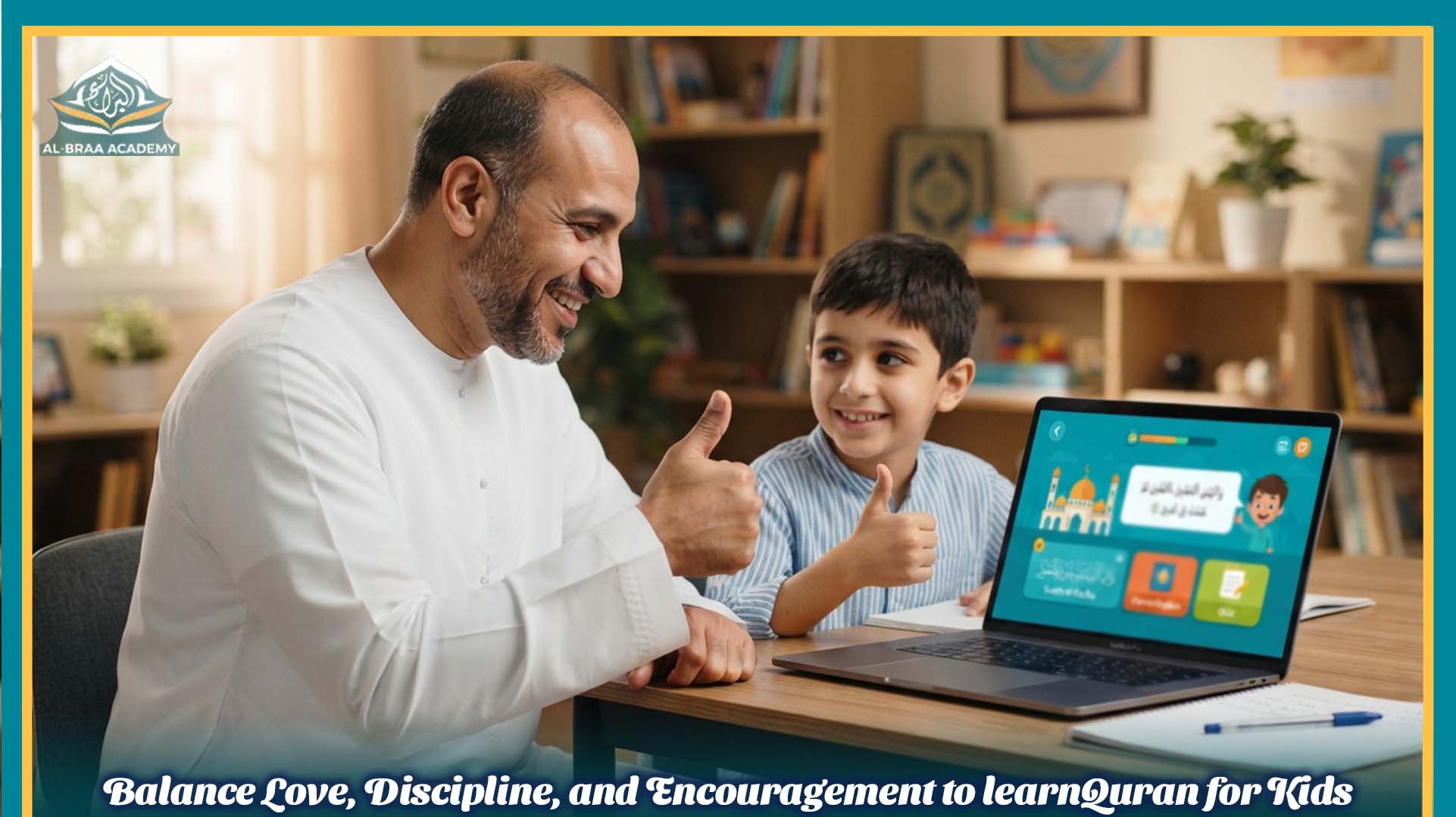
Effective Islamic parenting is built on balance. Children need guidance, but they also need compassion. Avoid using fear as the primary teaching method. Instead:
- Correct mistakes gently.
- Praise sincere effort.
- Explain the wisdom behind Islamic teachings.
- Encourage gradual improvement.
- Make dua for your children regularly.
The Prophet Muhammad ﷺ was known for his mercy, especially toward young people. His example teaches parents that kindness often leaves a deeper impact than harshness. Children who feel loved while learning Islam are more likely to continue practicing it confidently as they grow older.
Fun Activities to Teach Islam to Kids at Home
Children learn best when education feels exciting rather than repetitive. Turning an Islamic manners online course into enjoyable activities helps them remember important concepts while creating positive memories associated with their faith. Here are some engaging ideas parents can try:
Quran Memory Challenges
Set small weekly memorization goals and celebrate every achievement. Rewards don’t have to be expensive—a favorite meal, extra playtime, or words of encouragement can motivate children to stay consistent.
Islamic Craft Projects
Creative activities make learning more memorable. Children can:
- Design Ramadan and Eid decorations.
- Create the Arabic alphabet with colorful materials.
- Build a “99 Names of Allah” poster.
- Make a charity donation box.
- Draw scenes inspired by stories of the Prophets.
These projects help younger children connect with Islamic concepts through creativity.
Visit the Mosque Together
Regular visits to the mosque help children feel connected to the Muslim community. Introduce them to positive role models, encourage participation in children’s programs, and explain mosque etiquette in a friendly way.
Common Mistakes Parents Should Avoid
Even with the best intentions, some parenting approaches can unintentionally discourage children from embracing Islam. Recognizing these challenges allows parents to create a healthier learning environment.
Expecting Perfection Too Soon
Every child learns at a different pace. Comparing siblings or expecting instant results may lead to frustration and reduced motivation. Celebrate steady progress instead of demanding perfection.
Focusing Only on Rules
Children need to understand *why* Muslims pray, fast, and worship Allah. Explaining the wisdom behind Islamic practices helps them develop sincere faith rather than simply following instructions.
Using Religion as Punishment
Islam should always be presented as a source of mercy, guidance, and hope. Associating Islamic teachings only with punishment can create fear instead of love for the religion.
Neglecting Daily Conversations
Faith grows through regular communication. Short conversations about gratitude, honesty, or kindness often leave a stronger impact than long lectures delivered occasionally.
Depending Entirely on Others
While Islamic schools and academies provide valuable support, parents remain their children’s first teachers. The most successful Islamic education happens when home learning and professional instruction work together.
Why Does Online Learning Help Teach Islam to Kids Effectively?
Technology has transformed Islamic education, making authentic learning accessible to families worldwide. Online classes provide flexibility without compromising quality, especially for parents with busy schedules or limited access to local Islamic institutions. Some advantages include:
- Learning from qualified Quran teachers regardless of location.
- Flexible class schedules that fit family routines.
- Personalized one-on-one attention.
- Interactive teaching methods that keep children engaged.
- Consistent progress tracking.
- Safe learning from home.
At Al Braa Quran Academy, students receive individualized instruction that combines Quran recitation, Tajweed, Islamic studies, and character development. This personalized approach helps children learn confidently while allowing parents to stay involved in their educational journey.
The Long-Term Benefits When You Teach Islam to Kids
The effort parents invest today continues to benefit both this life and the Hereafter. Children who grow up with a strong Islamic foundation often develop qualities that positively influence every area of their lives. Some lifelong benefits include:
- A stronger relationship with Allah.
- Confidence in their Muslim identity.
- Respect for parents and elders.
- Compassion toward others.
- Better decision-making based on Islamic values.
- Love for the Quran and Sunnah.
- Greater emotional resilience during challenges.
The Prophet Muhammad ﷺ taught that one of the ongoing rewards after death comes from a righteous child who continues to pray for their parents. This beautiful reminder highlights that raising faithful children is among the greatest long-term investments a Muslim can make.
How to Build a Lasting Islamic Legacy?
Every generation shapes the next. The values parents teach today become the foundation their children will one day pass to their own families. Teaching Islam is not limited to helping children memorize information. It means nurturing sincere believers who worship Allah with understanding, treat others with kindness, and contribute positively to society.
Parents should remember that success is measured by consistency, sincerity, and reliance upon Allah—not by immediate results. Even small daily efforts accumulate over time and can transform a child’s heart.
With support from experienced educators at Al Braa Quran Academy, families can confidently provide balanced Islamic education that combines authentic knowledge, excellent character, and practical life skills.
Frequently Asked Questions
Find clear answers to the most common questions parents ask about how to teach Islam to kids, making it easier to support your child’s Islamic learning journey with confidence.
1. At what age should parents start to teach Islam to kids?
Children can begin learning simple Islamic concepts as early as two or three years old through short duas, stories, and positive daily habits. As they grow, lessons can gradually become more detailed according to their level of understanding.
2. How can parents keep children interested in learning Islam?
The best approach is to combine education with enjoyable activities such as storytelling, games, rewards, crafts, and interactive Quran lessons. Keeping learning fun encourages long-term motivation.
3. Can online Islamic classes replace learning at home?
No. Online classes provide structured education and qualified teachers, but parents remain the primary role models. The strongest results come when home learning supports what children study during their classes.
4. How do I know if my child is making good progress in Islamic learning?
Progress should be measured by more than memorization. Improvements in daily prayers, manners, honesty, confidence, love for the Quran, and willingness to practice Islamic values are all important signs of successful learning.
In conclusion, choosing to teach Islam to kids is one of the most meaningful responsibilities entrusted to Muslim parents. Every prayer taught, every Quran verse memorized, every story shared, and every act of kindness demonstrated helps shape a child’s faith for years to come.
Moreover, this consistent guidance strengthens their relationship with Allah and builds lasting Islamic values. In addition, children who grow up in a faith-centered environment often develop confidence, compassion, and strong moral character.
Most importantly, they learn to practice Islam with love rather than obligation. Therefore, parents should remain patient and continue making sincere dua while leading by example. Finally, with the support of Al Braa Quran Academy, families can provide authentic Islamic education that helps children become knowledgeable, confident, and practicing Muslims.