
Islam

How to Perform Wudu

How to Perform Wudu: Step by Step Islamic Guide

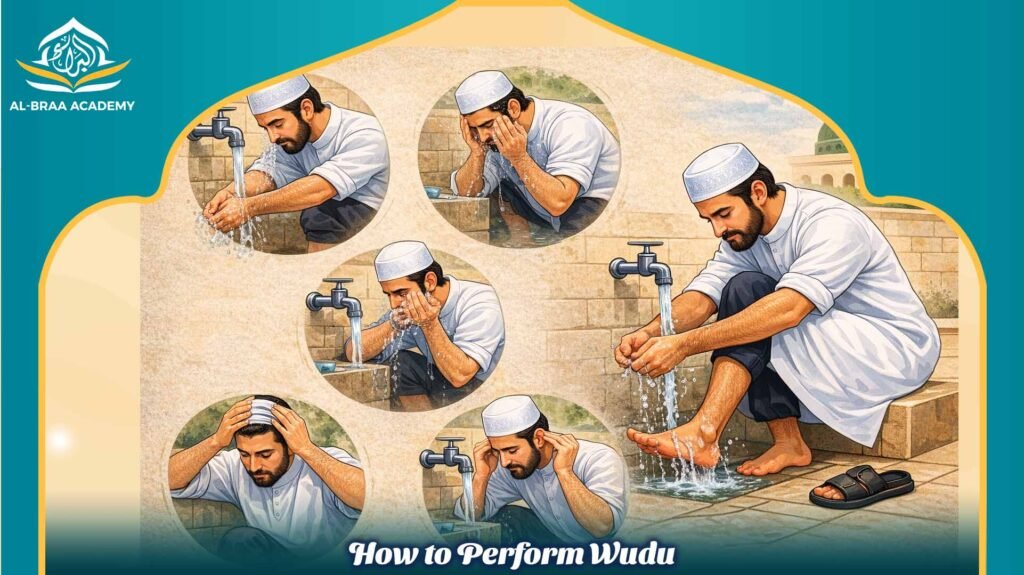
How To Perform Wudu correctly is an essential topic for every Muslim, as purification is the foundation of prayer and worship. Understanding the proper steps of wudu ensures that acts of worship are performed in accordance with authentic Islamic teachings. Many Muslims, especially beginners or new learners, may feel uncertain about the correct order, intentions, and actions involved in wudu. Al-Braa Academy provides clear and reliable guidance to help learners master this important practice with confidence. Through simple explanations and structured lessons, students can learn how to perform wudu step by step while understanding its spiritual significance. Wudu is not only a physical act of cleanliness but also a preparation of the heart and mind for prayer. Learning it correctly helps Muslims feel more connected and mindful during worship. By relying on trusted sources and qualified instructors, learners can avoid common mistakes and gain clarity in their daily religious practices, making wudu a consistent and meaningful habit. How to Perform Wudu – A Complete Introduction Understanding How to Perform Wudu is essential for every Muslim who wishes to establish prayer correctly and consciously. Wudu is not merely a physical act of washing certain body parts; it is a spiritual preparation that aligns the heart, mind, and body before standing in front of Allah in prayer. Before performing salah, a Muslim must enter a state of purity, and this purification process is known as wudu. It represents cleanliness, discipline, and obedience to divine instruction. Without wudu, salah is not valid, which highlights its importance in daily worship. Wudu teaches mindfulness. Every step, from washing the hands to cleansing the feet, is done with awareness and intention. The Prophet Muhammad (peace be upon him) emphasized the necessity of purification before prayer, making it clear that no salah is accepted without it. This shows that wudu is not optional or symbolic; it is a foundational requirement of worship. Learning how to perform wudu correctly ensures that prayer is performed with confidence and sincerity. Many people grow up practicing wudu but may not fully understand the spiritual depth behind it. Each drop of water represents purification from minor sins, and each step prepares the believer mentally for salah. By mastering the correct method, Muslims strengthen their connection with Allah and enhance the quality of their worship. In this comprehensive guide, we will walk through the complete method of performing wudu step by step, explain what nullifies it, and clarify special situations such as wiping over socks or shoes. Whether you are a beginner or someone revising your knowledge, understanding how to perform wudu properly will enrich your daily acts of devotion and bring greater mindfulness into your prayer routine. Learn Proper Wudu with Al-Braa Academy If you want to perfect your understanding of How to Perform Wudu and ensure that your prayer is always valid and spiritually fulfilling, Al-Braa Academy is here to guide you. Our qualified instructors provide clear, structured lessons that explain not only the steps of wudu but also the wisdom behind each action. Through personalized guidance and authentic Islamic teachings, students of all ages gain confidence in their daily worship. For a deeper dive, take a look at our islamic classes. Join Al-Braa Academy today and strengthen your foundation in Islamic practices. Learn with experienced teachers who are dedicated to helping you build proper habits of purification and prayer. Start your journey toward more mindful and correct worship now. For learners who want to go further, take a look at our islamic manners course. What Is Wudu and Why Is It Important? Wudu is the Islamic method of purification that prepares a Muslim physically and spiritually before performing salah. The word itself refers to cleanliness and brightness, symbolizing the removal of impurities and the preparation of the believer to stand before Allah. Understanding How to Perform Wudu begins with recognizing why it is required in the first place. Prayer is a direct conversation with Allah, and entering that sacred moment requires a state of purity. Wudu serves as both an external and internal cleansing process. Externally, it removes minor physical impurities from specific body parts. Internally, it encourages reflection, humility, and readiness for worship. The Prophet Muhammad (peace be upon him) taught that purification is half of faith, demonstrating how central cleanliness is within Islam. It is important to understand that wudu is mandatory before each salah if one’s previous wudu has been nullified. Performing prayer without proper purification invalidates the act of worship. This reinforces discipline and attentiveness in daily life. Muslims are encouraged to maintain wudu as much as possible, as it keeps them in a constant state of readiness for prayer. Beyond its legal requirement, wudu carries immense spiritual reward. Each time a believer washes a limb, minor sins committed by that limb are forgiven. This transforms a simple washing routine into a deeply meaningful spiritual practice. Learning how to perform wudu properly ensures that this act is done according to the Sunnah, preserving both its validity and its spiritual benefits. The Intention and Saying Bismillah in How to Perform Wudu When learning How to Perform Wudu, the very first step is forming the intention. Intention does not require spoken words or a specific formula; rather, it is an internal decision made in the heart. A Muslim simply becomes aware that they are about to perform wudu in order to prepare for salah. This awareness transforms an ordinary washing routine into an act of worship. In Islam, actions are judged by intentions, and wudu is no exception. When the heart is conscious of its purpose, the act carries spiritual weight and reward. After forming the intention, the believer says “Bismillah” (In the Name of Allah). This phrase serves as a reminder that every act begins with Allah and is performed for His sake. Saying Bismillah before starting wudu distinguishes it from ordinary washing. It sets a tone of mindfulness and devotion. Even if said quietly, it establishes sincerity and focus. Beginning with intention and Bismillah also teaches

Muslim Quran

Muslim Quran inspiring positive learning path 2026

Muslim Quran learning is the heart of faith, guiding every believer to live by divine teachings. Today’s learners can access tailored programs designed to suit their level and goals. For learners who want to go further, take a look at our 5 pillars faith muslim religion. At Al-Braa Academy, students explore accurate recitation, Tajweed, and Tafseer through qualified tutors. Users can also explore Quran recitation for more related options.This structured approach ensures the Quran is learned not only by memory but also by understanding, nurturing spiritual growth and commitment in daily life. Muslim Quran: Understanding the Central Role in Islam The Muslim Quran holds a central role in shaping the faith, worship, and daily life of every believer. It is not only the final revelation from Allah but also a complete guide for humanity on how to live with purpose, justice, and devotion. For Muslims, the Quran is the foundation of spiritual growth and the ultimate reference for moral conduct. From matters of personal character to social justice, the Quran provides timeless wisdom that continues to inspire millions worldwide. In Islam, the Quran is revered as the literal word of Allah revealed to the Prophet Muhammad (peace be upon him). Its recitation is an act of worship, and its memorization has been preserved across generations.Users can also explore Best Reciting Quran for more related options. Understanding its message is crucial for Muslims to implement divine guidance in their lives. Institutions like Al-Braa Academy play a vital role in helping learners deepen their relationship with the Quran through structured courses and personalized instruction. Studying the Muslim Quran is not limited to scholars; it is an obligation for every believer to engage with its verses regularly. Users can also explore How To Study Quran for more related options.Through reflection, recitation, and practical application, Muslims ensure that the Quran remains alive in their hearts and actions. As the ultimate source of truth, it stands as the foundation of Muslim identity and a light guiding the faithful in every era. read also: quran study online Quran Teachings for Muslims and Their Daily Guidance The Muslim Quran is not just a scripture to be read during worship—it serves as a complete guide for daily life. Every verse contains lessons that influence a Muslim’s behavior, decisions, and relationships. The teachings of the Quran cover all aspects of life, from honesty and kindness to justice, charity, and patience. By following these teachings, Muslims align their actions with divine will, ensuring that their lives are lived with purpose and accountability. For example, the Quran emphasizes compassion, urging Muslims to show mercy to others, care for the poor, and maintain strong family ties. It also instructs believers to avoid dishonesty, injustice, and arrogance, reinforcing the importance of integrity in both personal and social contexts. These values make the Quran a living manual that addresses real-life challenges. In modern times, structured programs from Al-Braa Academy provide Muslims with opportunities to study Quranic teachings in detail. By attending online classes, learners gain access to professional scholars who explain the meaning of verses and how to apply them in everyday situations. Users can also explore Online Quran School for more related options.This ensures that the guidance of the Muslim Quran is not abstract but practical, allowing Muslims to transform their work, relationships, and communities in accordance with Allah’s commands. Ultimately, the Quran’s teachings are timeless reminders that shape a Muslim’s character and create a balanced life rooted in spirituality, morality, and compassion. Importance of Holy Quran for Muslims in Modern Life In today’s fast-paced world, the Holy Quran for Muslims remains as essential as it was at the time of its revelation. While technology and globalization have transformed daily life, the Quran continues to provide eternal wisdom that addresses modern challenges. For Muslims navigating issues of morality, identity, and social justice, the Quran serves as a compass that points toward truth and stability. One of the most important aspects of the Quran is its ability to remain relevant across generations. Whether guiding parents in raising children, helping leaders act with justice, or advising individuals on personal struggles, its principles apply universally. For example, verses on patience and resilience inspire Muslims in times of difficulty, while teachings on charity encourage generosity in a world often dominated by materialism. Academies such as Al-Braa Academy ensure that Muslims can engage with the Quran in ways suited for modern learners. Through online classes, apps, and interactive lessons, the study of the Quran becomes accessible even for those with busy schedules. This ensures that no matter how hectic life becomes, the Quran remains central in shaping decisions and nurturing spirituality. The Muslim Quran ultimately reminds believers that worldly success is temporary, while eternal success lies in obedience to Allah. In modern life, this reminder is essential for maintaining balance between worldly responsibilities and spiritual growth. read also: online quran academy How the Quran Shapes Muslim Prayer and Worship Practices Prayer is the heart of a Muslim’s worship, and the Muslim Quran plays a defining role in shaping how Muslims perform it. From the recitation of Surah Al-Fatiha in every unit of prayer to the use of specific verses during supplication, the Quran is inseparable from worship. It gives Muslims the words to directly connect with Allah, ensuring that prayer is both structured and deeply meaningful. The Quran not only provides the content of prayer but also inspires the attitude behind it. Verses encourage humility, sincerity, and concentration, guiding Muslims to pray with full awareness of their Creator. For example, when reciting verses about paradise, a Muslim feels hope, while verses about accountability inspire repentance and reflection. This makes prayer a spiritual dialogue with Allah rather than a mechanical act. Institutions like Al-Braa Academy teach learners how to integrate Quranic recitation effectively into prayer. Students learn tajweed, correct pronunciation, and the spiritual significance of the verses they recite. Users can also explore Tajweed Quran Online for more related options.This enhances their worship, allowing them to experience prayer