
The Benefits of daily duas and supplications extend beyond the words recited during a quiet moment of worship. Regular dua can help Muslims maintain remembrance of Allah, express gratitude, seek guidance, and turn to Him during both ease and difficulty. When supplication becomes part of an everyday routine, it can also create meaningful pauses for reflection throughout a busy day.
For many Muslims, making dua is not limited to asking for a particular need. It can become a personal form of worship that encourages sincerity, humility, patience, and trust in Allah. Moreover, daily supplication allows a person to connect spiritual intentions with ordinary activities such as waking up, eating, working, studying, traveling, and preparing for sleep.
However, building this habit does not require spending hours reciting lengthy supplications. A practical routine can begin with a few authentic duas that fit naturally into the day. Al Braa Quran Academy can also serve as a learning resource for Muslims who want to strengthen their Quranic and Islamic understanding while developing a more consistent relationship with worship.
What Are the Benefits of Daily Duas and Supplications?

The benefits of daily duas and supplications can be understood through several areas of a believer’s spiritual life. Most importantly, dua creates an opportunity to turn directly to Allah with sincerity and awareness.
Rather than treating supplication as something reserved only for difficult situations, Muslims can include it throughout their daily routine. This approach creates regular moments in which a person remembers Allah and reflects on personal needs, blessings, responsibilities, and goals. Some important benefits include:
- Strengthening remembrance of Allah.
- Encouraging gratitude for everyday blessings.
- Developing humility and dependence upon Allah.
- Providing an opportunity to seek guidance.
- Supporting patience during difficult circumstances.
- Helping establish a consistent worship routine.
- Creating moments of reflection during a busy schedule.
- Encouraging a person to maintain hope while waiting for an answer.
These benefits are not necessarily experienced in the same way by every individual. Nevertheless, consistent dua can become an important part of a balanced Islamic routine when it is practiced sincerely and alongside other acts of worship.
Start Your Quran Journey With Al Braa Quran Academy Today
If you are ready to begin a meaningful journey with the Holy Quran, Al Braa Quran Academy is here to guide you step by step. Our qualified teachers help you improve your Quran recitation, understand Tajweed rules, and build strong confidence in reading the Quran correctly.
Moreover, you can join flexible online classes designed to suit all ages and learning levels. As a result, you can learn at your own pace while maintaining consistency and focus. In addition, our structured lessons ensure steady progress and a clear understanding. Start today and take the first step toward mastering Quran reading with clarity, consistency, and a strong spiritual connection.

Spiritual Benefits of Daily Duas and Supplications
One of the most important benefits of daily duas and supplications is the opportunity to strengthen one’s awareness of Allah throughout the day.
The Quran reminds believers of Allah’s nearness in Surah Al-Baqarah, 2:186, where believers are encouraged to call upon Him. This verse provides an important foundation for understanding dua as a direct act of devotion rather than merely a method of requesting material outcomes.
In practical terms, regular supplication gives a Muslim repeated opportunities to pause and remember that success, guidance, forgiveness, and protection ultimately depend upon Allah.
Furthermore, dua can encourage a believer to examine intentions before acting. A person who regularly asks Allah for guidance may become more conscious of decisions, relationships, responsibilities, and personal conduct. The habit can therefore become part of a broader spiritual routine that includes:
- Salah.
- Quran reading.
- Dhikr.
- Repentance.
- Gratitude.
- Seeking beneficial knowledge.
- Helping others.
For learners who want to understand Islamic worship more deeply, Al Braa Quran Academy can be incorporated into a broader learning journey focused on Quranic knowledge and consistent religious practice.
How Daily Supplication Can Strengthen Remembrance of Allah
Another important aspect of the benefits of daily duas and supplications is the way regular remembrance can fit naturally into ordinary activities.
A person may make a short dua after waking, before beginning work, when leaving home, before eating, during travel, or before sleeping. Consequently, familiar parts of the day can become reminders to pause and remember Allah.
This does not mean every moment needs to be filled with lengthy recitation. Instead, the goal is consistency. A short, sincere supplication practiced regularly may be easier to maintain than a complicated routine that quickly becomes difficult to follow. For example, someone could organize daily supplications around three simple periods:
- Morning: Begin the day by asking Allah for guidance, protection, and beneficial actions.
- Daytime: Use suitable moments to express gratitude or seek help with responsibilities.
- Evening: End the day with remembrance, repentance, gratitude, and prayers for protection.
As this pattern becomes familiar, the person may find it easier to associate specific daily activities with remembrance. In turn, worship becomes integrated into the rhythm of everyday life rather than being treated as an isolated activity.
Benefits of Daily Duas and Supplications for Gratitude
Gratitude is another area in which benefits of daily duas and supplications can become especially meaningful.
Modern routines can make people focus heavily on what they still want, what went wrong, or what remains unfinished. A regular habit of dua provides an opportunity to recognize blessings that may otherwise receive little attention.
A person can use supplication to thank Allah for health, family, food, shelter, opportunities, knowledge, safety, and countless everyday blessings.
Additionally, gratitude does not require perfect circumstances. Someone facing a difficult period can still acknowledge blessings while asking Allah for help with current challenges. A simple gratitude-focused routine might include reflecting on:
- One blessing received that day.
- One person for whom you are thankful.
- One difficulty that taught you something.
- One opportunity to improve.
- One request you want to place before Allah.
This practice can make dua more personal. Instead of approaching supplication only with requests, a believer can combine praise, gratitude, repentance, and personal needs in a sincere conversation with Allah.
Emotional and Mental Comfort Through Regular Dua
The benefits of daily duas and supplications can also be considered from the perspective of emotional comfort, although dua should not be presented as a substitute for professional medical or psychological care when such care is needed.
The Quran describes the remembrance of Allah as a source of tranquility for believing hearts in Surah Ar-Ra’d, 13:28. For Muslims, this provides an important spiritual perspective on remembrance during periods of uncertainty or difficulty.
When someone makes dua, they are given a structured opportunity to express fears, hopes, worries, gratitude, and needs before Allah. This can create a meaningful pause instead of allowing stressful thoughts to dominate every moment.
For example, a person experiencing a difficult day might pause and make dua before immediately reacting to a frustrating situation. That short pause can encourage reflection and patience.
Similarly, someone waiting for an important outcome can use dua to ask Allah for what is beneficial while reminding themselves that the result is ultimately within His knowledge and wisdom.
Al Braa Quran Academy can be part of a learner’s wider effort to understand Quranic guidance and build a more informed approach to Islamic worship.
Benefits of Daily Duas and Supplications During Difficult Times
Difficult circumstances often make people more aware of their need for support. Therefore, the benefits of daily duas and supplications may become especially noticeable when life becomes uncertain.
However, Islamic supplication is not limited to asking for immediate relief. A believer may ask Allah for patience, wisdom, forgiveness, protection, guidance, strength, and what is ultimately beneficial.
This broader understanding matters because an answer to dua does not always appear in the exact form or timing a person expects. During hardship, a practical supplication routine might involve:
- Asking Allah for patience.
- Seeking protection from harmful choices.
- Asking for guidance before making important decisions.
- Praying for family members and loved ones.
- Expressing trust in Allah.
- Asking for forgiveness for mistakes.
- Continuing to make dua even when circumstances have not changed.
In this way, supplication becomes part of how a believer responds to difficulty rather than simply an emergency action.
How Can You Build a Daily Dua Routine?

Understanding the benefits of daily duas and supplications is useful, but knowing how to turn the idea into a sustainable habit is equally important.
The easiest approach is usually to begin with a manageable routine. Choosing too many supplications at once can make the habit feel overwhelming, particularly for beginners.
Instead, start with a few authentic duas connected to familiar parts of the day. Once the routine becomes established, additional supplications can gradually be introduced.
A Simple Daily Plan
- Morning
- Begin with supplications that help you start the day with remembrance and a clear spiritual intention.
- After Salah
- Use appropriate moments after obligatory prayers for remembrance and personal dua.
- Before Meals
- Remember Allah before eating and express gratitude for the provision received.
- During Difficult Moments
- Pause before reacting and ask Allah for guidance, patience, and what is beneficial.
- Before Sleep
- End the day with suitable remembrance, reflection, repentance, and supplication.
- This approach removes unnecessary complexity. Instead of asking, “How can I recite dozens of duas every day?” a beginner can ask, “Which few supplications can I consistently practice?”That change in perspective makes the habit easier to maintain.
Benefits of Daily Duas and Supplications for Children and Families
Families can also explore the benefits of daily duas and supplications by making remembrance part of ordinary household routines.
Children often learn through repetition and observation. Therefore, parents can introduce short supplications at appropriate moments rather than expecting children to memorize a large collection immediately. For example, parents may encourage children to learn duas associated with:
- Waking up.
- Eating and drinking.
- Leaving or entering the home.
- Traveling.
- Before sleeping.
- Seeking forgiveness.
- Asking Allah for beneficial knowledge.
The learning process can become more engaging when parents explain the meaning of each dua instead of focusing only on memorization. Moreover, children can be encouraged to understand when and why a supplication is used. This helps transform memorization into practical Islamic knowledge.
Parents who want structured Quranic learning for their children may also explore Al Braa Quran Academy as part of a broader educational routine. The key objective should remain helping children understand worship and develop habits gradually according to their age and learning level.
Choosing Authentic Duas for Everyday Practice
Not every phrase shared online should automatically be treated as an established Islamic supplication. Therefore, choosing reliable sources is an important part of building a daily dua routine. When selecting supplications, Muslims can consider:
- The Quran.
- Authentic Hadith collections.
- Established Islamic scholarship.
- Reliable educational resources.
- The context in which a dua is traditionally used.
This approach is particularly useful for beginners who may encounter different versions of the same supplication online. Additionally, learners should pay attention to meaning. Understanding what a dua means can make its recitation more thoughtful and intentional.
For students studying Quran and Islamic knowledge, Al Braa Quran Academy may provide a setting in which questions about Quranic learning and religious practice can be explored as part of a broader educational journey.
Benefits of Daily Duas and Supplications for Personal Discipline
Consistency is one of the less obvious benefits of daily duas and supplications. Establishing a regular spiritual routine requires commitment, especially when motivation changes from one day to another.
A person may feel highly motivated at the beginning of a new habit. However, maintaining that practice during busy or ordinary days is where discipline develops.
Daily dua can therefore become an anchor within the schedule. When a supplication is connected to an existing activity, such as waking up or preparing for sleep, it becomes easier to remember. A useful method is to attach each dua to a specific routine:
- Wake up → morning remembrance.
- Complete Salah → appropriate post-prayer remembrance.
- Begin a journey → travel-related supplication.
- Prepare for sleep → evening remembrance.
- Face uncertainty → personal dua for guidance.
This technique reduces the need to remember a separate schedule. Instead, existing habits become reminders for worship. Over time, the consistency itself can make the routine feel natural.
How Can Dua Encourage Patience and Trust?
Another meaningful element of the benefits of daily duas and supplications is the opportunity to develop patience while waiting for outcomes.
People naturally want immediate answers to important requests. Yet dua teaches a believer to continue turning to Allah without making the timing of an outcome the only measure of worship.
For instance, someone may make dua for a personal goal, family matter, educational opportunity, or difficult situation. The person can continue taking appropriate practical steps while also asking Allah for guidance and what is best. For those who want to strengthen their Quran listening habits during moments of reflection, exploring the best quran reciters to listen to online can provide another way to remain connected to Quranic recitation. This creates a balanced approach:
- Make sincere dua.
- Take reasonable practical action.
- Avoid harmful or prohibited means.
- Remain patient with the outcome.
- Continue asking Allah for guidance.
- Accept that the result may differ from personal expectations.
Such an approach can help prevent dua from becoming a transaction in which worship is performed only when an immediate result is expected.
Instead, supplication remains an act of devotion regardless of the timing of the outcome.
Benefits of Daily Duas and Supplications and Personal Reflection
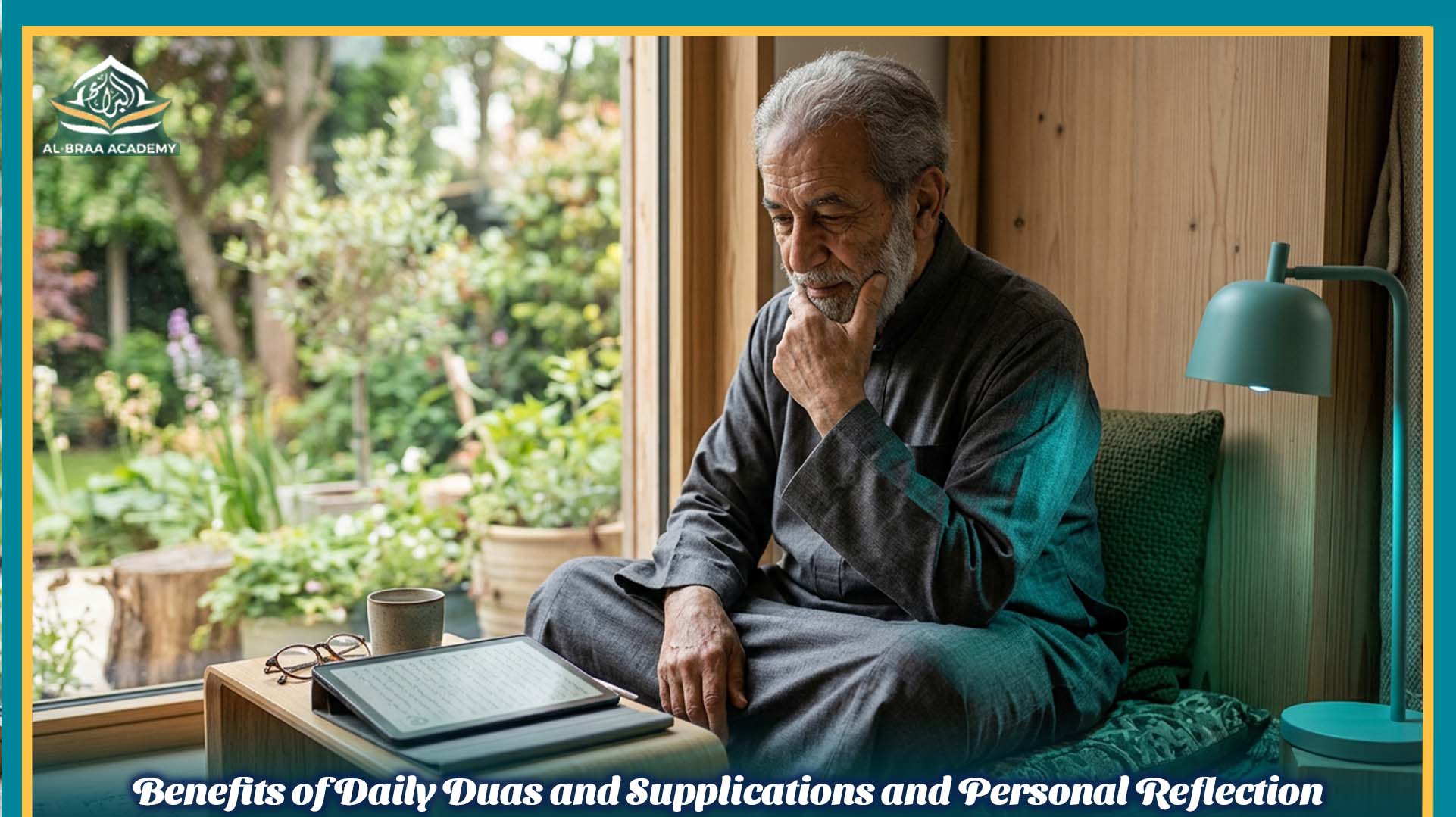
Regular dua can also create space for self-reflection. When people repeatedly stand before Allah with their concerns and hopes, they may begin to notice patterns in their own behavior and priorities.
For example, someone who repeatedly asks for patience may become more aware of situations that trigger impatience. Another person who frequently asks for guidance may begin to think more carefully before making decisions. S
Similarly, building a consistent Quran routine can support personal reflection, especially when learners use practical guidance such as these tips to memorize quran faster alongside their daily worship.
Consequently, the benefits of daily duas and supplications can extend into the way a person approaches everyday choices. A useful reflection after making dua can involve asking:
- Did my actions support what I asked Allah for?
- Is there something I need to correct?
- Have I shown gratitude for existing blessings?
- Am I taking reasonable steps toward my goal?
- Do I need to seek knowledge before making a decision?
These questions should not turn dua into a self-evaluation exercise every time. Rather, they can occasionally help connect spiritual intentions with practical behavior.
Making Daily Supplication Meaningful Instead of Mechanical
One challenge with repeated religious practices is that familiar words can sometimes become mechanical. A person may recite a supplication correctly while paying little attention to its meaning. To make the practice more meaningful, consider learning the translation and understanding the main message of each dua.
You can also vary your reflection while keeping the established supplication consistent. Before reciting it, take a moment to consider why you are making it and how its meaning relates to your current circumstances.
For example, if a dua asks Allah for guidance, think about an area of life in which guidance is needed. If it expresses gratitude, pause to recognize a specific blessing.
Likewise, learning with qualified guidance can help students understand pronunciation, meaning, and Quranic context more accurately. Al Braa Quran Academy can be considered by learners seeking to develop their Quranic knowledge alongside their personal worship routine.
Benefits of Daily Duas and Supplications in a Busy Lifestyle
Busy schedules can make religious routines difficult to maintain. Work, education, family responsibilities, commuting, and household tasks can quickly fill the day.
Nevertheless, the benefits of daily duas and supplications do not depend on creating a complicated schedule. Short supplications can often be connected to activities that already happen every day. Families with children can also make Quran learning part of their routine through age-appropriate approaches, including resources on how to teach quran to children with learning difficulties when a child needs additional support.
Instead of creating a completely separate timetable, use existing transitions as reminders. Waking up, leaving home, beginning work, finishing Salah, eating, traveling, and preparing for sleep can all become natural points for remembrance. This method has another advantage: it makes the habit more sustainable.
A practical routine might take only a few minutes at first. As familiarity grows, the person can expand the collection of supplications according to their knowledge and needs.
The objective is not to measure spiritual progress by the number of words recited. Rather, consistency, sincerity, understanding, and appropriate practice should remain central.
How Can Al Braa Quran Academy Support Quranic Learning?
Developing a daily dua routine can be complemented by learning more about the Quran and Islamic teachings. Understanding the sources behind supplications may help learners appreciate their meaning and context.
Al Braa Quran Academy can be part of this broader learning journey for people who want to improve their relationship with Quranic knowledge. Families who are introducing Islamic learning to younger children may also find value in age-appropriate material such as Prophet stories for kids, which can help connect religious learning with memorable stories and lessons.
A structured learning environment can be particularly useful for learners who have questions about pronunciation, Quran reading, memorization, Tajweed, or the meaning of passages connected to their worship.
At the same time, daily dua remains a personal act of worship. Formal learning and individual practice can complement one another without replacing each other. Learners can therefore combine:
- Regular Quran reading.
- Consistent Salah.
- Daily supplication.
- Dhikr.
- Islamic learning.
- Personal reflection.
- Practical good deeds.
Connecting Daily Worship With Islamic Learning
Daily supplication can become even more meaningful when it is connected with broader Islamic knowledge. A learner may study Quranic verses, understand the meaning of established duas, and gradually apply what they learn to everyday worship.
For example, someone preparing for a pilgrimage may want to understand the practical stages of worship rather than relying only on memorized instructions. A step-by-step resource such as How to perform Umrah step by step can help learners organize their preparation and understand the sequence of important actions.
This broader approach demonstrates why daily dua does not have to exist separately from Quran education. Reading, memorization, Tajweed, Islamic stories, worship, and supplication can all contribute to a more consistent learning experience.
Ultimately, the goal is not simply to collect information. Instead, learners can use Islamic knowledge to improve understanding, strengthen worship, and develop habits that remain practical in everyday life.
Long-Term Benefits of Daily Duas and Supplications
Over time, benefits of daily duas and supplications can become connected to a person’s broader approach to worship and everyday life. The long-term value is not simply the number of duas memorized. Instead, consistent supplication can help establish a recurring pattern of remembrance, gratitude, reflection, and reliance upon Allah.
A person may become more accustomed to turning to Allah in different circumstances rather than remembering Him only when something goes wrong.
Similarly, daily dua can reinforce the understanding that worship is not limited to a particular place or moment. A Muslim can remember Allah throughout different parts of the day while continuing to fulfill work, family, educational, and personal responsibilities.
For learners who want to strengthen their Quranic foundation alongside personal worship, Al Braa Quran Academy can be included as one part of a continuing Islamic learning plan. Ultimately, the most sustainable routine is one that fits the person’s circumstances while remaining sincere and consistent.
Creating a Sustainable Dua Habit Step by Step

The benefits of daily duas and supplications become easier to experience when the practice is realistic enough to continue. Rather than attempting to memorize a large collection immediately, use a gradual process.
- Step 1: Choose a Small Collection: Start with a few authentic supplications that fit common moments in your day, such as waking up, eating, traveling, after Salah, or before sleeping. A small collection is easier to remember and practice consistently.
- Step 2: Learn Their Meanings: Understand the meaning and purpose of each dua instead of memorizing the words alone. Knowing what you are asking Allah for can make your supplication more sincere and meaningful.
- Step 3: Connect Them With Existing Habits: Attach each dua to an activity you already perform regularly. For example, practice a morning supplication after waking up and an evening dua before going to bed. This makes the habit easier to maintain.
- Step 4: Practice Consistently: Repeat your selected duas regularly until they become familiar. If you forget sometimes, simply return to your routine without feeling discouraged. Consistency matters more than memorizing a large number of supplications quickly.
- Step 5: Add New Supplications Gradually: Once your basic routine feels natural, introduce additional duas one at a time. Choose supplications that address different situations, such as seeking guidance, forgiveness, protection, or beneficial knowledge.
- Step 6: Review Your Sources: Use reliable Islamic sources when learning new supplications. Check their wording, meaning, and attribution before adding them to your routine. This helps you build your practice around trustworthy Islamic knowledge.
- Step 7: Keep Sincerity Central: Avoid turning the routine into a competition based only on quantity. The purpose is worship, remembrance, and turning to Allah.
Frequently Asked Questions: Benefits of daily duas and supplications
Find answers to common questions about daily duas, their spiritual value, and how to make supplication part of your routine.
1. Can I make dua in my own language?
Yes. A Muslim may ask Allah for personal needs and concerns in their own language, particularly when making personal supplication outside the formal Arabic wording of established Quranic or prophetic duas. Learning Arabic supplications remains valuable because it helps preserve their original wording and meaning.
2. What should I do if I forget my daily duas?
Do not treat forgetting a supplication as a reason to abandon the routine. Return to the habit when you remember and keep a small, manageable collection until the words become familiar. Consistency can make memorization easier over time.
3. Should I make dua silently or aloud?
Both quiet and audible supplication can be appropriate depending on the situation and the type of worship involved. For personal dua, a person can choose a manner that helps maintain sincerity and concentration while observing the relevant Islamic guidance for the specific prayer.
4. Can I make dua for another person without telling them?
Yes. Muslims can make personal supplication asking Allah to grant another person goodness, guidance, protection, forgiveness, or other beneficial matters. Such private prayers can also become a meaningful way of remembering family members, friends, and other people in one’s life.
In conclusion, the benefits of daily duas and supplications are best understood as part of a wider relationship with Allah rather than as a quick solution to every difficulty.
Regular dua provides opportunities to remember Allah, express gratitude, seek guidance, ask for forgiveness, and place personal concerns before Him. Furthermore, connecting supplications with existing routines can make consistent practice easier for adults, families, and children.
A meaningful routine does not need to be complicated. Start with authentic supplications, learn their meanings, practice them consistently, and gradually expand your knowledge.
Most importantly, keep the purpose of dua clear. It is an act of worship and a way for a believer to turn toward Allah in different circumstances.
For those seeking to develop their Quranic knowledge alongside their personal worship habits, Al Braa Quran Academy can be part of that ongoing educational journey. With consistent learning and sincere practice, daily supplication can become a natural and meaningful part of everyday Muslim life.