Quran Classes for Toddlers can introduce young children to the Quran, Arabic, Islamic manners, and a love for learning in a gentle and age-appropriate way. At the toddler stage, children learn differently from older students. They respond better to short activities, repetition, stories, visual materials, encouragement, and friendly interaction than to long explanations or demanding assignments.
For parents, choosing an early Quran program involves more than asking how many surahs a child can memorize. The quality of the experience matters just as much. A suitable program should respect the child’s age, attention span, personality, and current abilities. It should also create an environment where mistakes are treated as a normal part of learning.
At Al Braa Quran Academy, the learning experience can be structured around these principles. Children from approximately three to six years old can gradually become familiar with Arabic letters, Quranic sounds, short surahs, simple duas, selected stories of the Prophets, Islamic manners, and basic Tajweed skills. The purpose is not to rush young learners through a difficult curriculum. Instead, the focus should be on building a strong and positive foundation that can support their Quran journey as they grow.
This guide explains what parents should look for in an early Quran program, how lessons can change according to age, which teaching methods can keep young children engaged, and what families can do at home to make learning easier.
Why Quran Classes for Toddlers Matter?
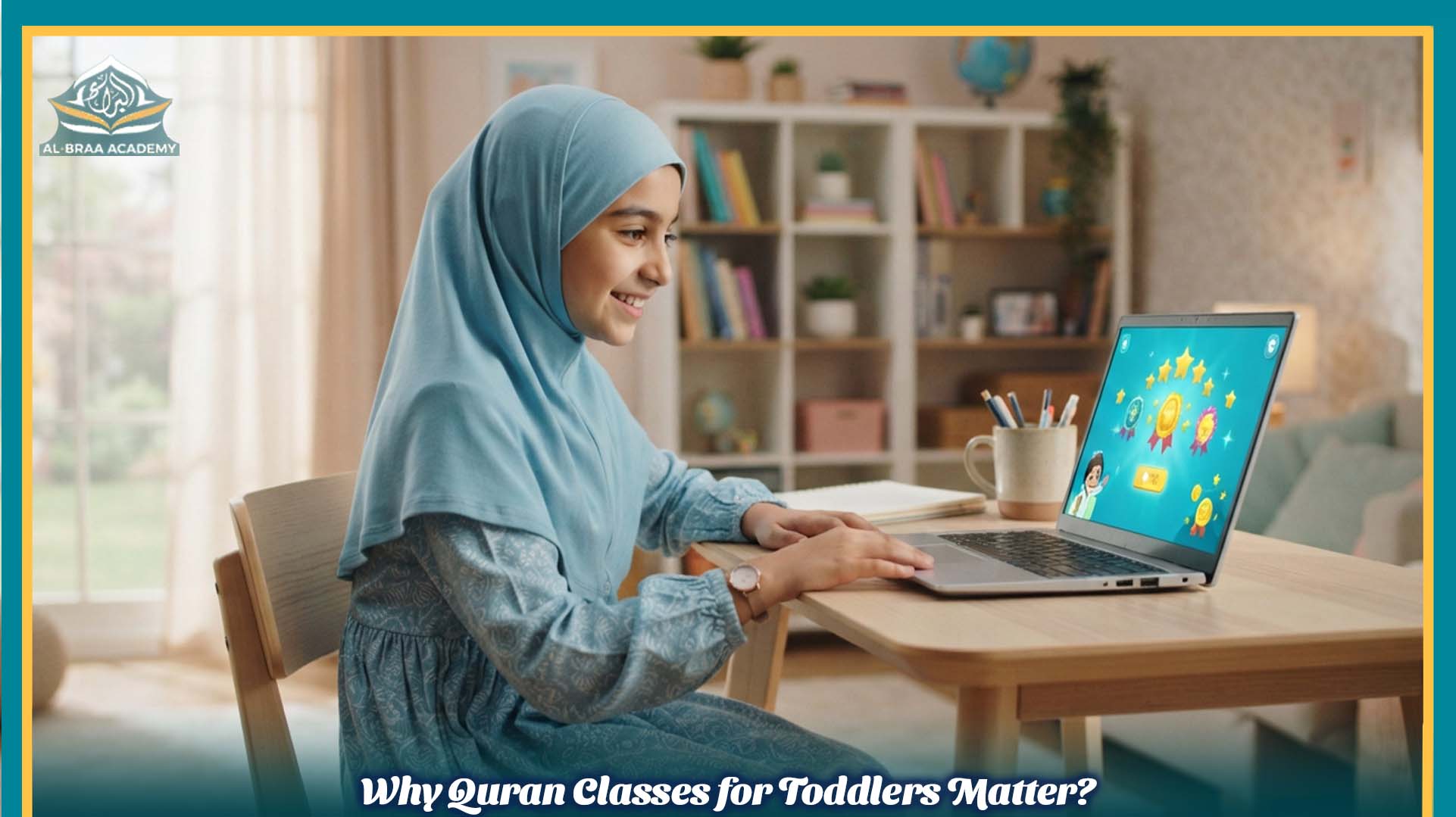
The early years provide an excellent opportunity to introduce children to familiar sounds, words, routines, and values. Young learners may not understand the complete meaning of every verse, but regular exposure can help them become comfortable with Quranic recitation and Arabic pronunciation.
A child who regularly hears Quran recitation may gradually recognize familiar verses and sounds. Simple duas can also become part of everyday life when parents and teachers introduce them through repetition and practical situations.
At the same time, early education should remain free from unnecessary pressure. Toddlers naturally have short attention spans, and their learning abilities can differ greatly. One child may happily repeat a verse several times, while another may respond more positively to pictures, movement, or a short story.
For that reason, flexibility is essential.
A thoughtful teacher knows when to repeat an activity, when to introduce something different, and when the child needs a short pause. Such an approach helps children see Quran learning as a positive experience instead of an obligation they fear.
Familiarity also matters. When children encounter Quranic learning in a warm environment from an early age, they can gradually become more comfortable with recitation and basic Islamic concepts. Later, when they begin more structured reading, memorization, or Tajweed study, that early confidence can provide a useful foundation.
Start Your Quran Journey With Al Braa Quran Academy Today
If you are ready to begin a meaningful journey with the Holy Quran, Al Braa Quran Academy is here to guide you step by step. Our qualified teachers help you improve your Quran recitation, understand Tajweed rules, and build strong confidence in reading the Quran correctly.
Moreover, you can join flexible online classes designed to suit all ages and learning levels. As a result, you can learn at your own pace while maintaining consistency and focus. In addition, our structured lessons ensure steady progress and a clear understanding. Start today and take the first step toward mastering Quran reading with clarity, consistency, and a strong spiritual connection.

What Do Children Learn in Quran Classes for Toddlers?
A toddler does not need an advanced academic curriculum. Too much information at once can make the learning process confusing and tiring.
Instead, the program should concentrate on a limited number of meaningful skills. Depending on age and readiness, children may begin with:
- Recognizing Arabic letters.
- Listening to correct Quranic pronunciation.
- Repeating individual Arabic sounds.
- Memorizing very short surahs.
- Learning simple daily duas.
- Becoming familiar with selected names of Allah.
- Listening to age-appropriate stories about the Prophets.
- Practicing basic Islamic manners.
- Developing familiarity with Quranic vocabulary.
- Building a regular habit of listening to Quran.
- Beginning simple pronunciation and Tajweed exercises.
The sequence should remain flexible. A three-year-old may spend more time listening and repeating, whereas a five-year-old may be ready for more structured letter recognition and memorization.
Rather than expecting every child to follow an identical pace, the teacher can adjust the lesson according to individual progress. This makes the learning experience more comfortable and gives children the opportunity to develop confidence.
Quran Classes for Toddlers by Age and Learning Stage
Children between three and six are not at the same developmental stage. A successful curriculum should therefore become gradually more advanced as the child develops.
Level One: Quran Classes for Toddlers Ages 3–4
Children between three and four are still developing their ability to communicate, concentrate, follow instructions, and control their movements. Lessons at this age should consequently remain simple, short, and interactive.
Possible learning goals include:
- Recognizing Arabic letters.
- Listening to short Quranic passages.
- Repeating individual sounds.
- Memorizing one or two very short surahs gradually.
- Learning basic duas.
- Listening to selected stories of the Prophets.
- Practicing Islamic greetings and simple manners.
- Participating in visual and movement-based activities.
Technical explanations should be limited at this stage. Instead of asking a young child to memorize complicated Tajweed terminology, the teacher can demonstrate the correct sound and allow the child to imitate it.
Repetition is particularly useful. A child may need to hear the same letter or verse several times before becoming comfortable with it. That is completely normal.
The lesson can also move between different activities. A few minutes of letter recognition might be followed by a short story, then a repetition exercise, and finally a simple review.
This variety helps maintain attention without making the child feel that learning is difficult.
Level Two: Quran Classes for Toddlers Ages 4–5
Children around four and five often become more curious and communicative. They may begin asking questions about Allah, the Prophets, Paradise, good behavior, and the world around them.
The curriculum can therefore become slightly more structured.
At this stage, children may work on:
- Additional Arabic letter recognition.
- Short surahs for memorization.
- Simple meanings of selected Quranic words.
- More daily duas.
- Basic Islamic manners.
- Selected names of Allah.
- Short stories about the Prophets.
- Quran listening exercises.
- Early pronunciation practice.
Story-based questions can also become part of the lesson. After hearing a simple story, the teacher might ask, “What did we learn?” A child could answer, “We should be patient,” or “We should tell the truth.”
Such questions connect Islamic knowledge with everyday behavior. The child is not merely repeating information but beginning to understand how Islamic values relate to daily life.
Level Three: Quran Classes for Toddlers Ages 5–6
Children approaching six may be ready for a more organized learning routine. Many can follow several instructions, memorize longer passages, recognize more letters, and understand simple explanations.
The curriculum can gradually introduce:
- Additional short surahs.
- Basic Tajweed principles.
- Structured Quran reading practice.
- Simple meanings of selected surahs.
- More daily supplications.
- Stories from the life of Prophet Muhammad ﷺ.
- Selected names of Allah and their meanings.
- Islamic manners and character development.
- Independent revision of familiar material.
Even at this age, however, lessons should not turn into long lectures. Stories, questions, games, repetition, and positive feedback remain valuable. A slightly older child still learns best when the lesson feels active and purposeful.
How to Make Quran Classes for Toddlers Engaging?
Teaching a toddler requires a different approach from teaching an adult. Young children can understand an idea for a short period and then suddenly become distracted. This does not automatically mean that the lesson has failed. It simply means that the teacher should respond to the child’s developmental needs.
One effective method is to divide the lesson into small sections.
A sample session might include:
- A few minutes for greetings and revision.
- A short Arabic letter or pronunciation activity.
- A brief memorization exercise.
- A story or Islamic activity.
- A final review with encouragement.
The exact structure can change according to the child’s personality and attention span. Some children may concentrate longer than others. Therefore, the teacher should observe the learner and adjust the pace rather than rigidly following a timetable.
Using the child’s name, asking simple questions, and celebrating small achievements can also make the lesson more personal.
If a child finally pronounces a difficult sound correctly, that achievement deserves encouragement. Small successes help children develop confidence, and confidence often encourages them to keep trying.
Fun-Based Quran Classes for Toddlers
Young children naturally learn through play and exploration. Incorporating enjoyable activities into quran classes near me New York can therefore make repetition easier and more memorable.
Useful materials may include:
- Flashcards.
- Pictures.
- Simple puzzles.
- Digital whiteboards.
- Drawing activities.
- Matching exercises.
- Arabic letter games.
- Story-sequencing cards.
- Short quizzes.
- Visual demonstrations.
- Movement-based activities.
For example, when learning Arabic letters, the teacher can display several letters and ask the child to find a particular one. The learner can then repeat the sound before moving to another activity.
During a story about a Prophet, visual prompts can help the child remember important details. Similarly, a short quiz can turn revision into an enjoyable challenge.
The purpose of these activities is not entertainment for its own sake. Each activity should support a clear learning objective.
When games, pictures, and stories are connected to the lesson, they can make difficult material feel easier for a young child.
Stories in Quran Classes for Toddlers

Stories are especially useful for young children because they turn ideas into memorable situations. Selected Quranic and Islamic stories can introduce values such as:
- Patience.
- Honesty.
- Kindness.
- Courage.
- Gratitude.
- Trust in Allah.
- Obedience.
- Forgiveness.
- Helping others.
The teacher should keep each story appropriate for the child’s age. A three-year-old does not need a detailed historical discussion. One simple message is often enough.
For instance, a teacher might explain that Prophet Nuh عليه السلام remained patient despite the difficulties he faced. The lesson can then move toward a simple question such as, “What can we do when something is difficult?”This transforms storytelling into character education.
As children hear stories repeatedly, they may remember both the events and the values connected to them. That makes storytelling more than a way to fill lesson time; it becomes a tool for helping children understand Islamic character.
Games for Quran Classes for Toddlers
Games can make repetition less tiring, especially when children are learning letters or short surahs. Imagine that a child is practicing Arabic letters. Instead of showing the same sequence repeatedly, the teacher can turn recognition into a quick activity. The learner might search for a particular letter among several choices or match a letter with its sound.
Short surahs can also be practiced through participation. The teacher may recite part of a familiar verse and allow the child to complete the next phrase. The objective is not competition. Participation and repetition are more important.
A good educational game should also remain short. If the activity becomes more exciting than the learning objective, the teacher can simplify it and return to the main lesson.
Quran Memorization in Classes for Toddlers
Memorization can begin during early childhood, but expectations need to remain realistic. Young children may memorize short surahs effectively through repeated listening and recitation. However, progress should not be judged solely by the number of surahs completed.Correct pronunciation, consistency, confidence, and retention are equally important.
A child who learns one short surah accurately may be making better progress than a learner who memorizes several surahs quickly but forgets them soon afterward.
A simple memorization process can involve:
- Listening to the surah several times.
- Repeating a short phrase.
- Connecting the phrase to the following part.
- Reciting the complete verse.
- Reviewing previous material.
- Revisiting the surah on later days.
Regular revision is essential because young children can forget material quickly.
Parents should therefore celebrate steady progress rather than rushing toward a particular number of memorized surahs.
Basic Tajweed in Quran Classes for Toddlers
Tajweed is essential for correct Quran recitation, but toddlers should not be expected to memorize complicated terminology.
At the beginning, correct pronunciation can be taught through listening and imitation. The teacher models a sound. The child listens carefully. Then the child attempts to reproduce it.
As the learner becomes older and more confident, simple concepts can be introduced, including:
- Correct articulation of the best online Arabic classes letters.
- Clear pronunciation.
- Basic elongation.
- Simple stopping and continuation rules.
- Differentiating between similar sounds.
The teacher should introduce each concept when the child is ready. This gradual method helps establish good pronunciation without overwhelming a young learner with technical information.
Arabic Letters in Quran Classes for Toddlers
Parents sometimes wonder whether a toddler should start reading Quranic words immediately. For many beginners, learning Arabic letters and sounds first creates a stronger foundation. The child can begin by identifying individual letters and gradually learn tajweed online for beginners how they sound with basic vowel marks.
Once these skills become familiar, the learner can move toward simple combinations and Quranic words. This progression makes reading less intimidating.
The teacher can also connect each new letter or sound to examples from the Quran. Doing so helps the child understand why the skill matters rather than viewing it as an isolated exercise.
The Teacher’s Role in Quran Classes for Toddlers
The teacher has a major influence on a child’s first experience with Quran learning. Strong Quran knowledge is essential, but it is not the only requirement for teaching toddlers effectively. Young learners also need a teacher who demonstrates patience, warmth, creativity, and flexibility.
An effective Quran tutors online should be able to:
- Explain ideas in simple language.
- Correct pronunciation gently.
- Maintain attention without excessive pressure.
- Change activities when necessary.
- Encourage effort.
- Adjust the lesson to individual ability.
- Communicate clearly with parents.
- Model accurate Quran recitation.
A child’s response to mistakes can depend greatly on how the teacher handles them.
Harsh criticism may make the learner afraid to participate. Calm correction, on the other hand, can show the child that mistakes are simply part of improvement. That attitude can have a lasting influence on the child’s relationship with learning.
Online Quran Classes for Toddlers
Online learning can be convenient for families who prefer lessons at home. Children do not need to travel, while parents can often choose a schedule that fits around family responsibilities.
One-to-one online instruction can also allow the teacher to focus closely on the child’s pronunciation, memorization, and participation. However, online learning works best when the environment is prepared properly.
The child should have a quiet and comfortable place to study. The device should be ready before the lesson starts, and unnecessary distractions should be removed.
A simple preparation routine may include:
- Preparing the device.
- Checking the internet connection.
- Reducing background noise.
- Keeping water nearby.
- Removing distracting toys.
- Explaining what will happen during the lesson.
- Encouraging the child before the session begins.
These small details can make the transition into class much smoother.
How Long Should a Toddler’s Quran Lesson Last?
There is no single lesson duration that suits every young learner. A three-year-old may benefit from shorter learning periods, while a five- or six-year-old may be able to participate for longer. The quality of attention is more important than simply counting minutes.
Once a child becomes very tired or restless, forcing the lesson to continue can reduce its effectiveness. Short, focused activities can often achieve more than one long uninterrupted session.
For this reason, teachers can divide lessons into several sections. A child may work on letters, listen to a short recitation, review a surah, and then participate in a story or activity.
This structure keeps the experience achievable. Finishing a lesson successfully can also encourage the child to look forward to the next one.
Making Quran Learning Enjoyable at Home
The home environment can reinforce what children learn during lessons. Families can listen to Quran recitation during appropriate quiet moments. Parents can encourage children to repeat short duas during daily routines and introduce Islamic manners naturally through everyday situations.
For example, when a child shares a toy, parents can talk briefly about kindness. When the child expresses gratitude, the family can connect that behavior with being thankful to Allah.
Such moments help children understand that Islam is not limited to a lesson or a screen. Instead, Islamic values become connected with daily family life. This connection can make early Quran education more meaningful.
Common Mistakes Parents Should Avoid
Parents naturally want their children to progress quickly. Nevertheless, excessive pressure can make learning more difficult.
One common mistake is expecting a toddler to learn at the same pace as an older child. Developmental differences are normal and should be respected.
Comparison is another problem. Children should not be measured against siblings, classmates, or other learners.
Memorization should also not become the only measure of success. Pronunciation, listening, confidence, Islamic manners, and positive participation are important parts of development.
Repeatedly interrupting every small mistake can create hesitation. Some errors can be corrected gradually as the child gains confidence.
Inconsistent attendance can create another challenge. Young learners need repetition, so frequent interruptions may result in more time being spent reviewing old material.
Finally, parents should avoid turning every home practice session into a strict test. A positive relationship with the Quran grows through patience, respect, encouragement, and consistency.
How to Choose the Right Quran Program for a Toddler?
Parents should evaluate several factors before choosing a program.
Age-Appropriate Curriculum
The course should explain how learning changes according to age and ability. A three-year-old should not automatically receive the same material as a six-year-old.
Qualified Quran Teachers
Teachers should have strong Quran reading skills and understand how to communicate with young children.
Interactive Learning
A program based entirely on lectures may struggle to hold a toddler’s attention. Stories, activities, visual materials, repetition, and interaction can make lessons more suitable.
Individual Attention
Young children can benefit from one-to-one teaching because the instructor can adapt the pace, activities, and corrections to the learner.
Flexible Scheduling
Family routines differ. A flexible schedule can make regular attendance easier to maintain.
Parent Communication
Parents should understand what their child is learning and receive practical guidance for supporting progress at home.
Positive Learning Environment
Children should be treated with patience and respect. Mistakes should be corrected without embarrassment or unnecessary pressure.
How Parents Can Support Quran Learning at Home?

Parents do not need to become Quran teachers to help their children succeed. Their most important contribution can be creating a positive environment.
A predictable routine is particularly useful. Reviewing a short surah at a similar time each day can make repetition feel natural rather than burdensome. Parents can also listen to the child without turning every practice session into an examination.
Instead of saying, “You forgot this again,” a more encouraging approach would be, “Let’s listen to it once more together.”That small change can make practice feel safer.
Children also benefit when parents praise effort. A learner who attempts a difficult Arabic sound deserves encouragement even if the pronunciation still needs improvement. Over time, consistent encouragement can help build perseverance.
Choosing Quran Classes for Toddlers That Build Confidence
A strong early program should do more than deliver information. It should help the child become comfortable with the Quran.That confidence develops gradually.
A child who is encouraged to try again after making a mistake may become more willing to participate. Someone who is praised for careful listening may begin paying closer attention. Another learner may become excited about recognizing an Arabic letter that was previously unfamiliar. These small moments represent genuine progress.
For this reason, parents should evaluate a program by observing the child’s overall development rather than looking only at completed lessons.
Is the child more comfortable hearing Quranic Arabic? Can the child recognize familiar letters? Does the learner remember previously studied material? Does the child participate willingly? These questions can provide a clearer picture of progress.
Building a Positive Relationship With the Quran
The ultimate purpose of early Quran education is larger than memorizing a list of surahs. Children are beginning a relationship with the Quran.
That relationship can become stronger when Quran learning is associated with warmth, encouragement, beautiful recitation, meaningful stories, and supportive adults.
A three-year-old may not understand the full meaning of every verse, and that is perfectly natural. Understanding can develop gradually as language skills and maturity increase.
The early stage is therefore an opportunity to establish familiarity and positive habits rather than demand perfection.
What Makes a Strong Early Quran Program?
Several elements work together to create a valuable learning experience. First, the curriculum should respect the child’s developmental stage. Material that is too difficult can create frustration, while material that is too simple for an older learner may reduce engagement.
Second, Quranic skills should be taught accurately. Correct pronunciation deserves attention from the beginning. Third, repetition should be part of the routine. Young learners need frequent opportunities to revisit previously learned material.
Fourth, Islamic character should be connected with the learning experience. Stories and simple discussions can show children how Quranic values relate to their behavior. Finally, individual differences should be respected.
One child may enjoy stories, another may prefer visual activities, and a third may respond particularly well to repetition. A flexible teacher can use different methods while maintaining the same educational objective.
Al Braa Best Academy to learn Arabic can structure its early learning approach around these principles, allowing families to introduce children to Quranic education through a supportive and age-sensitive experience.
When Should a Child Start Learning the Quran?
There is no single age that works for every child. Some children may be ready for structured activities around age three. Others may need additional time before they can participate comfortably. Readiness is more important than a specific birthday.
A child who can listen for a few minutes, repeat sounds, follow simple instructions, and participate willingly may be ready for a gentle introduction.
Parents should not assume that starting later means their child is behind. At the same time, there is no need to wait for a child to become older if the learner is naturally interested and ready. The best starting point is one that allows learning to remain positive and sustainable.
Preparing a Child for the First Quran Lesson
The first lesson should feel welcoming rather than intimidating. Parents can explain that the child will meet a teacher, hear Quran, learn some Arabic, and take part in simple activities.
It is better to avoid statements such as, “You must behave perfectly.” Such language can make a young child anxious before the lesson even begins.
A more positive message could be, “You are going to learn something beautiful today.”For online lessons, using the same comfortable learning space can also create familiarity.
The teacher can begin with a friendly conversation before introducing the first activity. This gives the child time to become comfortable with the new environment.
Long-Term Benefits of Early Quran Education
Early Quran education can provide a foundation for later learning. A child who becomes familiar with Arabic letters may find beginner reading easier. Someone who develops a regular memorization routine may be better prepared for longer passages in the future.
Likewise, early exposure to correct pronunciation can support later Tajweed study. Nevertheless, progress should remain gradual.
As children grow, their curriculum can become more advanced. They may move from recognizing letters to reading words, from short surahs to longer passages, and from basic pronunciation practice to more formal Tajweed rules.
The foundation remains valuable because advanced learning becomes easier when basic skills are secure.
Encouragement Is More Effective Than Pressure
Children generally respond better to encouragement than fear. Praise should focus on effort, attention, improvement, and persistence.
Useful expressions include:
- “You remembered that verse very well.”
- “Your pronunciation is becoming clearer.”
- “You listened carefully today.”
- “I like how you tried again.”
- “You worked hard on that letter.”
Such comments reinforce positive behavior without demanding perfection. Small rewards can also be used carefully. A sticker, star, or verbal compliment may encourage participation.
However, children should gradually learn to appreciate Quran learning itself rather than expecting a prize after every activity. The long-term goal is to help the child discover the joy of learning.
Quran Classes for Toddlers: Building Early Quran Skills
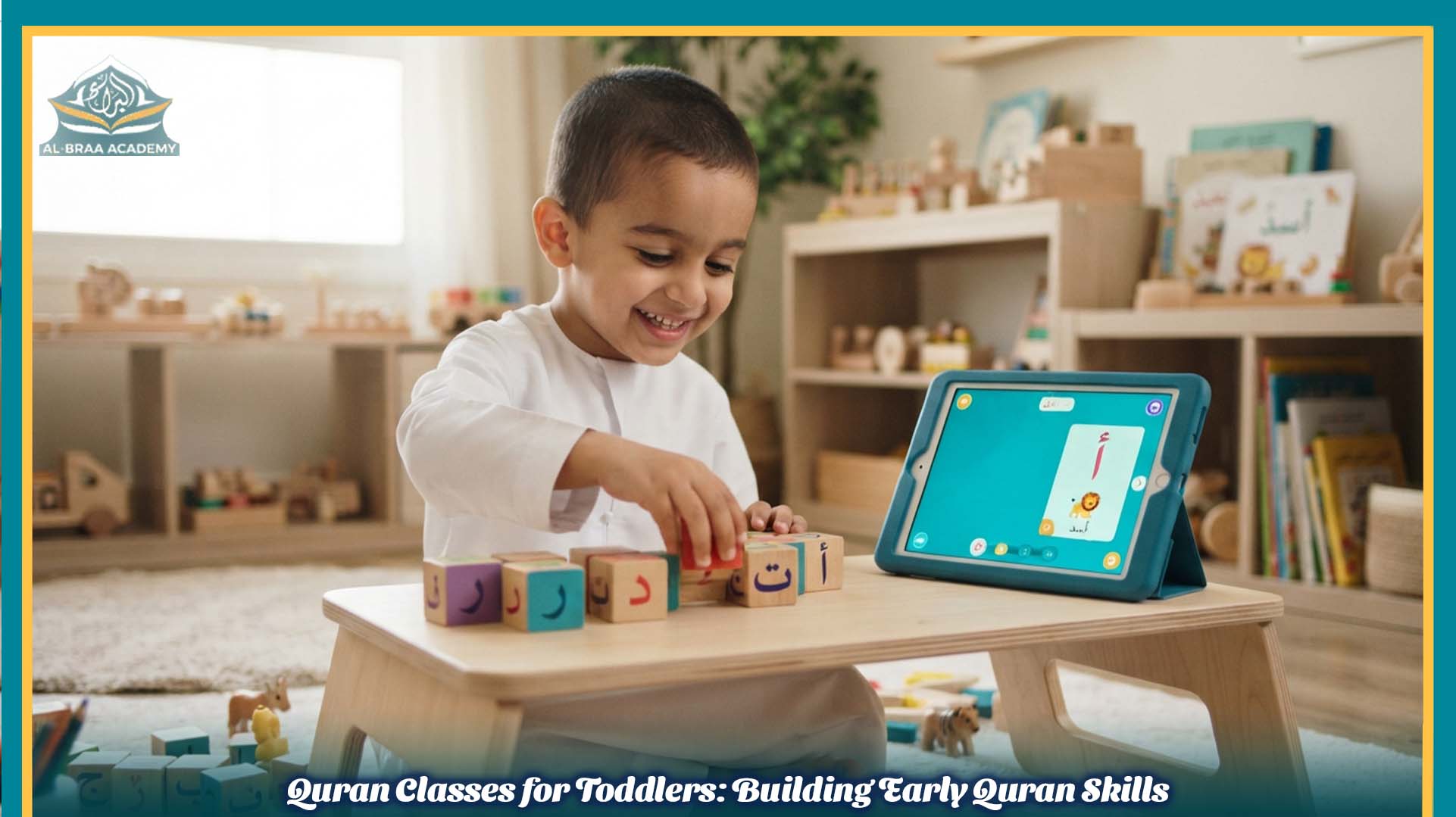
The first years of Quran education should be viewed as a beginning rather than a race. A toddler who learns a couple of short surahs with improving pronunciation, remembers a few duas, recognizes Arabic letters, and understands a simple Islamic value has already achieved something meaningful. Numbers alone cannot tell the whole story.
Parents should observe whether the child enjoys the lesson, becomes more comfortable with Arabic sounds, remembers previously learned material, and participates with greater confidence.
Those signs can be more valuable than a long list of completed lessons.
A successful early program does not try to make a toddler perform like an older student. Instead, it gives the child a positive first experience with the Quran and gradually develops the skills needed for future learning.
Frequently Asked Questions
section answers the most common questions parents have about Quran classes for toddlers, helping them choose the right learning approach for their children.
Can a child with no Arabic background join beginner Quran lessons?
Yes. Previous knowledge of Arabic is not necessary for a true beginner. The teacher can introduce letters, sounds, simple vocabulary, and Quranic recitation gradually according to the child’s ability.
What should parents do if their child refuses to participate?
Resistance can happen, particularly during the first few lessons. Parents can give the child time to become familiar with the teacher and learning environment. Shorter activities, encouragement, and a calm approach may help the child participate more willingly.
Should a parent remain beside a toddler during an online lesson?
That depends on the child’s age, confidence, and level of independence. Very young children may need a parent nearby, while older learners may gradually become more independent. The parent can provide support without taking over the lesson.
Can a toddler start learning Tajweed?
Yes, but early Tajweed instruction should be simple. Young learners can begin by listening to accurate pronunciation and imitating the teacher. More detailed terminology and rules can be introduced when the child’s language and learning abilities are more developed.
How can parents recognize genuine progress?
Progress can appear in several forms. Better pronunciation, stronger recall, improved letter recognition, greater participation, more confident recitation, and the ability to remember previous lessons are all useful indicators. Progress should be evaluated according to the child’s own development rather than comparison with others.
In conclusion, early Quran education should be built on patience, consistency, accurate instruction, and genuine care for the child’s experience. The objective is not to make a toddler complete an advanced syllabus. Instead, the aim is to introduce Quranic learning in a way that feels welcoming, understandable, and meaningful.
Children between three and six can gradually develop important foundations through short surahs, Arabic letters, simple duas, Islamic manners, stories, listening exercises, and age-appropriate pronunciation practice. When these elements are introduced with the right balance, learning can become an enjoyable part of the child’s routine.
The teacher’s responsibility is to guide, encourage, correct gently, and adapt the lesson when necessary. Parents can strengthen the process by creating a calm home environment, reviewing material consistently, and avoiding unnecessary comparisons.
Most importantly, early Quran education should nurture love before demanding achievement.
When a child looks forward to a lesson, attempts a difficult sound again after making a mistake, recognizes a familiar Arabic letter, or proudly recites a short surah, meaningful learning is already taking place.
Al Braa Quran Academy can offer families a structured approach to introducing young children to Quran reading, memorization, Islamic values, and foundational Tajweed in a way that respects their age and individual development. The right beginning can help children approach future Quran study with greater confidence, familiarity, and enthusiasm.