How To Perform Wudu correctly is an essential topic for every Muslim, as purification is the foundation of prayer and worship. Understanding the proper steps of wudu ensures that acts of worship are performed in accordance with authentic Islamic teachings.
Many Muslims, especially beginners or new learners, may feel uncertain about the correct order, intentions, and actions involved in wudu. Al-Braa Academy provides clear and reliable guidance to help learners master this important practice with confidence.
Through simple explanations and structured lessons, students can learn how to perform wudu step by step while understanding its spiritual significance. Wudu is not only a physical act of cleanliness but also a preparation of the heart and mind for prayer. Learning it correctly helps Muslims feel more connected and mindful during worship.
By relying on trusted sources and qualified instructors, learners can avoid common mistakes and gain clarity in their daily religious practices, making wudu a consistent and meaningful habit.
How to Perform Wudu – A Complete Introduction
Understanding How to Perform Wudu is essential for every Muslim who wishes to establish prayer correctly and consciously. Wudu is not merely a physical act of washing certain body parts; it is a spiritual preparation that aligns the heart, mind, and body before standing in front of Allah in prayer.
Before performing salah, a Muslim must enter a state of purity, and this purification process is known as wudu. It represents cleanliness, discipline, and obedience to divine instruction. Without wudu, salah is not valid, which highlights its importance in daily worship.
Wudu teaches mindfulness. Every step, from washing the hands to cleansing the feet, is done with awareness and intention. The Prophet Muhammad (peace be upon him) emphasized the necessity of purification before prayer, making it clear that no salah is accepted without it. This shows that wudu is not optional or symbolic; it is a foundational requirement of worship.
Learning how to perform wudu correctly ensures that prayer is performed with confidence and sincerity. Many people grow up practicing wudu but may not fully understand the spiritual depth behind it.
Each drop of water represents purification from minor sins, and each step prepares the believer mentally for salah. By mastering the correct method, Muslims strengthen their connection with Allah and enhance the quality of their worship.
In this comprehensive guide, we will walk through the complete method of performing wudu step by step, explain what nullifies it, and clarify special situations such as wiping over socks or shoes. Whether you are a beginner or someone revising your knowledge, understanding how to perform wudu properly will enrich your daily acts of devotion and bring greater mindfulness into your prayer routine.
Learn Proper Wudu with Al-Braa Academy
If you want to perfect your understanding of How to Perform Wudu and ensure that your prayer is always valid and spiritually fulfilling, Al-Braa Academy is here to guide you.
Our qualified instructors provide clear, structured lessons that explain not only the steps of wudu but also the wisdom behind each action. Through personalized guidance and authentic Islamic teachings, students of all ages gain confidence in their daily worship. For a deeper dive, take a look at our islamic classes.
Join Al-Braa Academy today and strengthen your foundation in Islamic practices. Learn with experienced teachers who are dedicated to helping you build proper habits of purification and prayer. Start your journey toward more mindful and correct worship now. For learners who want to go further, take a look at our islamic manners course.

What Is Wudu and Why Is It Important?
Wudu is the Islamic method of purification that prepares a Muslim physically and spiritually before performing salah. The word itself refers to cleanliness and brightness, symbolizing the removal of impurities and the preparation of the believer to stand before Allah.
Understanding How to Perform Wudu begins with recognizing why it is required in the first place. Prayer is a direct conversation with Allah, and entering that sacred moment requires a state of purity.
Wudu serves as both an external and internal cleansing process. Externally, it removes minor physical impurities from specific body parts. Internally, it encourages reflection, humility, and readiness for worship. The Prophet Muhammad (peace be upon him) taught that purification is half of faith, demonstrating how central cleanliness is within Islam.
It is important to understand that wudu is mandatory before each salah if one’s previous wudu has been nullified. Performing prayer without proper purification invalidates the act of worship. This reinforces discipline and attentiveness in daily life. Muslims are encouraged to maintain wudu as much as possible, as it keeps them in a constant state of readiness for prayer.
Beyond its legal requirement, wudu carries immense spiritual reward. Each time a believer washes a limb, minor sins committed by that limb are forgiven. This transforms a simple washing routine into a deeply meaningful spiritual practice. Learning how to perform wudu properly ensures that this act is done according to the Sunnah, preserving both its validity and its spiritual benefits.
The Intention and Saying Bismillah in How to Perform Wudu
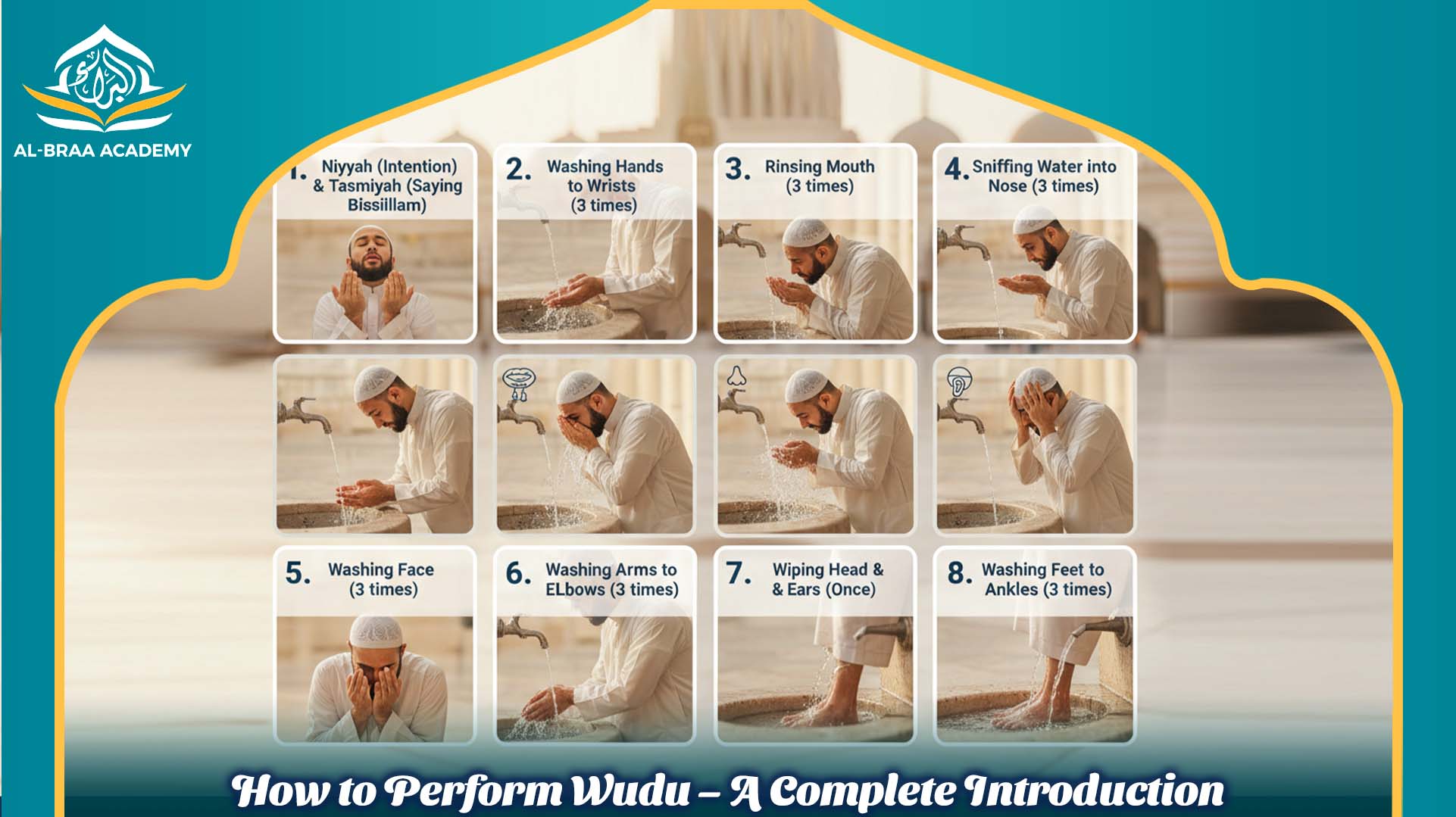
When learning How to Perform Wudu, the very first step is forming the intention. Intention does not require spoken words or a specific formula; rather, it is an internal decision made in the heart. A Muslim simply becomes aware that they are about to perform wudu in order to prepare for salah. This awareness transforms an ordinary washing routine into an act of worship.
In Islam, actions are judged by intentions, and wudu is no exception. When the heart is conscious of its purpose, the act carries spiritual weight and reward.
After forming the intention, the believer says “Bismillah” (In the Name of Allah). This phrase serves as a reminder that every act begins with Allah and is performed for His sake. Saying Bismillah before starting wudu distinguishes it from ordinary washing. It sets a tone of mindfulness and devotion. Even if said quietly, it establishes sincerity and focus.
Beginning with intention and Bismillah also teaches discipline. It prevents wudu from becoming mechanical or rushed. Instead, each step becomes deliberate and meaningful. The believer understands that they are preparing to stand before their Creator, which creates humility and attentiveness.
Understanding this first stage of how to perform wudu ensures that the process starts correctly, spiritually and practically. Without intention, the washing may physically occur, but the act of worship is incomplete.
By beginning with conscious awareness and remembrance of Allah, wudu becomes a bridge between daily life and sacred prayer, helping the believer transition into a state of readiness and spiritual clarity.
Washing the Hands, Mouth, and Nose in How to Perform Wudu
The next stage in understanding How to Perform Wudu involves cleansing the hands, mouth, and nose. These steps are essential because they remove visible and hidden impurities while preparing the body for prayer. The Prophet Muhammad (peace be upon him) taught that purification begins with the right side, emphasizing order and consistency.
The process includes the following actions:
- Wash the right hand from fingertips to wrist three times, ensuring water reaches every part.
- Repeat the same process with the left hand three times.
- Rinse the mouth three times using the right hand, swirling the water thoroughly to cleanse properly.
- Sniff water gently into the nostrils three times and expel it carefully without causing harm.
These actions are not random; they follow a precise Sunnah method. Washing the hands first ensures cleanliness before touching other parts of the body. Rinsing the mouth purifies the area used for recitation of the Quran during prayer. Cleaning the nose removes impurities and promotes hygiene.
Performing these steps attentively enhances both physical cleanliness and spiritual awareness. Care must be taken not to waste water or rush through the process. Moderation and mindfulness are key principles in Islamic purification. Through this methodical cleansing, the believer continues transitioning from a worldly state into one of worship and reverence.
Washing the Face and Arms Properly
Continuing the journey of How to Perform Wudu, the next step is washing the face thoroughly three times. The boundaries of the face extend from ear to ear and from the top of the forehead to the bottom of the chin. Every part within this area must be washed to ensure validity.
For men with beards, it is recommended to pass wet fingers through the beard so that water reaches the skin beneath. This careful attention ensures no area is left dry.
The face represents identity and expression. Washing it symbolizes presenting oneself in purity before Allah. It also reminds the believer that the face will one day shine with light on the Day of Judgment for those who maintained proper purification.
After the face, both arms are washed up to and including the elbows, starting with the right arm and then the left, each three times. Water must reach every portion, including areas that are often overlooked. This step reinforces discipline and completeness. The repetition ensures thoroughness while symbolizing spiritual cleansing.
These actions may appear simple, yet they carry deep meaning. The arms are tools for action in daily life. Washing them signifies purification of one’s deeds and intentions.
By carefully performing these steps, a Muslim strengthens their understanding of how to perform wudu correctly while cultivating humility and attentiveness before prayer.
Wiping the Head and Cleaning the Ears
As we continue learning How to Perform Wudu, the next step shifts slightly from washing to wiping. After completing the washing of the arms, the believer wipes the head once using wet hands. This distinction is important because the Sunnah specifically instructs wiping rather than washing.
The hands are passed from the front of the head to the back and then returned to the front in one smooth motion. This action symbolizes humility and submission, as the head represents intellect, thought, and decision-making.
Unlike other steps that are repeated three times, wiping the head is performed only once. This teaches balance and adherence to prophetic guidance. Whether a person has long hair, short hair, or no hair at all, the method remains the same. The purpose is not the amount of water used but the obedience in following the correct method.
After wiping the head, the ears are cleaned using the same moisture on the hands. The index fingers are used to gently clean the inside of the ears, while the thumbs wipe the outer areas behind them. This is also done once.
The ears are included because they are part of the head and play a vital role in listening, especially to the recitation of the Quran during prayer.
These actions may seem brief, yet they complete an essential portion of purification. By following this method carefully, the believer ensures their wudu aligns with the Sunnah and prepares them mentally for the solemn act of salah.
Washing the Feet Correctly in How to Perform Wudu
The final washing step in How to Perform Wudu involves cleansing the feet thoroughly, ensuring no part remains dry. This step requires attention and care because the feet often collect dust and impurities throughout the day. Proper washing of the feet completes the physical purification process before prayer.
The correct method includes the following:
- Begin with the right foot, washing from the toes up to and including the ankle three times.
- Ensure water reaches between the toes and around the heel.
- Follow the same process for the left foot, also washing it three times up to the ankle.
- Make sure no area is left dry, especially the back of the ankle and between the toes.
The repetition ensures thorough cleanliness. The Prophet Muhammad (peace be upon him) warned about neglecting certain areas of the feet, highlighting the importance of complete washing. This step reminds believers that attention to detail matters in worship.
Washing the feet also carries symbolic meaning. The feet carry a person to places throughout the day, and cleansing them represents preparing oneself to walk toward acts of obedience and righteousness. Completing this step properly ensures that the entire body required for wudu has been purified according to Islamic guidance.
Reciting the Shahada and Dua After Completing Wudu
After finishing all physical steps of How to Perform Wudu, the process concludes with remembrance of Allah. The Prophet Muhammad (peace be upon him) would recite the Shahada upon completing wudu, affirming faith and devotion.
The testimony declares belief in the oneness of Allah and the prophethood of Muhammad (peace be upon him). This transforms the physical act of washing into a renewed declaration of faith.
Following the Shahada, it is recommended to recite a supplication asking Allah to make one among those who constantly repent and purify themselves. This dua emphasizes that true purification is not only physical but also spiritual. It reinforces humility and the need for continual self-improvement.
By concluding wudu with remembrance and supplication, the believer completes the cycle of preparation for prayer. The body has been cleansed, and the heart has been reminded of its purpose. At this stage, the Muslim is fully ready to stand before Allah in salah with confidence and tranquility.
What Nullifies Wudu and Special Cases?
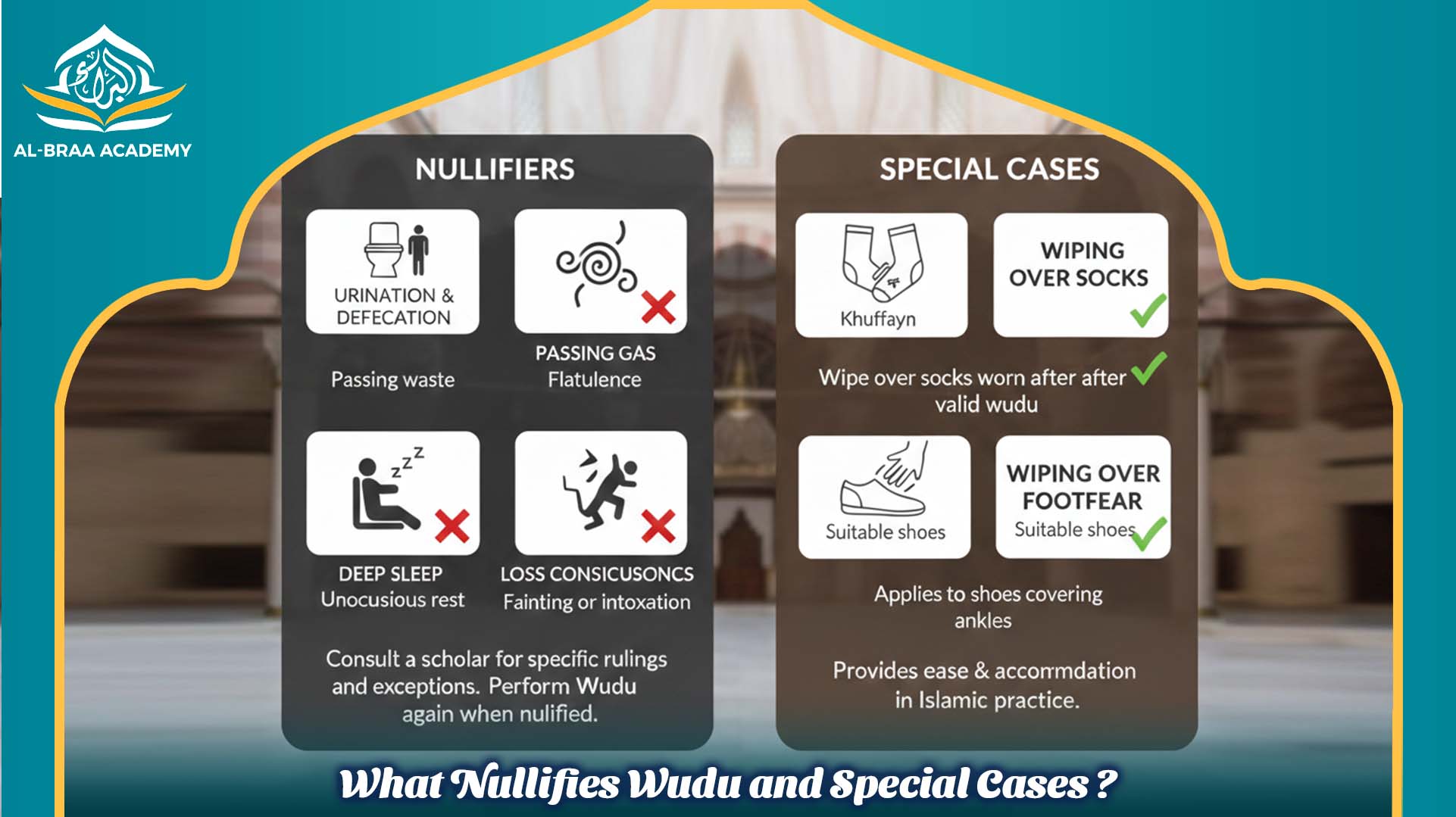
Understanding How to Perform Wudu also requires knowing what invalidates it. Wudu remains valid until certain actions occur that break the state of purification. Natural bodily discharges such as urination, defecation, or passing gas nullify wudu.
Falling into deep sleep, losing consciousness, or any state that removes awareness also requires renewal of wudu before prayer. These rulings maintain discipline and ensure that prayer is always performed in a state of purity.
There is also a special allowance in Islamic law regarding wiping over socks or footwear. If a person wears socks after having performed valid wudu, and later needs to renew it, they are not required to remove the socks during the next wudu. Instead, when reaching the step of washing the feet, they may gently wipe over the top of each sock once with wet hands.
This concession reflects ease within Islamic practice while maintaining purification requirements. The same ruling applies to footwear that covers the ankles properly.
These guidelines demonstrate balance in Islamic law—maintaining purity while accommodating practical daily needs. By understanding both what nullifies wudu and the permissible allowances, a Muslim ensures their worship remains valid and consistent.
Frequently Asked Questions about How to Perform Wudu
Some readers ask many questions about the topic How to Perform Wudu. Here are some of those frequently asked questions:
What is the minimum requirement for a valid wudu?
All obligatory parts must be completed: washing the face, arms up to the elbows, wiping the head, and washing the feet up to the ankles, along with intention.
Does touching someone break wudu?
Scholarly opinions differ, but in many interpretations, casual contact without specific conditions does not invalidate wudu.
How long does wudu last?
Wudu remains valid until one of the nullifying actions occurs.
Can I perform wudu with limited water?
Yes, Islam encourages moderation. Even a small amount of water is sufficient if used properly.
Is wiping over socks allowed?
Yes, if the socks were worn after valid wudu and they properly cover the ankles.
In conclusion, learning How To Perform Wudu with Al-Braa Academy ensures accuracy, confidence, and spiritual awareness. Proper wudu is a key part of Islamic worship, and understanding its steps allows Muslims to approach prayer with peace of mind.
The academy’s clear teaching methods help learners of all ages grasp the essentials without confusion. By learning from qualified instructors, students gain authentic knowledge rooted in Islamic tradition. This understanding not only improves daily worship but also strengthens one’s overall connection to faith.
When wudu is performed correctly and consciously, it enhances the quality of prayer and brings a sense of discipline and calm. Al-Braa Academy supports learners in building strong foundations in Islamic practices, making wudu a source of spiritual preparation rather than uncertainty.
Read More: