5 Pillars Of Faith In The Muslim Religion represent the essential foundation of Islamic belief and practice. At Albraa Academy, students learn these pillars in a clear and inspiring way that strengthens both knowledge and spirituality.
These five core principles guide Muslims in how they live, worship, and maintain a strong relationship with Allah. Shahada, the declaration of faith, reminds every believer of their purpose. Salah, the daily prayers, brings discipline and spiritual connection throughout the day.
Zakat encourages compassion and generosity by helping those in need. Sawm during Ramadan builds self-control and empathy while deepening spiritual awareness. Hajj, for those who are able, unites Muslims from around the world in a powerful act of devotion.
Understanding these pillars provides students with a complete picture of Islamic teachings and values. Whether someone is new to learning or wants to refresh their knowledge, studying these foundations creates confidence and pride in their faith.
Through accessible online learning and supportive instructors, students can explore these essential teachings from home in a comfortable and motivating environment that nurtures personal growth and commitment to Islam.
5 Pillars Of Faith In The Muslim Religion And Their Essential Role

The 5 Pillars of Faith in the Muslim Religion serve as the foundation of a believer’s spiritual and practical life. Albraa Academy emphasizes understanding these pillars thoroughly, as they guide Muslims in every aspect of worship, conduct, and personal development.
Each pillar, from Shahada to Hajj, provides a roadmap for fulfilling religious duties while fostering a strong connection with Allah. Students at Albraa Academy learn how the pillars collectively strengthen faith, increase moral responsibility, and build a disciplined spiritual routine that enhances both personal and community life.
By focusing on the 5 pillars of faith in the muslim religion, learners gain insight into their practical application. Shahada instills unwavering belief in Allah, while Salah cultivates daily mindfulness. Zakat encourages compassion through charitable giving, Sawm teaches self-discipline, and Hajj promotes unity and equality.
Albraa Academy’s structured online courses make it possible for learners of all ages to engage deeply with these teachings, understand their significance, and integrate them meaningfully into their daily lives.
The essential role of the 5 pillars of faith in the muslim religion extends beyond ritual practices. They offer guidance for ethical conduct, social responsibility, and spiritual growth. Albraa Academy ensures students not only memorize the pillars but also grasp their deeper spiritual meaning.
By practicing the pillars consistently, learners develop resilience, empathy, and devotion. This comprehensive understanding helps Muslims live faithfully, uphold Islamic values, and contribute positively to their communities.
Transform Your Quran Learning Experience Online With Albraa Academy
Albraa Academy provides adults and children a unique online platform to learn Quran effectively. Our teachers combine modern tools with traditional methods to ensure each lesson is clear, engaging, and memorable.
Personalized feedback helps learners improve pronunciation, Tajweed, and memorization skills efficiently. Join now to experience a supportive environment where your spiritual and educational growth is the priority. Whether at home or on the go, our interactive sessions make learning convenient and fun.
Take control of your Quranic journey today and enjoy the confidence that comes from expert guidance. Albraa Academy is here to make your Quran goals achievable.
Understanding The True Meaning Of Islamic Faith Foundations
The foundations of Islamic faith, represented by the 5 pillars of faith in the muslim religion, are more than symbolic rituals. Albraa Academy teaches that these pillars provide a framework for understanding the essence of Islam. Each pillar has a unique purpose, aiming to foster a balanced and righteous life.
Shahada signifies commitment to monotheism, while Salah reminds Muslims of daily accountability. Zakat cultivates generosity, Sawm strengthens patience, and Hajj unites believers in worship. Together, these pillars form a holistic approach to spiritual and moral development.
Learning the 5 pillars of faith in the muslim religion helps believers internalize values that extend beyond religious practice. Albraa Academy emphasizes reflection and practical application, encouraging students to make ethical decisions, support the needy, and uphold justice.
By studying the true meaning of each pillar, learners understand that Islamic faith is not limited to rituals but encompasses compassion, integrity, and devotion in all aspects of life.
Through Albraa Academy’s structured guidance, students explore the spiritual, social, and psychological benefits of the 5 pillars of faith in the muslim religion.
The integration of knowledge and practice ensures that learners achieve a genuine connection with Allah and the Muslim community. Understanding these foundations leads to stronger faith, deeper self-awareness, and a meaningful approach to everyday challenges.
How The 5 Pillars Of Faith Guide Every Muslim’s Life?
The 5 pillars of faith in the muslim religion provide direction and purpose to a Muslim’s life. Albraa Academy demonstrates how each pillar functions as a guiding principle. Shahada nurtures sincere belief, serving as the core identity of a Muslim.
Salah structures daily life around remembrance of Allah, creating consistency in spiritual discipline. Zakat encourages empathy and social responsibility, while Sawm teaches control over desires and self-reflection. Hajj exemplifies unity, equality, and devotion, reinforcing a global sense of belonging among believers.
By learning the 5 pillars of faith in the muslim religion, students at Albraa Academy see how faith shapes character, decision-making, and moral conduct. Daily observance of the pillars encourages perseverance, patience, and ethical behavior. The principles embedded in these pillars influence family life, workplace conduct, and social interactions, reflecting a holistic approach to living Islamically.
The guidance provided by the 5 pillars of faith in the muslim religion extends beyond rituals into personal growth and community responsibility.
Albraa Academy ensures learners comprehend this connection, making the practice of the pillars purposeful and impactful. By consistently following these principles, Muslims develop spiritual strength, moral clarity, and a deeper appreciation for the teachings of Islam.
The Importance Of Shahada In Strengthening Islamic Belief
Shahada, the declaration of faith, is the first and most fundamental of the 5 pillars of faith in the muslim religion. Albraa Academy emphasizes its importance as the foundation of Islamic identity.
By sincerely declaring “There is no god but Allah, and Muhammad is His messenger,” believers affirm their devotion and commitment to monotheism. Shahada not only marks the beginning of a Muslim’s faith journey but continually strengthens belief, guiding decisions and actions throughout life.
The practice of Shahada helps students internalize the principles of Islam, reinforcing moral integrity and spiritual awareness. At Albraa Academy, learners explore the profound impact of Shahada on ethical behavior, personal growth, and community engagement. Understanding Shahada ensures that faith remains deeply rooted, influencing interactions and priorities in alignment with Islamic teachings.
Shahada, as part of the 5 pillars of faith in the muslim religion, unites all Muslims under a common belief system. Albraa Academy teaches that regular reflection on this declaration strengthens faith, builds confidence in worship, and inspires lifelong devotion. By internalizing its meaning, students develop resilience, spiritual clarity, and unwavering commitment to Allah’s guidance.
Daily Prayers And Spiritual Benefits Of Performing Salah
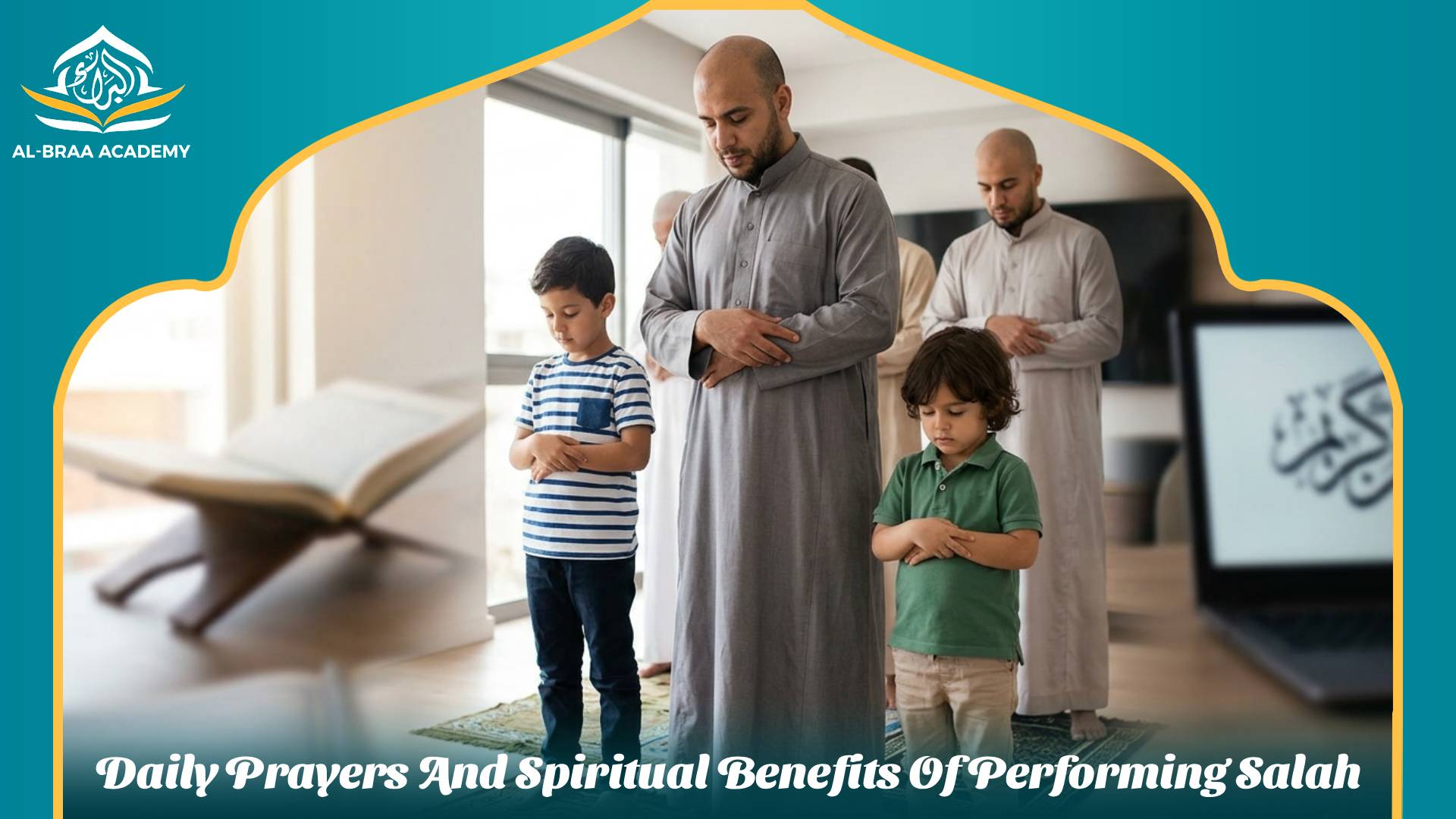
Salah, the ritual prayer, is the second of the 5 pillars of faith in the muslim religion and central to a Muslim’s spiritual practice. Albraa Academy highlights its role in fostering discipline, mindfulness, and closeness to Allah.
Performing Salah five times a day creates a structured routine, offering regular moments for reflection, gratitude, and supplication. Through these prayers, believers reinforce their connection to Allah, seek guidance, and strengthen their spiritual awareness.
Beyond spiritual benefits, Salah encourages mental clarity, focus, and patience. Albraa Academy teaches students how regular prayer cultivates inner peace, reduces stress, and instills a sense of responsibility. By practicing Salah mindfully, learners internalize values of humility, gratitude, and submission to divine will.
As part of the 5 pillars of faith in the muslim religion, Salah serves as both a personal and communal practice. Albraa Academy ensures that students understand its significance, demonstrating how prayer strengthens character, unites the community during congregational prayers, and shapes a morally grounded life. Daily observance reinforces the believer’s identity and spiritual resilience.
Why Muslims Pay Zakat And Support Those In Need?
Zakat, the third pillar of the 5 pillars of faith in the muslim religion, reflects the importance of social responsibility and compassion. Albraa Academy teaches that paying Zakat purifies wealth, fosters empathy, and strengthens community bonds.
By allocating a portion of income to help those in need, Muslims fulfill a religious obligation while promoting justice and equality. Zakat encourages selflessness and a deep understanding of societal interconnectedness.
The practice of Zakat also cultivates gratitude and humility. At Albraa Academy, learners understand that wealth is a trust from Allah, and sharing it ensures spiritual and moral development. Beyond financial assistance, Zakat empowers communities, supports education, and provides essential aid to the less fortunate, creating a positive social impact.
Through understanding the 5 pillars of faith in the muslim religion, students learn that Zakat is more than charity—it is a spiritual duty that nurtures moral integrity. Albraa Academy emphasizes that consistent practice of Zakat strengthens faith, deepens empathy, and aligns believers with the principles of Islam in both personal and communal life.
The Deep Spiritual Purpose Of Sawm During Ramadan
Sawm, fasting during Ramadan, is the fourth pillar of the 5 pillars of faith in the muslim religion and carries profound spiritual significance. Albraa Academy teaches that Sawm develops self-control, patience, and empathy for the less fortunate. By abstaining from food, drink, and negative behavior, believers focus on spiritual reflection, personal growth, and purification of the soul.
Fasting instills discipline and mindfulness in daily life. Students at Albraa Academy learn that the experience of hunger and restraint fosters gratitude and strengthens one’s connection to Allah. Sawm is also an opportunity to improve ethical conduct, curb desires, and cultivate generosity and compassion.
As part of the 5 pillars of faith in the muslim religion, Sawm has social and spiritual dimensions. Albraa Academy ensures learners understand its significance in fostering unity, shared purpose, and a deep sense of devotion. The practice enhances faith, encourages empathy, and builds spiritual resilience that extends beyond Ramadan.
The Significance Of Hajj And Unity Of The Muslim Ummah
Hajj, the pilgrimage to Mecca, is the fifth pillar of the 5 pillars of faith in the muslim religion and symbolizes global Muslim unity. Albraa Academy emphasizes its spiritual, ethical, and communal importance. Performing Hajj demonstrates submission to Allah, equality among believers, and dedication to Islamic teachings. Pilgrims from diverse backgrounds come together, reinforcing a sense of belonging and shared faith.
Hajj also represents personal purification and spiritual renewal. Students at Albraa Academy learn that completing the pilgrimage fosters humility, patience, and devotion. The rituals performed during Hajj provide opportunities for reflection, repentance, and self-improvement.
Through understanding the 5 pillars of faith in the muslim religion, learners see that Hajj strengthens both individual faith and collective identity. Albraa Academy guides students in comprehending the unity, discipline, and spiritual enrichment that Hajj brings, highlighting its essential role in a Muslim’s religious journey.
How Practicing The Five Pillars Builds Stronger Faith?
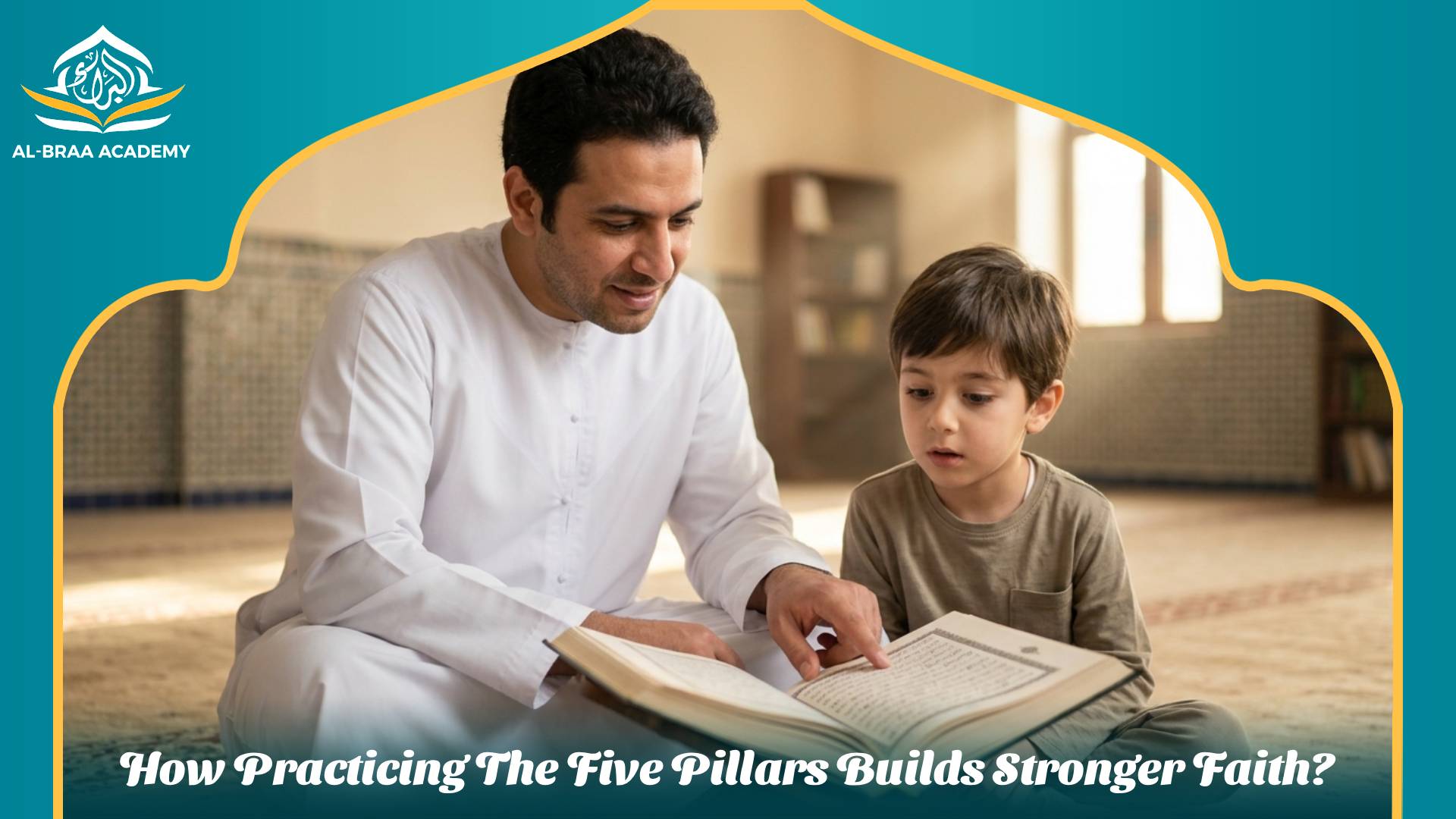
Practicing the 5 pillars of faith in the muslim religion consistently develops spiritual maturity and moral integrity. Albraa Academy teaches that each pillar contributes uniquely to faith, character, and life purpose.
Shahada affirms belief, Salah provides structure, Zakat encourages generosity, Sawm develops patience, and Hajj fosters unity. Together, these practices create a well-rounded spiritual foundation.
Regular observance reinforces commitment, builds resilience, and strengthens ethical conduct. Students at Albraa Academy understand that the pillars are not merely rituals—they are practical steps toward deepening one’s connection with Allah and community.
By practicing the 5 pillars of faith in the muslim religion, believers internalize values that guide behavior, inspire service, and enhance spiritual awareness. Albraa Academy ensures learners recognize how each pillar contributes to stronger faith, moral growth, and lifelong devotion.
Teaching Children The 5 Pillars Of Faith Effectively
Introducing children to the 5 pillars of faith in the muslim religion requires practical methods, patience, and guidance. Albraa Academy emphasizes using interactive learning, stories, and repetition to help children understand the significance of Shahada, Salah, Zakat, Sawm, and Hajj. By creating engaging experiences, children grasp foundational concepts while developing a lifelong love for Islam.
Teaching the 5 pillars of faith in the muslim religion also involves modeling behavior. Parents and educators can reinforce lessons by practicing the pillars consistently, sharing reflections, and encouraging questions. Albraa Academy provides structured curricula and online support to ensure that children build strong spiritual foundations.
Effectively teaching children strengthens faith, shapes character, and instills a sense of moral responsibility. Albraa Academy ensures learners experience the pillars meaningfully, fostering early understanding, devotion, and ethical conduct that will guide them into adulthood.
Common Misconceptions About The 5 Pillars Of Islam
Many misunderstandings surround the 5 pillars of faith in the muslim religion, such as assuming they are purely ritualistic without practical impact. Albraa Academy clarifies that each pillar encompasses spiritual, social, and ethical dimensions, influencing everyday life. Learning the pillars provides deeper insight into Islam’s purpose and values.
Students at Albraa Academy explore misconceptions, such as thinking Zakat is optional or fasting is only physical. In reality, each pillar reinforces faith, shapes character, and fosters community well-being. Correct understanding allows learners to appreciate the pillars’ holistic role.
By addressing myths, the 5 pillars of faith in the muslim religion become accessible, relevant, and meaningful. Albraa Academy ensures learners understand how proper practice enhances devotion, moral conduct, and spiritual growth.
How The Islamic Pillars Shape Muslim Identity And Values?

The 5 pillars of faith in the muslim religion are central to forming Muslim identity, values, and lifestyle. Albraa Academy teaches that adherence to these pillars fosters integrity, compassion, humility, and devotion. They guide believers in personal conduct, social responsibility, and ethical decision-making.
Practicing the pillars strengthens faith, reinforces moral standards, and shapes worldview. Students at Albraa Academy learn how consistent observance cultivates resilience, gratitude, and connection with the Muslim Ummah.
Through understanding the 5 pillars of faith in the muslim religion, learners internalize values that define a Muslim’s character, behavior, and spiritual commitment. Albraa Academy ensures students integrate these principles effectively into all aspects of life.
Frequently Asked Questions About 5 Pillars Of Faith In The Muslim Religion
Albraa Academy has compiled answers to common questions about the 5 pillars of faith in the muslim religion to help learners deepen understanding and resolve doubts.
What Are The 5 Pillars Of Faith In The Muslim Religion?
They include Shahada (faith), Salah (prayer), Zakat (charity), Sawm (fasting), and Hajj (pilgrimage).
Why Are The 5 Pillars Important For Muslims?
They provide a framework for worship, moral conduct, and spiritual growth, guiding daily life.
Can Adults Learn The 5 Pillars Later In Life?
Yes, Albraa Academy ensures learners of all ages can study and practice the pillars effectively.
How Does Practicing Zakat Benefit The Community?
Zakat distributes wealth, supports the needy, and fosters empathy and social cohesion.
What Spiritual Benefits Come From Fasting During Ramadan?
Sawm develops patience, self-discipline, empathy, and closeness to Allah.
How Does Hajj Unite Muslims Worldwide?
Hajj symbolizes equality, submission, and unity, bringing believers together from all nations.
In conclusion, the 5 Pillars Of Faith In The Muslim Religion shape the identity of every Muslim and provide a clear path for living with purpose and sincerity. At Albraa Academy, students not only memorize these pillars but also understand their spiritual meaning and real-life impact.
By learning about each pillar in depth, students strengthen their faith, improve their worship, and develop a greater appreciation for the values Islam promotes such as kindness, unity, and gratitude. The flexibility of online learning allows individuals of all ages to explore these teachings at their own pace, making the experience both enjoyable and effective.
Parents can feel confident knowing their children are gaining strong Islamic knowledge, while adults can renew their connection with their faith. These pillars are more than practices — they are a lifelong journey of devotion that guides believers in every step they take.
With the right support and engaging lessons, learning becomes a source of peace and inspiration. Developing a strong foundation in these principles empowers Muslims to live with integrity and stay connected to Allah in all aspects of life, bringing blessings to their families and their community.
Learn also: